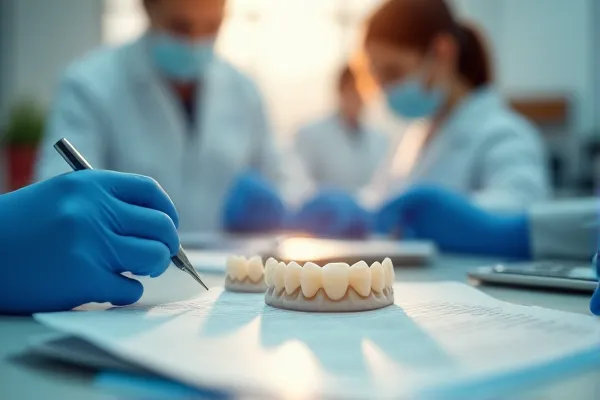
Not every patient needs or expects the highest-cost restorative material—but every patient deserves a crown that lasts and functions well. Without clear guidance, some may overpay for aesthetics or underchoose durability, leading to avoidable dissatisfaction or remakes. By identifying when semi-precious crowns offer the right clinical and financial balance, dental practices can confidently recommend solutions that meet real-world patient needs.
What Are the Main Benefits of Semi-Precious Crowns for Patients?
Semi-precious crowns should be recommended when patients need durable, cost-effective restorations with acceptable aesthetics—especially in posterior zones or for cases involving bruxism. Their strength, reliability, and mid-tier pricing make them suitable for many everyday restorative scenarios.
Benefits-of-semi-precious-dental-crowns
How Durable and Strong Are Semi-Precious Crowns for Long-Term Use?
Stable under occlusal force: Semi-precious metal substructures provide strong support for daily chewing stress.
Reduced fracture risk: Ceramic layers bonded to metal cores are less prone to catastrophic breakage than all-ceramic options.
Good longevity record: Many semi-precious crowns last 10–15 years or more with proper care and fit.
Excellent for multi-unit restorations: Strong framework enables bridges and longer-span work with reduced risk of flex or failure.
How Do Semi-Precious Crowns Perform Aesthetically on Visible Teeth?
Custom porcelain layering: Proper ceramic technique allows close shade matching and translucency control.
Reduced shadowing: With bright alloy selection and cut-back design, visible metal can be effectively masked.
Subgingival margin options: Strategic margin placement helps conceal metal edges in the smile zone.
Are Semi-Precious Crowns a Cost-Effective Choice Compared to Other Crowns?
Mid-range pricing: Offers a balance between lower-cost resin crowns and higher-end zirconia or full ceramic.
Lower long-term remake rate: Their durability reduces chairside adjustments and repeat lab fees.
Strong return on investment: Especially valuable for posterior units, where esthetics are less critical and strength is paramount.
Predictable performance: Fewer complications mean less time spent managing post-placement issues.
✅ Semi-precious crowns combine strength, reliability, and long-term value – TRUE They are a dependable choice for posterior cases and cost-sensitive patients who still expect functional durability.
❌ Semi-precious crowns are outdated and offer poor esthetics – FALSE Modern design, ceramic layering, and margin control make them a viable esthetic option in many zones—especially with a skilled lab partner.
When Are Semi-Precious Crowns Suitable for Posterior vs Anterior Teeth?
Choosing where to use semi-precious crowns depends on the clinical zone, load demands, and patient esthetic expectations. Understanding when they’re ideal—and when to consider alternatives—helps create balanced, cost-effective, and durable treatment plans.
Why Are Semi-Precious Crowns Ideal for Posterior Teeth Restorations?
High bite force tolerance: The metal core resists fracture under heavy chewing loads.
Less esthetic pressure: Posterior molars are rarely visible, making exposed metal or ceramic masking less critical.
Minimal chairside adjustment: Strong margins and predictable occlusion reduce the need for post-cementation work.
Ideal for bridges: Multi-unit posterior restorations benefit from the strength and flexibility of metal frameworks.
What Are the Aesthetic Considerations for Semi-Precious Crowns on Front Teeth?
Margin visibility: Even slight gingival recession can reveal the metal collar if not managed properly.
Translucency challenge: Porcelain over metal can lack the natural light diffusion of full ceramics in bright smile zones.
Design solutions: Using cut-back designs, high-opacity porcelain cores, and subgingival margins can improve results.
Patient expectations matter: Some patients accept minor esthetic compromises in favor of longevity and cost savings.
How Should You Balance Durability and Aesthetics in Treatment Planning?
Zone-based approach: Use semi-precious crowns posteriorly, and full ceramics anteriorly when esthetics are the priority.
Mix-and-match strategy: For full-arch or quadrant restorations, combine materials based on function and visibility.
Patient profile: Factor in budget, bruxism risk, and long-term maintenance ability when deciding material per zone.
Lab collaboration: Work closely with your lab to customize designs for both strength and esthetic harmony.
Semi-precious crowns are best used where strength and cost-efficiency matter most. To compare crown material strategies by zone, download our anterior vs posterior crown selection guide.
When Should You Use Semi-Precious Crowns for Patients with Bruxism?
Bruxism presents unique restorative challenges—especially when balancing force resistance and esthetics. Semi-precious crowns offer a durable solution that supports occlusal stability while allowing esthetic flexibility in multi-material treatment plans.
Semi-precious-crowns-for-bruxism-cases
Why Are Semi-Precious Crowns Effective for High Occlusal Stress Cases?
Metal substructure absorbs stress: The core prevents catastrophic fracture under parafunctional loads.
Ceramic chipping is minimized: Unlike full-ceramics, bonded porcelain has structural support.
Predictable performance: Metal frameworks reduce flexion and distortion in long-term function.
Reduced fatigue failures: Semi-precious alloys maintain strength and shape even with repeated bite force.
How Do Semi-Precious Crown Materials Resist Wear and Fractures?
High yield strength: Alloys used in these crowns can tolerate concentrated bite forces without cracking.
Metal occlusal options: Full metal or hybrid occlusal surfaces are available to extend wear life in extreme bruxers.
Bonding reliability: Proven metal-ceramic bonding reduces the risk of delamination under dynamic load.
Superior marginal integrity: Less prone to micro-fractures or cement washout in high-function zones.
How Can You Balance Strength and Aesthetics for Bruxism Patients?
Posterior placement strategy: Prioritize semi-precious in molars and premolars for strength, with ceramic-only in esthetic areas.
Use occlusal metal windows: Allow visible porcelain on buccal but retain metal on occlusal for wear resistance.
Manage expectations: Clearly explain trade-offs between long-term function and cosmetic perfection.
Include nightguard planning: Ensure the patient understands the role of protection in preserving the crown.
✅ Semi-precious crowns offer superior strength and support for bruxism cases – TRUE They are one of the most reliable options for high-stress restorations, especially when esthetics can be strategically managed.
❌ Full-ceramic crowns are always the best choice for all patients, including bruxers – FALSE Full-ceramic restorations are more prone to fracture and wear under extreme force, making them less ideal for high-risk patients.
What Are the Limitations of Using Semi-Precious Crowns for Some Patients?
While semi-precious crowns perform well in many cases, they are not the best fit for every patient. Certain esthetic expectations, biological factors, and material sensitivities may lead clinicians to choose alternative crown types. Understanding these limitations supports better material planning and patient communication.
When Are Full-Ceramic Crowns a Better Option Than Semi-Precious Crowns?
High-esthetic priority cases: In patients with high smile lines or thin gingival tissue, translucency becomes critical.
Anterior restorations under natural light: Full ceramics offer better shade blending and light transmission.
Young patients or cosmetic-driven treatment: Younger patients often prioritize invisible margins and fully tooth-like appearance.
No bruxism or structural concern: When bite forces are minimal, strength trade-offs are less risky.
What Are the Shade Matching Challenges in Esthetic Zones?
Metal reflection: Even with ceramic layering, metal substructures can reduce depth and realism in incisal zones.
Porcelain thickness limits: To avoid over-bulking, labs must compromise between contour and esthetic layering.
Margin exposure risk: Gingival recession over time may reveal gray or opaque metal collars.
Color shift under lighting: Metal-supported crowns may appear dull or less natural under certain lighting conditions.
Are Semi-Precious Crowns Suitable for Patients with Metal Sensitivities?
Alloy composition matters: While most semi-precious alloys avoid nickel, some patients may still react to palladium or other trace metals.
Allergy history should guide: Patients with dermatological metal sensitivities may benefit from full-ceramic, metal-free alternatives.
Diagnostic patch testing: In questionable cases, allergy testing can help avoid postoperative reactions.
Patient preference counts: Even in the absence of confirmed allergy, some patients prefer all-ceramic on principle or perception.
Some cases demand full esthetic or biologic compatibility. To evaluate crown options by patient profile, consult with our lab for case-specific crown recommendations.
How Can You Explain the Benefits of Semi-Precious Crowns to Patients?
Effective communication can help patients understand the value of semi-precious crowns—especially when they are balancing durability, cost, and esthetic goals. Simple, confident explanations reduce confusion and increase treatment acceptance.
How Can You Explain the Advantages of Semi-Precious Crowns in Simple Terms?
Use relatable language: Say “strong metal inside with a tooth-colored shell” instead of “PFM with porcelain veneering.”
Focus on what matters to patients: Emphasize strength, reliability, and comfort over technical details.
Compare to everyday items: Describe semi-precious crowns as “a good hybrid—like a car with a strong frame and a smooth exterior.”
Avoid jargon: Stay away from material codes or alloy names unless the patient asks for specifics.
How Should You Address Patient Concerns About Crown Aesthetics and Cost?
Show examples: Use photo books or mockups to demonstrate how semi-precious crowns look in the mouth.
Clarify visibility zones: Reassure them that molars are rarely seen and often don’t require the most esthetic materials.
Frame the investment: Explain that the slightly lower esthetic trade-off allows for higher durability and fewer replacements.
Offer choices, not pressure: Let the patient choose between options based on what matters most to them—appearance or longevity.
How Can You Present Semi-Precious Crowns in a Comprehensive Treatment Plan?
Use a material matrix: Visually lay out strengths, esthetics, and pricing for each option.
Zone-based approach: Recommend semi-precious crowns in posterior zones, full-ceramic in the front when needed.
Be transparent about limitations: Address potential metal exposure or slight color difference honestly.
Reinforce long-term value: Emphasize how fewer remakes or problems protect their investment.
✅ Clear explanations improve patient trust and treatment acceptance of semi-precious crowns – TRUE Patients are more likely to accept restorative plans when they understand the “why” behind material choices.
❌ Patients will always choose the most esthetic crown once presented – FALSE Many patients prioritize durability, cost, or simplicity—when given the full picture in relatable terms.
Conclusion
Recommending the right crown material begins with understanding the clinical situation and patient priorities. Semi-precious crowns remain a trusted option when long-term strength, affordability, and moderate esthetic performance are required—particularly when planned collaboratively with the lab.
Material selection isn’t one-size-fits-all—using zone-based treatment strategies ensures the right crown is used in the right place, every time.
Need help mapping crown materials to patient goals? Request our material recommendation toolkit and get patient conversation guides, crown selection matrices, and zone-based planning templates.