Metal sensitivity can complicate restorative choices and lead to delayed healing or long-term discomfort.
When full-ceramic solutions fall short in strength or spatial fit, clinicians may feel cornered by limited options.
Hi-Noble PFM crowns, when paired with thoughtful lab collaboration, offer a reliable path to restore comfort, safety, and mechanical integrity for sensitive patients.
Hi-Noble PFM crowns are recommended when patients show mild to moderate metal sensitivity and require strong, esthetically layered restorations in high-load or posterior zones. Their high noble metal content minimizes allergenic reactions, while porcelain layering ensures reduced soft-tissue exposure.
Metal sensitivity is an immunologic response to certain metallic elements used in dental restorations. It can compromise patient comfort and long-term success if the wrong materials are used. Recognizing its signs and implications helps dental teams choose better-suited restorative options.
Metal-Sensitivity-Dental-Restorations
Metal sensitivity is not rare, though often underdiagnosed.
Material selection is not just about aesthetics or strength.
The right alloy selection reduces the likelihood of post-op complications and patient dissatisfaction.
Allergic responses may be subtle but clinically significant.
While definitive diagnosis is up to medical professionals, early signs can help guide restorative planning.
Patients with suspected sensitivity benefit from early material screening and informed lab collaboration.
Careful alloy selection—starting with known biocompatible options—can avoid the clinical and emotional costs of allergic failure.
Hi-Noble PFM crowns offer a strong balance between biocompatibility and durability, making them a trusted option for patients with known or suspected metal sensitivities. Their high precious metal content helps reduce allergic reactions while maintaining clinical performance.
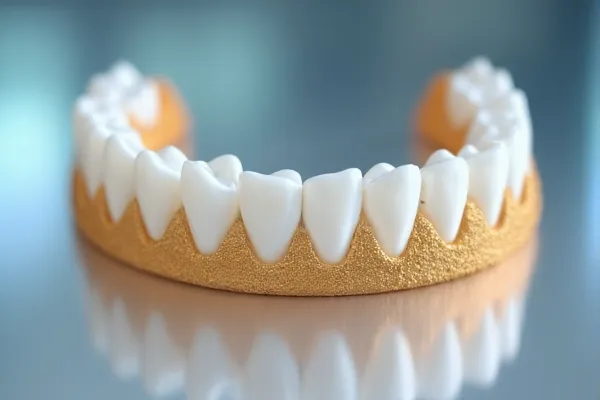
Hi-Noble-Alloy-For-Metal-Sensitive-Patients
Hi-Noble alloys contain a high percentage of noble metals like gold, platinum, or palladium.
These properties make Hi-Noble alloys a safer choice than base metal or economy alloys.
The metal’s purity directly impacts patient tolerance.
Less irritation means fewer remakes and improved patient trust.
PFM crowns with Hi-Noble substructures offer double protection.
From design to delivery, Hi-Noble PFM crowns can be tailored to minimize adverse responses.
✅ Hi-Noble PFM crowns reduce the risk of allergic reactions due to their high noble metal content – TRUE
Their composition avoids common allergenic metals and meets strict biocompatibility standards.
❌ All crowns with metal will trigger reactions in metal-sensitive patients – FALSE
Not all metals are equally reactive; Hi-Noble alloys show low sensitivity rates in clinical use.
While full-ceramic restorations are often considered the go-to for metal-sensitive patients, they may not always meet the functional demands of every clinical case. Hi-Noble PFM crowns offer a reliable alternative when strength, longevity, and biocompatibility must be balanced.
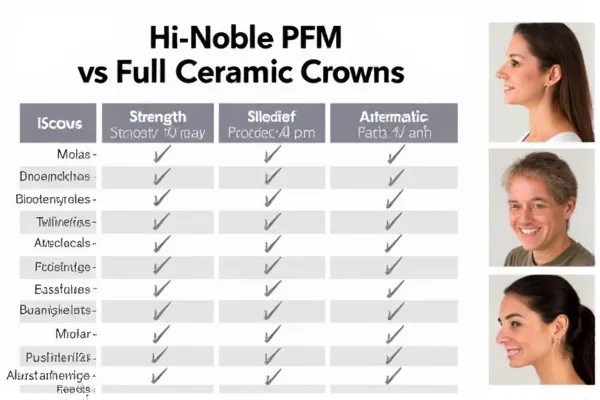
Hi-Noble-vs-Ceramic-Crown-Comparison
Some cases require strength that glass ceramics can’t always provide.
In these situations, Hi-Noble PFM crowns provide both durability and low sensitivity risk.
Biocompatibility doesn’t need to sacrifice appearance.
| Feature | Hi-Noble PFM Crown | Full Ceramic Crown |
|---|---|---|
| Core Strength | Excellent (metal support) | Moderate to high (varies by type) |
| Aesthetics | Natural with layering | Highly translucent |
| Biocompatibility | High (noble content) | High (metal-free) |
| Margin Options | Thin, adaptable | Thicker, needs space |
| Posterior Suitability | Strongly recommended | May require reinforcement |
| Cost | Moderate to high | High (esp. multilayer zirconia) |
Hi-Noble PFM crowns often outperform in mixed-priority cases where neither function nor comfort can be compromised.
Both materials are suitable—but the best choice depends on the context.
Understanding each material’s true limits and strengths allows better case-specific selection.
Hi-Noble PFM crowns should be considered when patient sensitivity is a concern but functional demands make full-ceramic options clinically risky.
Discuss case specifics with your lab team to find the right balance between esthetics, comfort, and mechanical performance.
Not all sensitivity is the same, and not every patient who reports a metal allergy requires a metal-free crown. Clinical evaluation, patient history, and lab collaboration all play a role in determining whether a Hi-Noble PFM crown is appropriate.
Patient-Metal-Sensitivity-Assessment-Dental
Understanding true sensitivity level is critical.
Clinical assumptions should not replace case-specific evaluation.
Some patients prioritize esthetics or peace of mind over mechanical advantages.
Patients value being part of the material decision process—especially in sensitive cases.
Long-term data helps guide short-term choices.
Medical collaboration adds insight that labs and dentists alone may miss.
✅ Patient history and clinical context should guide Hi-Noble crown use – TRUE
Every case requires individual risk assessment—not blanket assumptions based on material category.
❌ Any reported metal sensitivity automatically rules out PFM crowns – FALSE
Hi-Noble alloys are often tolerated even in mildly reactive patients due to their low reactivity and high purity.
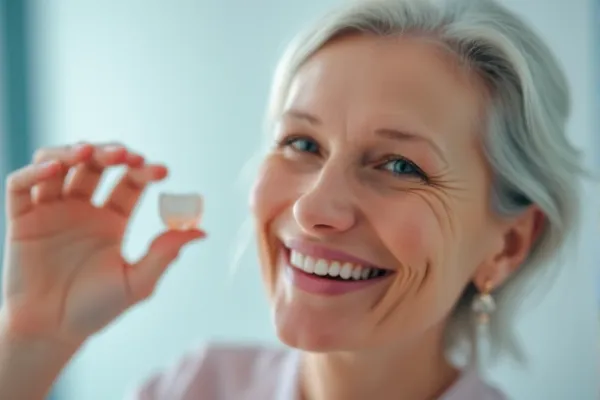
Customization plays a critical role in reducing the risk of sensitivity reactions. From alloy selection to porcelain layering techniques, labs can adjust multiple parameters to make Hi-Noble PFM crowns both biocompatible and esthetically acceptable for sensitive patients.
Hi-Noble-Crown-Customization-Process
Customizing a Hi-Noble PFM crown for metal-sensitive patients involves several deliberate steps:
Each step helps reduce the likelihood of irritation while achieving restorative success.
Choosing the right materials isn’t enough—how they’re used also matters.
Precision and transparency from the lab enhance safety for patients with unclear sensitivity profiles.
Esthetic techniques can also improve biocompatibility.
Small refinements often make the biggest difference in patient comfort.
Customizing Hi-Noble PFM crowns for sensitive patients is a collaborative process.
Discuss your case parameters with the lab early to ensure both safety and satisfaction in the final result.
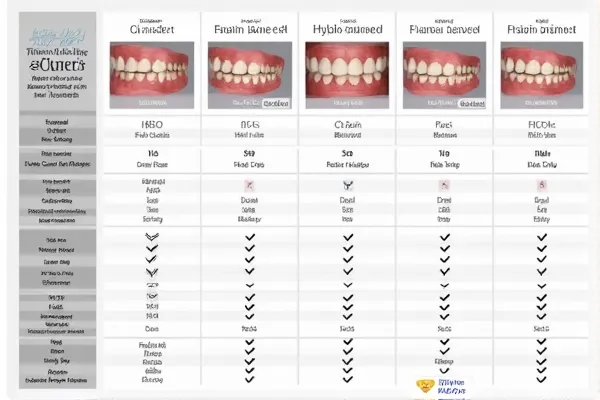
While Hi-Noble PFM crowns offer strong biocompatibility, certain clinical or personal preferences may call for metal-free alternatives. Understanding the trade-offs of each option helps clinicians make patient-specific recommendations without compromising outcomes.
Dental-Crown-Material-Comparison-Metal-Sensitive
Full-ceramic crowns are often the first alternative for patients avoiding all metal.
They’re ideal where esthetics outweigh functional risk.
Resin-based options offer flexibility but come with trade-offs.
| Feature | Resin-Bonded Crowns |
|---|---|
| Biocompatibility | Moderate to high |
| Esthetics | Moderate (may discolor over time) |
| Strength | Lower than ceramics or metal |
| Longevity | Short to medium term |
| Cost | Lower upfront, higher replacement risk |
They’re best used as interim or lower-load solutions—not long-term alternatives for molar regions.
Some cases benefit from blending properties.
These materials are case-specific and require experienced lab handling.
✅ Not all metal-sensitive patients require metal-free crowns – TRUE
Hi-Noble alloys are often well-tolerated and clinically preferred in many posterior cases.
❌ Full ceramic crowns are always better for metal-sensitive patients – FALSE
Full ceramics can fail under stress or in limited space situations, making high-noble metal a safer option in some cases.
For metal-sensitive cases, not every dental lab is equipped to deliver the precision and material control required. Choosing a lab with proven experience in high noble alloy handling is key to minimizing risks and maximizing clinical success.
Choosing-Dental-Lab-For-Metal-Sensitive-Cases
The right lab does more than follow prescriptions—it safeguards outcomes.
Look for labs that treat sensitivity cases as a specialization, not an exception.
Track record matters more than claims.
Labs with clinical awareness and proactive service make stronger partners.
Execution is everything when dealing with sensitive patients.
High-noble materials are only as good as the lab behind them.
Partnering with the right lab ensures material safety and esthetic precision for your most sensitive patients.
Reach out to labs experienced in Hi-Noble workflows to review samples or discuss how they manage biocompatible crown fabrication.
When working with metal-sensitive patients, clinicians must navigate a delicate balance between safety, function, and patient preference. Hi-Noble PFM crowns offer a dependable, lab-supported solution that protects against hypersensitivity while meeting the mechanical demands of complex restorations. By collaborating closely with experienced labs and aligning material strategies to each clinical context, dental teams can deliver outcomes that are both biocompatible and lasting.
To discuss sensitive material protocols or review certified Hi-Noble alloy workflows, contact our technical coordination team for collaborative case planning and support.