Choosing crown materials for esthetic zones often feels like a compromise between beauty and durability.
Patients demand natural translucency, yet clinical needs like strength or prep constraints can limit options.
Semi-precious PFM crowns offer a realistic balance—delivering esthetic outcomes through layered craftsmanship while ensuring functional reliability for anterior restorations.
Semi-precious PFM crowns are appropriate in esthetic zones when clinical demands require strength, minimal prep, or cost balance, and the patient accepts moderate translucency. With skilled porcelain layering, they provide natural results in anterior restorations while supporting long-term durability in cases where full ceramics may be less predictable.
Semi-precious PFM crowns can provide surprisingly natural results in anterior restorations when layered and planned properly. While often overlooked for esthetic zones, they offer a balance of shade control, long-term stability, and functional strength that’s achievable through close lab-clinic coordination.
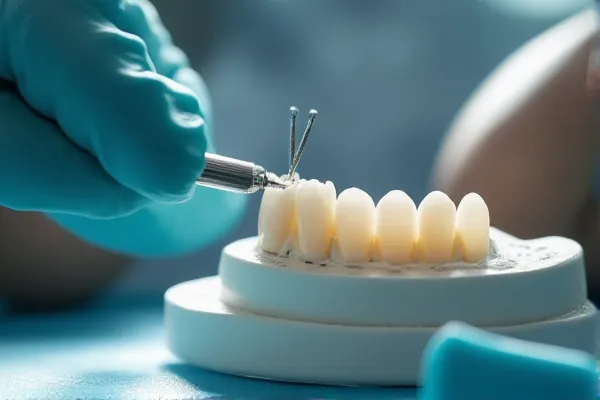
PFM-Crown-Aesthetic-Layering-DentalLab
Achieving lifelike esthetics with semi-precious PFM crowns involves precise control of layering and masking. A step-by-step ceramic build-up process ensures a balance between natural light play and structural durability.
Semi-precious alloys enable consistent esthetic performance by providing a predictable substructure that works well with modern layering ceramics.
While not as translucent as full-ceramic crowns, semi-precious PFMs show solid performance in long-term shade retention and controlled esthetic outcomes.
| Property | Semi-Precious PFM | Full-Ceramic (Emax/Zirconia) | Resin-Based Crowns |
|---|---|---|---|
| Shade longevity | Excellent | Excellent | Poor |
| Translucency | Moderate with cutback | High | Low |
| Staining resistance | High | High | Low to moderate |
| Cervical masking ability | Strong (with opaquer) | Limited (thin margins) | Inconsistent |
✅ Semi-precious PFMs can achieve natural esthetics with skilled layering – TRUE
Their visual performance depends heavily on lab technique and case selection, not just material category.
❌ PFM crowns are never suitable for esthetic zones – FALSE
With proper design, they can deliver lifelike results, especially in patients prioritizing durability with acceptable appearance.
Choosing between semi-precious PFM and full-ceramic crowns for esthetic zones often involves weighing aesthetics, strength, and long-term value. Each material has distinct characteristics that influence performance in anterior restorations. Labs can play a key role in helping clinics understand these trade-offs beyond surface appearance.
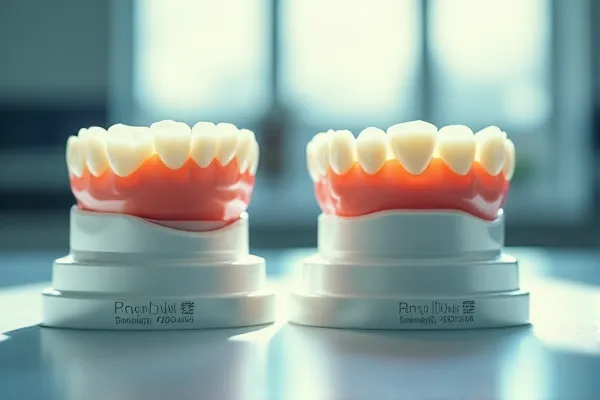
Crown-Material-Comparison-Esthetic-Zone
Visual outcomes depend on multiple factors—light transmission, margin visibility, and layering capacity. The table below highlights core esthetic distinctions.
| Aesthetic Feature | Semi-Precious PFM | Full-Ceramic (Emax/Zirconia) |
|---|---|---|
| Light translucency | Moderate (with cutback) | High (natural-like glow) |
| Cervical margin visibility | May show gray if gum recedes | Fully tooth-colored, seamless |
| Shade customization | High with lab control | High, but more reliant on prep shade |
| Depth/layering realism | Excellent with skilled technician | Intrinsic to material |
Durability is a hidden esthetic factor—chips, cracks, or delamination can compromise long-term appearance. PFM crowns provide specific advantages.
Cost differences go beyond lab fee—consider remakes, wear, and clinical risk when budgeting for anterior esthetic restorations.
If you’re weighing esthetics and function in anterior restorations, we can provide a side-by-side sample case kit or customized material comparison sheet to support treatment planning.
While semi-precious PFM crowns can perform well in certain anterior cases, their limitations must be clearly understood. Many esthetic compromises are not due to material flaws, but rather to their inherent structural characteristics and how those interact with gum contours, lighting, and patient expectations.
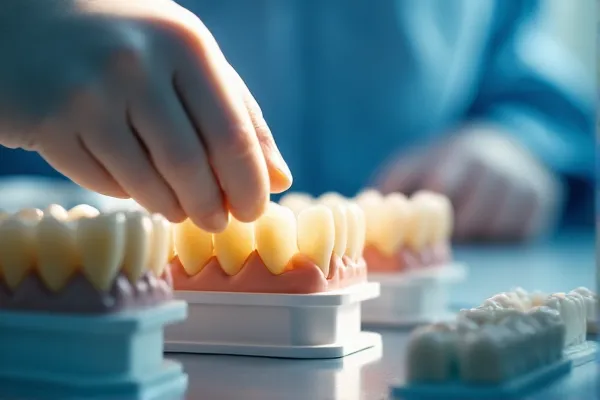
PFM-Crown-Shade-Matching-Challenges
Because of the metal substructure, light behavior differs from full-ceramic options, making shade matching more complex and technique-dependent.
| Shade Challenge | Cause | Lab-Level Mitigation Strategy |
|---|---|---|
| Slight grayness at margin | Metal shine-through in thin porcelain | Use of high-opacity opaquer, margin cutback |
| Inconsistent shade blending | Light blockage by metal core | Multi-layered buildup, internal tints |
| Hue mismatch under LED light | Differing reflection patterns | Use natural-light photo references |
Even with skilled layering, PFM crowns require tight clinic-lab coordination on stump shades and prep margins for best visual results.
Full-ceramic crowns allow a wider range of light effects and prep options. PFM crowns are more constrained in how they adapt to changing esthetic demands.
Even if shade and layering are managed, marginal details can visually betray a crown as unnatural. Fit and finish are key.
✅ PFM crowns have esthetic limitations due to metal substructure – TRUE
These limitations are predictable and manageable, but cannot be fully eliminated by technique alone.
❌ All PFM esthetic failures are due to poor lab work – FALSE
Many visual compromises arise from clinical factors like margin placement, prep shape, or unrealistic esthetic expectations.
Selecting the right material for anterior restorations requires aligning clinical conditions, patient expectations, and long-term functional needs. Semi-precious PFM crowns can be a suitable option in visible zones—but only when their strengths match the case requirements. Labs can support clinics by offering case-based guidance rather than default material selection.
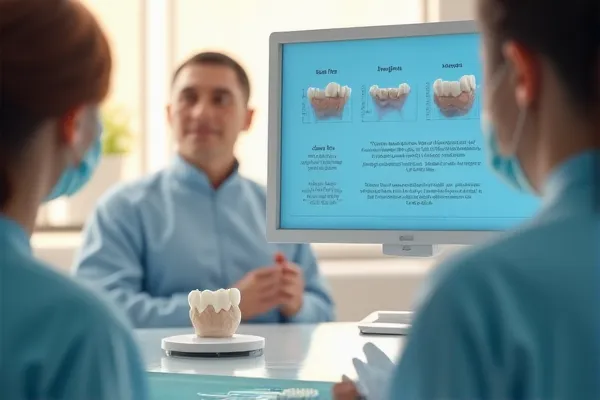
Crown-Material-Selection-Consultation
Clinicians must balance esthetics, prep conditions, bite force, and patient history when selecting materials. The lab can provide input on technical feasibility and risk factors.
Managing esthetic outcomes starts with setting the right expectations. A step-by-step approach helps clarify what each material can or cannot deliver.
Some anterior cases are better suited for PFM than others, especially when strength and prep conditions take priority.
| Clinical Scenario | PFM Crown Suitability | Notes |
|---|---|---|
| Patient with heavy anterior contact | High | Metal coping resists flexural stress |
| Limited prep due to tooth vitality | High | Thin coping achieves retention without bulk |
| Thin gingival biotype with recession risk | Low | Metal margin may become visible over time |
| High-demand esthetic case (central incisor) | Low to moderate | Case-by-case basis depending on expectation |
Semi-precious PFM crowns can be a confident choice in esthetic zones—when case selection is deliberate and guided by both technical and patient-centered criteria. To support your clinical decisions, we offer custom case reviews and sample builds based on your prep photos or material goals.
When esthetic restorations intersect with functional complexity or prep limitations, semi-precious PFM crowns offer a valuable alternative. At Raytops Dental Lab, we support anterior restorations by optimizing layering techniques and helping clinicians match material performance to patient expectations.
If you’re planning anterior restorations with durability, value, and lab-guided esthetics in mind, connect with Raytops Dental Lab for tailored consultation or sample case planning.