
Clinicians often face a dilemma between preserving tooth structure and ensuring long-term durability—especially in posterior restorations.
Overusing full crowns can lead to unnecessary reduction, while large fillings may lack strength or longevity in stressed zones.
Onlays offer a conservative yet protective solution that reinforces weakened cusps without over-preparing the tooth. This article explores when onlays outperform fillings or crowns, and how to choose the right cases for predictable, functional outcomes.
Onlays are indirect restorations that cover one or more cusps of a tooth without full crown preparation. They are preferred over fillings when more strength is needed and over crowns when healthy tooth structure can be preserved. Onlays provide a balance of protection and conservation for moderate posterior damage.
Onlays offer a middle ground between conservative direct fillings and full-coverage crowns. For clinicians, understanding what onlays are—and how they differ in coverage, workflow, and purpose—is essential to selecting the right restoration type. From the lab side, well-indicated onlay cases often yield more predictable fits and better long-term performance than large composites or over-reduced crowns.
Dental-onlay-vs-crown-vs-filling-diagram
Onlays are particularly useful when one or more cusps need structural reinforcement, but the tooth retains enough healthy enamel to avoid full reduction.
One of the key advantages of onlays is conservative preparation:
This makes onlays ideal for patients where tissue preservation is a treatment goal.
Compared to direct fillings or crowns, onlays involve:
In digital workflows, turnaround and seating time can be streamlined through clean margin design and occlusion data.
Popular choices include:
The lab typically recommends material based on prep design, occlusal stress, and esthetic zone.
✅ Onlays preserve more tooth structure than crowns while offering better coverage than fillings – TRUE
They strike a balance between protection and conservation, especially in structurally compromised but restorable teeth.
❌ Onlays are just small crowns – FALSE
Unlike crowns, onlays don’t require full axial wall reduction or margin relocation. Their prep is dictated by defect—not a uniform cutting protocol.
Onlays are not universal—but when chosen for the right clinical context, they provide exceptional functional and esthetic outcomes. From a lab’s perspective, well-chosen onlay cases tend to show fewer complications, more predictable fits, and better long-term performance compared to overextended direct fillings or underprepared crowns.
Ideal-onlay-cases-clinical-indications
Ideal when:
Onlays restore lost structure without overextending coverage.
Onlays shine in cases where:
Labs can precisely design coverage to cap only what’s compromised.
When a large MOD filling fails, but:
An onlay can replace the failing bulk-fill with improved margin adaptation and wear resistance.
After root canal therapy:
Raytops frequently receives post-endo premolars and molars for partial-coverage onlays—especially in patients under 40 with good hygiene and conservative-minded clinicians.
When the structural foundation is restorable but stressed, onlays offer the best balance between preservation and protection. Their indications are clear when you prioritize minimal intervention without compromising strength or seal.
Onlays are more than a cosmetic or conservative choice—they offer distinct biomechanical and maintenance advantages when properly indicated. For posterior teeth under complex load, onlays can outperform large direct restorations and avoid the invasiveness of full crowns. From a lab standpoint, they strike a reliable balance between structure, fit, and long-term function.

Posterior-onlay-functional-advantages-diagram
Onlays help:
Especially in post-endo cases, onlays reduce the risk of catastrophic fracture compared to oversized fillings.
Crowns require:
Onlays, in contrast:
Less drilling, more long-term predictability.
Indirect restorations like onlays:
We routinely see reduced microleakage, improved marginal integrity, and fewer post-cementation complaints in lab-made onlays.
Compared to crowns:
✅ Onlays offer functional strength and conservative prep in posterior teeth – TRUE
They deliver biomechanical benefits with less tissue removal, especially when bonded over vital teeth.
❌ Crowns are always functionally superior to onlays – FALSE
Crowns may overextend coverage, remove sound structure, and introduce cementation challenges not justified in moderate-loss cases.
Onlays are not just functional—they also perform well aesthetically and over time. For posterior cases, they offer a unique combination of visual integration, material resilience, and conservative design, especially when fabricated with high-precision lab workflows. When case selection and prep are appropriate, onlays can rival or exceed the performance of crowns and fillings in both look and lifespan.
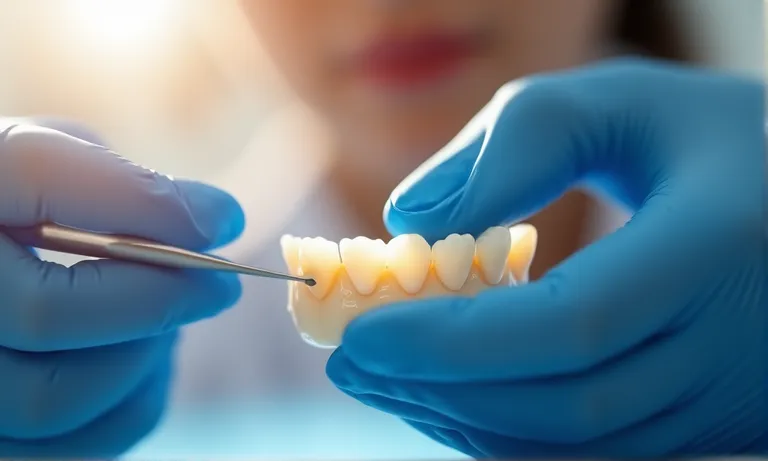
Onlay-aesthetics-and-longevity-clinical-photo
Modern CAD/CAM workflows allow:
Lab-made onlays can blend almost invisibly into the dentition with proper case planning.
Compared to composite or bulk-fill materials:
Clinics often note better long-term esthetics and fewer polish-related complaints than with resin restorations.
Clinical studies suggest:
| Restoration Type | Average Posterior Lifespan |
|---|---|
| Composite filling | 5–7 years |
| Onlay (e.max) | 10–15 years |
| Crown (PFM/Zirconia) | 10–15+ years |
When margins are ideal and bonding is well-isolated, onlays often approach crown longevity—without the full prep sacrifice.
Several retrospective studies report:
These outcomes are consistent when case selection favors moderate structural loss, good hygiene, and non-bruxing patients.
Onlays offer reliable long-term esthetics and durability, particularly when placed on structurally sound posterior teeth with precise lab support. Material selection, bonding protocol, and prep detail all play major roles in how well an onlay performs over time.
While onlays offer many advantages, they’re not a universal solution. Certain clinical, financial, or structural conditions call for alternative approaches—either a full-coverage crown or a simpler direct restoration. From the lab perspective, cases that fall outside onlay indications often result in remakes, marginal failure, or seating challenges if misjudged at the planning stage.
Onlay-vs-crown-vs-filling-case-selection
In these situations, a crown provides full protection and improved long-term stability.
Onlays rely on:
When margins extend too far subgingivally, isolation and seating become unreliable. Crowns with margin relocation or surgical crown lengthening may be preferable.
Onlays perform well in typical masticatory environments, but:
Full-contour zirconia crowns or overlay designs may offer greater safety in these high-risk groups.
Despite their clinical benefits:
In some settings, the “ideal” clinical choice must give way to patient acceptance or operational constraints.
✅ Crowns or fillings are more appropriate when structure is severely compromised or margins are inaccessible – TRUE
Full coverage or direct restorations offer better predictability and practicality in such cases.
❌ Onlays can be used in any posterior case with damage – FALSE
Overextending onlay indications leads to debonding, fracture, and reduced restoration longevity.
Onlays offer a valuable middle ground in posterior restorations—combining the strength of indirect restorations with the conservation of minimal prep. When used in the right cases, they outperform large fillings and avoid the over-reduction of crowns. Here’s what to keep in mind:
Need support selecting cases or materials? Contact Raytops Dental and we’ll share sample workflows and prep references to support your next onlay case.