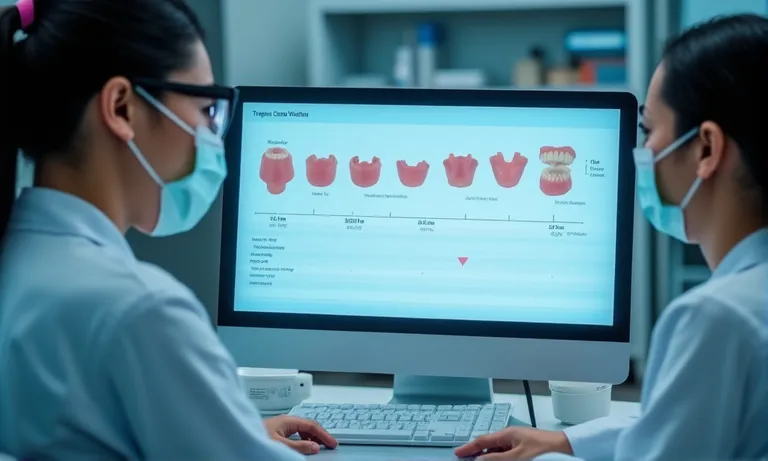
Digital crown and bridge cases typically follow a fast turnaround—3 to 4 in-lab days for monolithic zirconia and 5 to 7 days for layered ceramics, excluding shipping. More complex cases, such as multi-unit bridges or implant-supported restorations, may require 8 to 10+ days depending on design and materials.
Turnaround time is not fixed. It can be extended by incomplete scans, design revision cycles, technician backlogs, or missing approvals. Conversely, well-prepared digital submissions and early material confirmation help labs stay on schedule.
Some dental labs offer expedited production—24–48 hour rush cases for simple crowns or temporaries. However, faster delivery may involve limited QC passes or reduced esthetic detailing, making them best suited for select scenarios.
To align expectations, leading labs use tools like SLA guidelines, real-time dashboards, and automated delay alerts. Buyers can help ensure timely delivery by submitting complete case data, approving designs promptly, and following standardized lab intake protocols.
Digital crown and bridge cases typically require 3 to 7 in-lab days depending on the material and restoration type. For standard zirconia crowns, the average turnaround is 3–4 days, while layered ceramics and complex cases may extend to 5–7 days or more. Digital workflows tend to be faster and more predictable than conventional models, especially when both sides follow well-defined protocols.
For most digital crown or bridge cases, labs deliver within 3–4 days for zirconia and 5–7 days for layered restorations—shorter than conventional methods, with better consistency when data is clean and designs pre-approved.
digital-dental-case-turnaround-timeline
The internal lab workflow typically follows a predictable timeline once the STL or intraoral scan is submitted. While times may vary slightly by lab, this general framework applies to most digital-only cases:
| Stage | Action | Estimated Time |
|---|---|---|
| Day 0 | STL file received and case approved | Within 1 business hour |
| Day 1 | Design finalized and submitted to CAM | Same day or overnight |
| Day 2 | Milling + initial QC | 1 working day |
| Day 3 | Sintering / staining / glazing / final QC | 1–2 working days |
| Day 4+ | Case packaged and shipped | Same day or next day |
The case type and restoration material significantly influence expected delivery times:
Labs often publish general timelines, but actual turnaround depends on clean data, clear prescriptions, and workload capacity.
Digital workflows are generally faster because they eliminate physical transport of impressions and reduce remakes caused by poor models. Conventional workflows often require physical pickup, model pouring, manual design, and longer bake cycles, which can add 2–4 days.
From our experience supporting overseas clients with digital-only submissions, we’ve found that even across time zones, fully digital workflows average 1.5–2 days faster than traditional cases. More importantly, the consistency is easier to maintain, as revisions and approvals are handled in real-time.
In most modern labs, once the scan is received, a standard digital zirconia crown can ship within 3 working days—provided there are no prescription issues or design bottlenecks.
Labs that adopt digital-first pipelines, like Glidewell or Digital Dental Leaders, demonstrate how structured workflows drive faster case returns while keeping QC intact.
Timely delivery is never just about speed—it’s about predictability. That’s the advantage digital workflows bring to crown and bridge cases.
Several internal and external variables can significantly shift turnaround times for digital crown and bridge cases—even for routine cases. While most labs can deliver within a 3–5 day window for standard zirconia crowns, delays are often caused by scan quality issues, design changes, case complexity, or capacity constraints in manufacturing. Understanding these variables can help clinics and labs better plan and avoid last-minute surprises.
Labs typically process cases in a first-in, first-out manner, but some files naturally “slow down” depending on the data completeness, coordination timing, and material complexity.
Common data issues that delay case intake include:
In one case, a client submitted a 4-unit zirconia bridge scan with no opposing arch. Our team flagged the issue within 30 minutes, but lost a full day waiting for the corrected upload due to time zone differences.
Cases that require doctor confirmation or are pending design approval can sit idle in queue. For example, if a case involves a custom margin design or esthetic layering, labs often submit a 3D viewer file or screenshot for review. Any delay in response—even a few hours—can push delivery by a full working day, especially in busy labs.
From our experience at Raytops, we’ve seen that pre-approval protocols dramatically improve predictability. Clinics that approve within 4 hours of first design feedback almost always receive delivery within the expected window.
Once a case enters production, its turnaround can still fluctuate due to:
Even with automated CAM, these steps are not instantaneous—timing bottlenecks add hours or a full day in busy production windows.
| Case Type | Time Impact | Reason |
|---|---|---|
| Single zirconia crown | Minimal | Standard design + automated process |
| 5+ unit layered bridge | +2–3 days | More hand layering + firing cycles |
| Implant bars or custom abutments | +3–5 days | Involves custom titanium work or coordination with third-party partners |
| Mixed material combinations | +2 days | Coordination between multiple production tracks |
Larger or implant-supported restorations often require collaboration with external milling centers or abutment suppliers, which adds to turnaround uncertainty.
Proper planning and communication can prevent most delays—but understanding where bottlenecks can occur is key to smoother collaboration.
Restoration type is one of the most critical factors influencing turnaround time for crown and bridge cases. Simpler monolithic crowns often move quickly through production, while layered or implant-based cases involve more steps, materials, and quality checks. Labs must balance speed with esthetics and fit, so knowing what to expect by case type helps clinics plan effectively.

At Raytops, we’ve supported clinics across 11 countries, and consistently see variation in in-lab timelines based on restoration complexity—even when digital submission quality is consistent.
We’ve observed that clinics using monolithic crowns for posterior regions can often schedule delivery to patients within 5 working days, assuming same-day lab submission and shipping.
Layered restorations introduce more manual steps—cutbacks, porcelain layering, multi-stage firings—which increase production time. For example, a 3-unit anterior bridge with layered zirconia may require:
Compared to monolithic zirconia, these steps can add 2–3 in-lab days, depending on technician availability. Porcelain-fused-to-metal (PFM) bridges follow similar timelines due to metal casting and ceramic application processes.
These cases often demand more back-and-forth with the clinic for shade matching or margin detail, especially in esthetically sensitive zones.
| Case Type | Est. Turnaround | Complexity Factors |
|---|---|---|
| Screw-retained crowns | 6–8 days | Requires digital analog + angulation verification |
| Full-arch implant bars | 10–12+ days | Often coordinated with 3rd party milling centers |
| Custom abutment + crown sets | 7–10 days | Multi-party workflow (lab + abutment vendor) |
| Mixed zirconia + PMMA temporaries | 8–9 days | Requires coordination across different machines and techs |
In one recent case, we supported a client needing a zirconia bridge over two custom abutments. Due to outsourcing titanium base design, the full workflow extended to 11 in-lab days—even with digital approvals completed early.
Planning for these timelines in advance helps align patient appointments, avoid rushed fitting, and reduce remake rates.
Yes, most labs offer expedited options—but faster turnaround comes with specific trade-offs and eligibility limits. Not all cases can or should be rushed. Understanding what can be expedited and what might be compromised is crucial for making the right decision under time pressure.

We’ve supported clients with everything from 24-hour monolithic crowns to diagnostic wax-ups in under 48 hours—but success depends on preparation, timing, and case type.
Labs typically offer the following expedited pathways:
At Raytops, we handle rush case requests with pre-assigned slots for clients in urgent treatment windows—especially for single posterior crowns or esthetic prototypes.
Expedited production always means less time for fine-tuning. While final fit and function are never sacrificed, some trade-offs include:
We’ve seen cases where a rush PFM bridge had to be returned for shade correction—not due to error, but due to limited preview time. The client later adjusted expectations to use PMMA temporaries for future fast-track work.
Some case types lend themselves better to rush processing:
In general, expedited workflows are best reserved for simple units, known patients, or prototype stages. For anything involving implants, custom abutments, or layering, standard cycles remain the safer and more consistent choice.
Planning ahead—even by 12–24 hours—gives labs flexibility to deliver faster without sacrificing long-term success.
Clear and transparent communication about turnaround times is crucial for building trust and managing expectations between labs and clients. Most professional labs, including Raytops, have defined processes in place to ensure clients are kept informed from case submission through to final delivery.
Effective communication doesn’t just prevent frustration—it enables clinics to plan their treatment schedules, manage patient expectations, and avoid delays.

Service Level Agreements (SLAs) are the backbone of most dental lab communications. SLAs define the turnaround times for different case types and help manage client expectations. Raytops offers the following SLAs:
| Case Type | Standard SLA | Rush SLA | Complex Case SLA |
|---|---|---|---|
| Zirconia crowns | 3–4 days | 1–2 days | N/A |
| PFM bridges | 5–6 days | 2–3 days | 6–8 days |
| Implant restorations | 7–10 days | 3–4 days | 10–12+ days |
| Custom abutments | 7–10 days | 4–5 days | 12+ days |
By adhering to these guidelines, clients can feel confident in their expectations for delivery. Clients with urgent cases, like single-unit crowns for same-day fittings, can benefit from prioritized slots, while more intricate cases follow a clear timeline that allows for proper design and quality assurance.
Today, most labs offer digital solutions to keep clients informed about the status of their cases. Common features include:
Raytops has developed a client-facing dashboard that tracks case progress in real time. It includes a “Case Status” column that shows whether a case is in design, production, or QC, with color-coded status updates. This feature has significantly reduced client inquiries and improved satisfaction by 30%.
It’s essential that labs notify clients immediately if there are any issues with the case that could delay production. Common delay triggers include:
For example, a client recently faced a delay when a shade matching request for an anterior crown wasn’t approved on time. We were able to promptly notify them, and the revised delivery time was adjusted accordingly. Transparent communication allowed the client to reschedule their patient appointment smoothly.
Labs can only work with the data and decisions provided—so timely, accurate submissions from buyers are the single most controllable factor in achieving predictable delivery.
At Raytops, we’ve found that clients who follow a few simple practices consistently experience 3–4 days faster turnaround and lower remake rates.
Planning isn’t just helpful—it’s decisive. The more complete and organized the intake, the smoother the lab side runs.
To avoid delays at the intake stage, clinics should ensure:
A common issue we see: the bite is submitted in a separate upload 6 hours later. That alone can delay a case’s production start by a full working day.
Last-minute changes in material or restoration type can cause major workflow disruptions. For example, switching from monolithic zirconia to a layered esthetic design introduces at least 2–3 extra steps and may push the timeline by 1–2 days.
Clinics should lock in these decisions before file upload—especially if delivery is time-sensitive.
For multi-unit or esthetic anterior cases, it’s good practice to also confirm whether shade guides or patient reference photos will be sent. These help reduce the back-and-forth.
Labs like Raytops provide clients with shared intake checklists that help clinics submit complete information. These protocols typically include:
When clinics follow these tools, most issues can be avoided before production even starts. One DSO group we support integrated a shared dashboard with checklists, and reported a 35% reduction in turnaround variation within two months.
Consistent turnaround in digital crown and bridge cases isn’t just about lab speed—it’s about alignment. When clinics and labs collaborate on clear case data, material decisions, and approval timelines, delivery becomes not only faster, but more reliable.
As an overseas dental lab, Raytops focuses on structured communication, workflow transparency, and flexible production capacity to help clients meet their treatment deadlines. Whether it’s a routine zirconia crown or a layered implant case, the key is early clarity and shared planning.
In the end, reliable turnaround isn’t a promise—it’s a process.