Selecting the right dental implant lab partner directly affects patient outcomes, clinic efficiency, and long-term workflow reliability—especially in full-arch restorations, digital workflows, or multi-unit implant cases. In today’s procurement landscape, buyers aren’t just sourcing a vendor—they’re choosing a collaborative extension of their clinical and operational team.
A successful lab relationship hinges on more than price. It requires consistent restoration quality, material compatibility, regulatory compliance, and digital integration. Equally important are the lab’s responsiveness, transparency, and support when cases deviate from plan.
This guide outlines the most critical evaluation factors for implant-focused buyers:
Rather than lab-side promotion, this guide takes a buyer’s perspective—equipping you with practical, experience-backed criteria to identify lab partners that can deliver low-risk, high-value outcomes in implant dentistry.
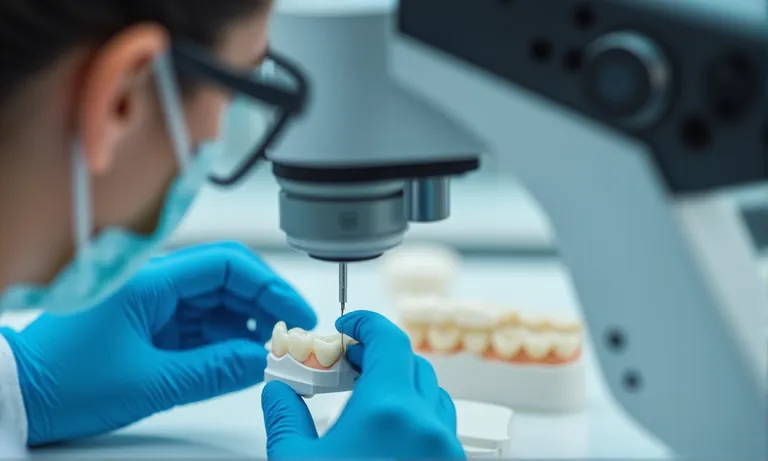
High-quality implant restorations are defined by their predictable fit, functional accuracy, and material reliability across batches. For buyers, especially procurement leads or clinic owners, consistency isn’t just about aesthetics—it’s about how well restorations integrate with clinical workflows and how rarely remakes are needed. Understanding how a dental lab achieves this standard can directly impact patient satisfaction and the operational efficiency of your clinic or lab.
dental-lab-implant-restoration-quality-check
Fit and function in implant restorations depend on process control at every stage of production.
For example, one Australian clinic we supported had long struggled with inconsistent abutment seating. By shifting to a uniform scan body protocol and implementing design checks via ExoCAD’s validation tools, their adjustment rate dropped by over 13%.
Quality assurance policies aren’t just about internal inspection—they’re about cross-team transparency and traceability.
In one case, a DSO in Germany reported a 12% remake rate. Our team analyzed their data and found that 70% of remakes stemmed from incomplete file uploads or inconsistent instructions. A pre-case checklist system reduced those issues by over half within two months.
You don’t need to guess—quality can be assessed systematically even before placing your first order.
A reliable partner should be open to showcasing process transparency. Labs like Raytops Dental Lab offer detailed visual workflows to illustrate case handling—which helps buyers set expectations early.
A well-prepared buyer who asks these questions early tends to avoid miscommunication later—and often forms stronger, longer-term lab partnerships.
High-quality implant restorations are not defined by surface-level polish but by the reproducibility of results across clinical cases. For global buyers, choosing a lab with traceable QA systems and strong design discipline is the most sustainable way to lower remake rates and build trust over time. As an overseas dental lab, we’ve seen how quality becomes visible not only in the crown margin—but in how few surprises there are after delivery.
Quality control processes and remake prevention strategies are critical when evaluating a dental implant lab partner. For a deeper dive into practical methods to evaluate restoration quality and reduce remake rates, see our guide: How to Evaluate Quality and Reduce Remakes in Dental Implant Restorations.
A technically capable implant lab should support diverse implant systems, master digital workflows, and operate with CAD/CAM tools that match your clinical environment. Buyers should assess not just the lab’s tooling, but their ability to integrate with your system—ensuring predictable outcomes, minimal conversion errors, and fewer back-and-forths. Technical depth is what separates a one-off supplier from a long-term implant partner.
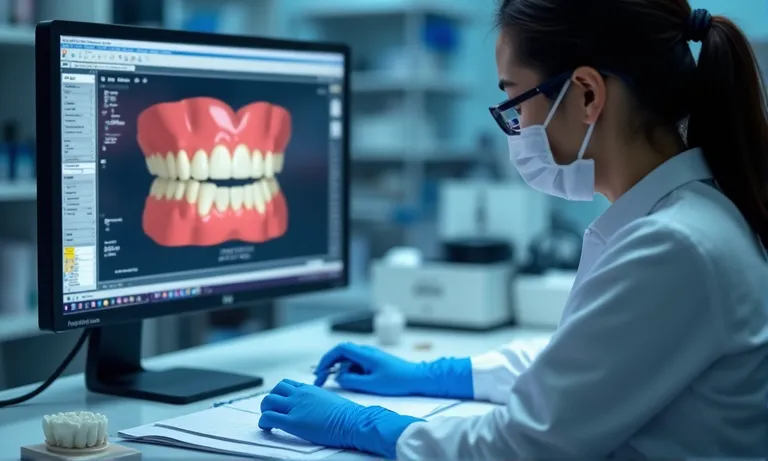
dental-lab-cadcam-implant-workflow
Material and system compatibility is a key differentiator for advanced labs.
An experienced overseas dental lab should be transparent about its supported platforms, and ideally offer a matrix of implant compatibility during onboarding.
CAD/CAM infrastructure is central to repeatable implant quality.
| Capability | What to Look For | Why It Matters |
|---|---|---|
| CAD software | ExoCAD, 3Shape, DentalCAD | Determines compatibility with your design files and data formats |
| CAM integration | HyperDENT, Sum3D, WorkNC | Impacts milling precision, especially for angulated screw channels |
| 3D printing | Asiga, NextDent, Formlabs | Enables model accuracy, custom trays, and surgical guides |
| Scanner brands | Shining3D, Medit, iTero | Dictates STL compatibility and data cleaning workflow |
Labs that rely solely on analog or use generic third-party software may encounter fidelity loss during file transfer or implant interface modeling—especially in full-arch or multi-unit cases.
A client in the UK once struggled with marginal misfits when their local lab couldn’t read Medit STL data properly. After switching to a lab that supported native Medit output and printed on Formlabs 3B printers, their first-time seat rate improved by 12%.
Digital readiness means more than owning a scanner—it’s about ecosystem fluency.
Labs that “speak digital fluently” save you time by eliminating format conversion, standardizing communication, and aligning design expectations from the start.
Technical depth isn’t about owning the most machines—it’s about interoperability and system-level understanding. The best lab partners don’t just support technology; they adapt to your tools, your constraints, and your preferred workflows. As a global dental lab, we’ve seen that successful collaborations often begin with this alignment—not just a shared case, but a shared system logic.
Certifications like ISO 13485, CE marking, and FDA registration are essential indicators that a dental implant lab operates with verified quality systems and traceable protocols. For overseas buyers, especially those working with U.S., EU, or Australian regulatory environments, choosing a certified lab reduces compliance risks and builds a foundation of trust. But certification isn’t just a logo—it’s a process-backed signal of operational maturity.

dental-lab-compliance-certification-documents
Buyers often ask: “Is this lab certified?” But the better question is: “Certified to do what, and how does that protect me?”
| Certification | What It Covers | Why It Matters |
|---|---|---|
| ISO 13485 | Medical device QMS, including documentation, traceability, and risk controls | Ensures the lab has formalized quality processes for implant-grade production |
| CE Marking | Product safety & compliance for European markets | Required for EU-bound restorations and components |
| FDA Registration | U.S. market regulatory listing and device manufacturing compliance | Mandatory for U.S. importers, distributors, and clinics working with U.S. patients |
Labs working across borders should have documentation that aligns with the target market. For example, a CE-marked zirconia product may not meet FDA material traceability rules unless documented under UDI protocols.
It’s not enough to take a logo at face value. A buyer-friendly lab should provide:
One of our Canadian clients initially worked with a lab that claimed to be ISO-certified—but couldn’t provide documentation or SOP snapshots. After switching to our team (a certified Chinese dental lab), they passed their internal audit with zero corrective actions in the implant category.
The risks aren’t always visible—until a complication arises.
In one case, a U.S.-based DSO had to recall 11 zirconia restorations after discovering they originated from a non-FDA-registered lab subcontractor. This incident delayed treatment and required issuing refunds across three practices.
Compliance isn’t just a checkbox—it’s how buyers de-risk their supply chain. Certified labs show their systems, not just their results. As a global dental lab, we maintain up-to-date ISO 13485 certification and product-level CE documentation, and we proactively provide documentation to support audits, onboarding, and long-term procurement trust.
Certification and regulatory readiness are often deal-breakers in lab selection. For a deeper breakdown of essential standards like ISO 13485, CE Marking, and FDA QSR—and how they affect market access—see our detailed guide on Key Certifications and Compliance Factors to Review Before Partnering with an Implant Lab.
Predictable turnaround times are just as important as speed—buyers should look for labs that balance timeliness with consistency, especially for complex implant restorations. The true value lies not only in how fast a lab can deliver but in how reliably it meets promised timelines across case types and communication cycles.
dental-lab-implant-case-packaging-logistics
Turnaround time varies significantly depending on case complexity and communication efficiency.
For example, we once supported a U.S. clinic doing a full-arch on four implants. With scan refinement and soft-tissue model verifications included, the timeline stretched to 17 days—but the final fit was approved on the first try, with no remakes.
Fast communication doesn’t just shave hours—it prevents delays before they begin.
One of our EU clients standardized their process by assigning a clinic-side coordinator to respond within 12 hours to all lab queries. This change alone shortened their average implant workflow by 2.4 days.
Even efficient labs can experience internal delays—but transparency and process design make the difference.
| Delay Source | Description | Risk if Unmanaged |
|---|---|---|
| Inbound Data Errors | Missing or misaligned STL files, scan body mismatches | Production halts while clarification is sought |
| Material Stock Gaps | Out-of-stock Ti base platforms or specific zirconia pucks | Can add 1–3 extra working days |
| Technician Overload | Unexpected workload surges or technician absences | Delivery dates may shift unless buffered |
| Holiday/Logistics Factors | National holidays (e.g., Golden Week), customs holds | Impact cross-border shipping reliability |
An experienced lab should proactively communicate any projected delays and propose mitigation steps. As an overseas dental lab, we embed milestone updates into our delivery cycle—ensuring clients always know where a case stands and when to expect completion.
In implant workflows, time isn’t just money—it’s trust. Delays can ripple into patient chair time, rebooking, or clinician stress. Labs that optimize not just production, but response coordination, build credibility that lasts beyond a single case.
Effective collaboration in implant cases depends on timely technical communication, file compatibility, and structured case feedback loops. For procurement leads and dental professionals, the quality of interaction with a lab often defines whether a case moves smoothly—or ends in frustration. A well-aligned lab doesn’t just “reply fast,” it understands what to clarify, when to escalate, and how to support clinical decision-making without overstepping.
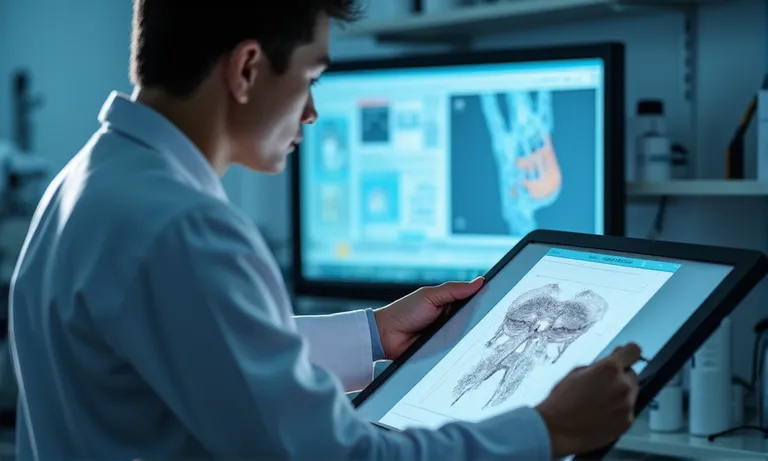
dental-lab-implant-case-digital-collaboration
Labs that handle implant work successfully usually have standardized touchpoints for every case.
A client in Norway told us their previous lab didn’t provide any design preview before shipping. After switching, our team shared annotated screenshots at every design stage—and their chairside adjustment time dropped by 30%.
Implant cases often require mid-process clarification. What separates a good lab is how it handles uncertainty.
We once handled a U.K. case involving a patient with extreme tissue collapse. The scan lacked gingival contour clarity, so we flagged the issue with 3 visual proposals and a recommended approach. The clinic chose the most conservative route—and the restoration seated on first delivery.
Digital misalignment causes silent failures: remakes, delays, or suboptimal fits.
| Platform | Common Issues When Not Compatible | Coordination Benefit When Aligned |
|---|---|---|
| Medit Link | STL not fully exported or occlusion missing | Enables direct messaging and cloud file sync |
| 3Shape Communicate | Incorrectly linked orders or delayed uploads | Allows structured prescriptions and real-time collaboration |
| iTero | Color maps not viewable in basic lab software | When fully supported, enables better margin verification |
| Open STL | No metadata or bite relation missing | Needs lab-side reconstruction; better with standard workflows |
Labs fluent in your digital ecosystem reduce errors and response lag. We frequently serve as a second pair of eyes for clients during onboarding—flagging inconsistent scan angles or missing occlusals before design even begins.
Collaboration isn’t just communication—it’s structured, verified, and clinically aligned interaction. As a global dental lab, we build communication workflows that blend responsiveness with system-level clarity. This ensures not only fewer surprises—but fewer back-and-forths, and more first-time-fit results.
The true cost of working with a dental implant lab isn’t just the unit price—it’s the combined impact of remakes, delivery delays, support quality, and clinical outcomes over time. Evaluating a lab’s pricing model should focus on value retention across the workflow, not just short-term savings. An inexpensive lab that leads to chairside issues will ultimately cost more—in time, trust, and money.

dental-lab-pricing-model-comparison-analysis
Understanding the structure behind the quote helps buyers plan for long-term budget stability.
| Pricing Model | Description | Pros | Cons |
|---|---|---|---|
| Per-unit Fixed Price | Flat fee for each restoration | Simple, easy to forecast | May hide costs for adjustments or remakes |
| Tiered Pricing | Different prices based on complexity or materials | Transparent by case type | Requires upfront case classification |
| Package/Bundle Pricing | Set price for crown + abutment + screw + shipping | Cost-efficient for repeat orders | Less flexibility for single-case orders |
| Introductory Trial Pricing | Lower rates for test orders (1–3 cases) | Reduces entry barrier | May not reflect regular cost structure |
When evaluating quotes, ask whether design revisions, remakes, or multi-unit coordination are included—or charged separately.
Low per-unit price doesn’t mean low total cost. Hidden costs often emerge downstream.
A client in Australia once worked with two labs in parallel—one offering 20% lower per-unit cost. After three months, the lower-cost lab’s higher adjustment and remake rate resulted in nearly identical total spend—but more team frustration and longer delivery cycles.
Higher pricing is justifiable when it’s backed by predictability and efficiency.
One DSO group in California chose a higher-priced overseas lab after realizing their in-house rework time was over 90 minutes per implant case. With the new partner, that dropped below 20 minutes—resulting in 3 more patients seen per week per clinic, more than offsetting the price gap.
Value isn’t found in the invoice—it’s revealed in the results. As a global dental lab, we focus on building pricing models that reflect long-term cooperation: fewer remakes, predictable results, and true downstream savings that procurement teams can quantify.
While this section outlines the main pricing models and ROI factors, you can dive deeper into how to compare dental implant lab pricing models and calculate long-term ROI for detailed formulas, case scenarios, and cost breakdowns.
A dental lab’s reputation and operational transparency are not just soft metrics—they directly reflect the lab’s reliability, accountability, and long-term suitability as a partner. For procurement teams and DSO decision-makers, reputation is often the fastest way to screen for risk. Transparency, on the other hand, is what sustains trust throughout the relationship.

dental-lab-client-audit-visit-implant-process-review
Site visits or audits offer insight that certificates or slide decks can’t reveal.
One DSO client from the U.K. visited three labs before choosing a partner. They said the deciding factor wasn’t price or tech—it was how clearly one lab explained its remake policy, documentation flow, and implant-specific QC checkpoints.
Trust doesn’t come from claims—it comes from behaviors and infrastructure.
We’ve seen clients lose confidence in previous vendors when each case was handled by a different technician, leading to unpredictable results. In contrast, our lab assigns fixed case managers per client, ensuring stable communication and learning curve optimization.
A strong lab partner should be able to share third-party proof—not just testimonials.
| Proof Type | What to Look For | Why It Matters |
|---|---|---|
| Client Reviews | Specific, detailed feedback (not generic praise) | Indicates real experience and results |
| References | Willingness to connect you with existing clients | Suggests confidence in long-term relationships |
| Case Studies | Real cases with context, process, and outcome | Offers insight into how the lab thinks and solves problems |
Look for whether the lab shares both smooth and challenging case stories—that’s a sign of maturity and process discipline.
In one instance, a mid-size implant distributor in Canada chose our lab after reviewing a 12-month case study that detailed not only success metrics but also how we handled a full-arch scan error and rebuilt the case with input from the client’s lead technician.
Reputation gets you noticed, but transparency keeps you chosen. As an overseas dental lab, we understand that trust is built through proactive communication, predictable behavior, and openness about how we work—not just what we make.
Beyond compliance checklists and digital compatibility, here’s a detailed guide on what to look for in a trusted implant lab partner, including benchmarks for credibility, communication, and delivery reliability.
Before partnering with a dental implant lab, buyers should ask structured questions that go beyond pricing—covering workflow, remake handling, case experience, and onboarding process. These questions help reveal whether a lab is just a vendor or a long-term collaborative partner capable of supporting implant complexity.

dental-lab-onboarding-discussion-checklist-review
Understanding the lab’s actual implant exposure helps gauge risk.
For example, a U.S. buyer once asked about our experience with All-on-4 hybrid bridges. Instead of vague assurances, we shared three anonymized cases—one involving bar distortion, another margin tissue management—proving our readiness for complex work.
Labs should have clear protocols, not case-by-case improvisation.
Trustworthy labs will explain their escalation process and how they work to prevent recurrence—not just patch individual cases.
Before committing to full-scale orders, run structured pilot cases.
| Onboarding Method | Description | What to Observe |
|---|---|---|
| Trial Case | 1–2 units under reduced pricing | Evaluate fit, occlusion, communication flow |
| Technical Audit | Review of lab’s CAD files or SOPs | See how consistent and detailed their protocols are |
| Design Demo | Real-time screen share of case planning | Check how the lab communicates, flags issues, and handles design questions |
A distributor client in New Zealand asked for a 3-case onboarding test: one zirconia crown, one screw-retained bridge, and one full-arch. Their technical team rated not just outcome quality but also documentation, image clarity, and issue handling. They scaled to monthly orders within six weeks.
Asking the right questions doesn’t slow down the process—it prevents downstream issues. As an overseas dental lab, we encourage partners to test us before scaling up. A thoughtful onboarding phase sets the tone for predictable, collaborative, and low-stress implant workflows.
Beyond general compliance and digital workflow requirements, here’s a ready-to-use checklist of questions to ask before partnering with a dental implant lab—covering quality, pricing, communication, and turnaround time.
Choosing a dental implant lab partner is not just about finding a supplier—it’s about securing a consistent, technically capable, and transparent collaborator who can support your clinical workflows and growth. From quality assurance systems to turnaround reliability, from digital compatibility to long-term value, the right questions—and the right pilot process—make all the difference.
As an overseas dental lab(Raytops Dental Lab) with implant-focused expertise, we understand what procurement teams truly need: fewer remakes, clearer communication, and scalable solutions. A strong partnership begins with operational alignment, not just product delivery.