An impressive factory setup means little if the technical team behind it lacks structure, experience, or digital fluency—Overloaded technicians, unclear role division, or inconsistent QC practices often result in delayed cases, poor fit, and costly remakes. By evaluating technician structure, experience tiers, and digital skill alignment, dental professionals can identify whether a crown & bridge lab is truly equipped for reliable, scalable cooperation.
A qualified crown & bridge factory should define clear technician roles, assign senior technicians to complex cases, ensure strong digital design capabilities, embed quality control into technician workflows, maintain a sustainable technician-to-case ratio, and provide documentation that verifies training, output quality, and workflow consistency.
What core roles make up a qualified crown & bridge technical team?
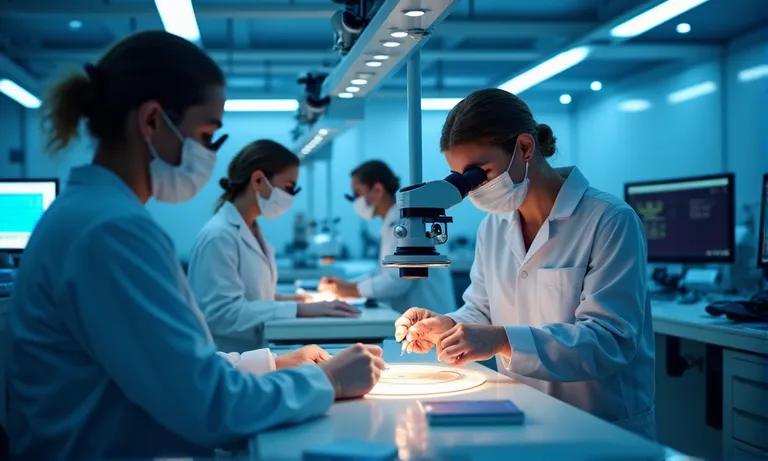
A capable crown & bridge factory relies on a multidisciplinary team, not just individual technicians. Each role—spanning design , manual finishing, and quality control—contributes to consistent results across diverse restoration types. Understanding these roles helps clients evaluate whether a supplier is equipped for stable delivery at scale.
Crown-Bridge-Lab-Team-Role
Common technician roles in a crown & bridge lab
Each step in the workflow requires specialists with distinct responsibilities.
CAD designer: Handles digital modeling, margin line setting, and occlusal contouring
Ceramist: Builds aesthetic contours, stains, and glazes anterior or layered restorations
Polisher/Finisher: Handles final smoothening, contact adjustments, and shine quality
QC technician: Performs dimensional checks, margin reviews, and documentation control
A factory setup includes backups and overlap to avoid bottlenecks when one role is overloaded.
Digital, manual, and QC responsibilities division
Balanced factories avoid overloading one technician with multiple unrelated tasks.
Digital stream: CAD and CAM are kept within a trained unit using shared libraries
Manual stream: Ceramic application and polishing handled by craftspeople with aesthetic sensitivity
QC stream: Operates independently of production to ensure unbiased final checks
Cross-role feedback: Design and finishing teams share notes via internal forms
Such segmentation supports precision, especially in cases requiring tight delivery schedules.
Why full-team coordination matters for consistent quality
Even skilled individuals cannot substitute for coordinated systems.
Daily case meetings ensure complex orders are reviewed jointly
Case routing forms guide handoffs across roles to minimize errors
Centralized job boards provide real-time progress visibility
Shared evaluation protocols allow uniform interpretation of margin quality, occlusion, and aesthetics
Without team coordination, variability increases—and remake risk rises.
A complete, well-structured team is not just about headcount—it’s about the right people in the right roles with aligned workflows. This structure enables scalable, high-quality production.
How does technician experience affect crown & bridge consistency?
Technician experience directly impacts the consistency of crown & bridge restorations, especially in complex or time-sensitive cases. A factory with senior talent and structured training can better manage variability, troubleshoot quality issues, and maintain low remake rates.
Experienced technicians offer a crucial buffer when cases deviate from routine.
Senior designers handle full-arch, implant-supported, or hybrid restorations
Complex layering for anterior esthetics is reserved for top ceramists
Multi-unit coordination is guided by technicians familiar with bridge tension, connector design, and occlusal load
Mid-senior review of large cases improves first-time success rates
Without this experience tier, even standard cases can drift into unpredictable results.
Technician onboarding and internal training systems
A factory’s training structure affects long-term consistency as much as its talent pool.
Structured onboarding for new hires includes material ID, digital workflow, and internal QC expectations
Case shadowing allows new technicians to follow complex workflows before full responsibility
Cross-team knowledge sessions help spread techniques across ceramics, design, and finish
Error debriefs are used for continuous improvement and team learning
Without training, technician performance relies solely on individual background—too risky for consistent delivery.
Role of experienced staff in quality troubleshooting
Remake avoidance often depends on timely, informed intervention.
Margin inconsistency? Senior designer re-evaluates margin line interpretation
Contact issues? Ceramist adjusts based on prior knowledge of that case type or client preference
Implant misfit? Experienced technician re-checks scan alignment and scanbody library used
Urgent remake? Senior team prioritizes corrections without disrupting other workflows
These “quiet interventions” are rarely visible to clients—but they protect the client’s chair time and trust.
✅ Experienced technicians reduce remake risk and ensure complex case success – TRUE Their role extends beyond skill—they also guide, verify, and intervene before problems reach the client.
❌ Digital tools eliminate the need for technician experience – FALSE Even with CAD/CAM, judgment in margin design, occlusion handling, and esthetics still relies on human experience.
What digital skills should the technical team be proficient in?
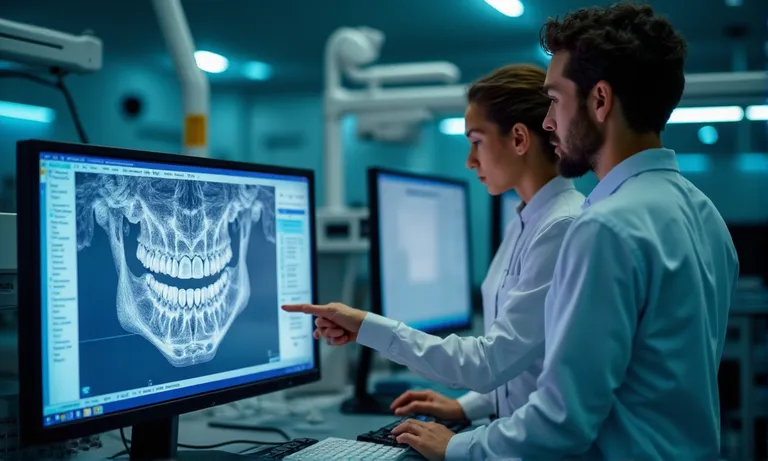
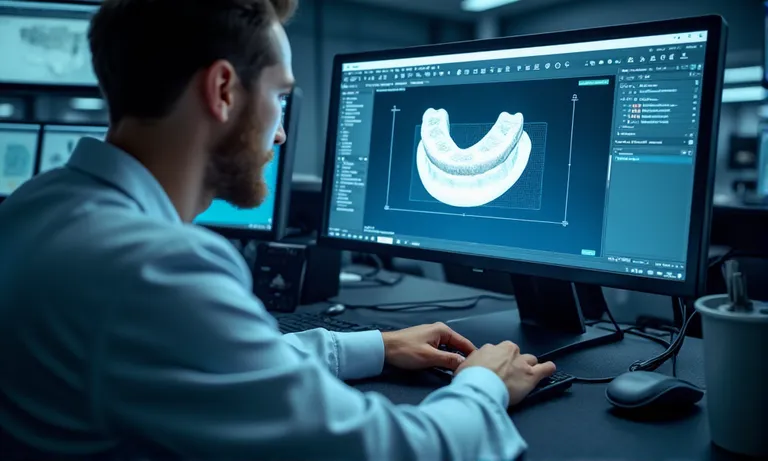
CAD design and margin line management capabilities
Designing for functional, esthetic, and biologically safe restorations starts with accurate margins.
Clear margin line interpretation from scan data
Anatomical contouring adapted to prep condition and opposing arch
Connector sizing that balances strength and esthetics in bridges
Occlusal scheme design based on case-specific loading and guidance
Poor design decisions—even with good scans—can lead to chairside adjustments or remakes.
STL handling and platform compatibility
Modern labs must adapt to varying file sources and scanning standards.
STL format support is essential for all incoming data
File correction tools for smoothing scan errors or trimming margins
Cross-platform nesting for CAM preparation (open vs closed systems)
Multi-format export (STL, PLY, OBJ) for downstream system compatibility
Without these skills, even digitally equipped labs can become bottlenecks.
Integration with intraoral scanners and cloud systems
Lab teams must align with the digital ecosystem used by clients.
Direct import from iTero, Medit, 3Shape TRIOS, and Planmeca systems
Cloud-based communication for scan reviews, approvals, or margin clarification
Live chat or screen share options for urgent scan issues or design walkthroughs
Feedback loops to log scan quality problems and reduce rework
Digital collaboration only works when both sides speak the same technical language.
A digitally fluent team ensures fast onboarding, fewer file issues, and stronger case precision. Contact us to review our scanner compatibility list and data transfer workflows if you’re evaluating digital fit for your clinic or lab.
How does the team support internal QC and quality feedback?
In a high-performing crown & bridge factory, technicians are directly embedded in the quality control loop—not just in production. Their early-stage involvement in checkpoints and structured feedback reduces remake rates, improves fit accuracy, and builds long-term consistency.
Root cause tagging: Error type is logged under design, CAM, ceramic, or finishing
Corrective action: Rework is completed with an updated report for internal tracking
Weekly team debrief: Patterns discussed to prevent repeated errors
This system shifts quality from reactive to preventive.
Process stability to reduce remake rates
When quality steps are embedded, remake risk naturally declines.
Role-based QC: Each step has a separate reviewer, not the producer
Visual benchmarks: Margin, contact, and anatomy expectations are standardized
Real-time dashboards: Error rate and case quality data are visible to leads
Technician ownership: Performance KPIs include accuracy and rework frequency
Technicians become invested in getting it right the first time—not just fixing later.
✅ QC success relies on cross-role technician participation – TRUE Remake prevention starts with early, embedded quality habits—not just final-stage inspection.
❌ Only dedicated QC inspectors ensure product quality – FALSE Limiting quality to inspectors ignores the upstream responsibility and insight of technicians.
What is the technician-to-case ratio and how does it impact scalability?
A dental factory’s ability to maintain quality at scale often comes down to technician-to-case ratio . The technician-to-case ratio reflects how sustainably a lab can handle growing demand without sacrificing consistency or turnaround.
Dental-Factory-Technician-Case-Ratio-Scheduling
Daily workload benchmarks in crown & bridge labs
Case volume per technician varies by restoration type and lab automation level.
Single-unit zirconia: ~15–20 units per day per technician (design to finish)
3-unit bridges or complex cases: ~6–10 units per technician
High-aesthetic anterior cases: ~3–5 units per experienced ceramist
Digital-only design roles: Can process ~20–30 units depending on scan quality
A realistic benchmark helps clients assess whether a lab is stretched or structured.
Managing peak periods and maintaining turnaround
Scalability depends on how well a lab absorbs case surges without delay or quality drop.
Flexible shift planning during holidays or promotional seasons
Case-type balancing to ensure complex cases don’t slow overall production
Overflow roles to absorb sudden remakes or urgent cases
Cross-trained teams who can rotate between design, polish, and QC as needed
A rigid team struggles during demand spikes, leading to remakes or delays.
Supporting large-volume orders with technical flexibility
Larger orders require coordinated response and technical infrastructure—not just more hands.
Batch scheduling aligned with scanner input and delivery deadlines
Dedicated teams for DSO accounts or regional distributors
Internal communication tools to coordinate updates across production steps
Mid-shift QC checks to catch scaling errors before shipment
Technical scalability isn’t about speed alone—it’s about replicable accuracy across volume.
A stable technician-to-case ratio is key to balancing quality and turnaround. Contact our team to assess how our technician capacity aligns with your case volume needs.
Conclusion
A dental lab’s technical team is the backbone of consistent crown & bridge delivery—and its structure directly impacts scalability, turnaround, and remake risk. Evaluating technician roles, digital fluency, and quality execution helps clients choose partners who can reliably support growth and clinical outcomes.
A competent factory ensures role-based technician structure and full-team coordination to maintain consistent production quality.