Digital workflow integration has become a defining factor in modern dental lab partnerships—influencing turnaround speed, remake rates, and overall collaboration stability. For dental procurement teams and lab decision-makers, assessing a lab’s technical capabilities is critical to ensure compatibility, precision, and scale.
A digitally mature dental lab should demonstrate:
Procurement managers can use these benchmarks to shortlist qualified labs, request pilot runs, and validate digital readiness—ensuring efficient, scalable collaboration in fully digital workflows.
A dental lab’s digital readiness directly impacts the stability, efficiency, and reliability of modern case collaboration. When technical capabilities are lacking, even a seemingly simple digital case can encounter bottlenecks, miscommunication, or data errors that delay delivery and erode trust. For procurement decision-makers, understanding how digital maturity influences outcomes is critical to avoiding unexpected costs and case failures.
dental-lab-case-delay-due-to-scan-issue
Labs that lack essential digital infrastructure often introduce friction across the workflow. Common issues include file rejection, communication delays, and remakes caused by design inaccuracies. These breakdowns typically happen at moments where speed and clarity matter most:
When a single file fails or a technician misreads a prep line, the result is often multi-day delays, back-and-forth clarification, or reprints—all of which extend chair time and disrupt schedules.
Even when lab prices look competitive on paper, choosing a partner without solid digital readiness can lead to significant hidden costs:
These costs often go unnoticed during vendor selection but become painfully clear during routine case handling. Labs that appear affordable may ultimately generate more overhead due to inefficiencies and workflow mismatches.
True digital readiness isn’t defined by having a scanner or using CAD software—it’s about system-level integration across every phase. Labs with integrated systems can receive, design, and manufacture cases in a synchronized, closed-loop workflow. This eliminates most data loss, formatting conflicts, or handoff issues. The benefits include:
Without full integration, each handoff creates a potential failure point. In contrast, integration ensures that what’s scanned is what’s designed—and what’s delivered.
✅ Technical readiness means more than having digital tools – TRUE
It reflects whether a lab can execute consistently, at scale, with minimal friction, minimizing communication breakdowns and ensuring consistency in outcomes.
❌ Any lab with STL support is equally prepared for digital workflows – FALSE
Scanner acceptance is not the same as operational maturity. Labs that simply accept files may still lack process alignment, validation checkpoints, or integrated CAD/CAM systems, making technical gaps the weakest link in collaboration.
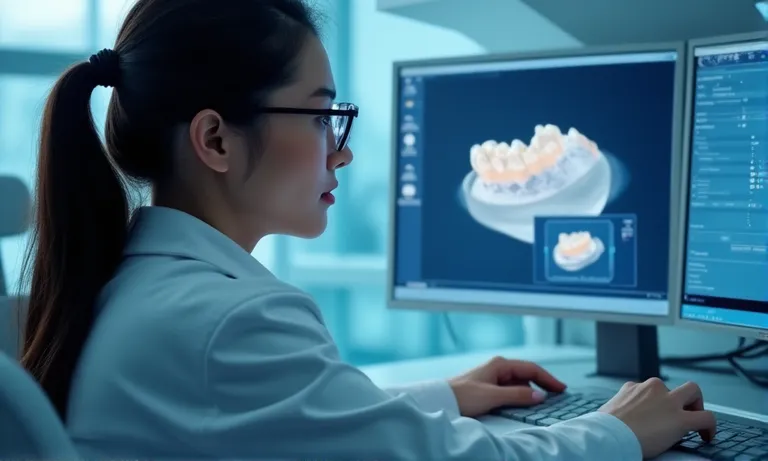
Compatibility in file formats and scanner systems forms the foundation of any efficient digital workflow. If a lab cannot seamlessly process your scanner’s output, the entire digital pipeline is at risk. Procurement teams should verify format and system support first—this step filters out labs that may struggle with data integrity, turnaround, and scanner-specific optimizations.
scanner-file-format-compatibility-check
Open formats ensure true interoperability and preserve critical scan details. Labs should support:
Supporting multiple formats reduces conversion errors and maintains scan fidelity. According to [Institute of Digital Dentistry], while STL remains the base standard, formats like PLY and OBJ are increasingly relevant for comprehensive digital workflows
Supporting open formats alone isn’t enough; labs should integrate with closed scanner ecosystems:
| Scanner Brand | Format(s) | Lab Integration Requirement |
|---|---|---|
| 3Shape TRIOS | DCM / STL | Direct intake via 3Shape Communicate portal |
| iTero | iRecord / STL | MyiTero portal access + STL mesh validation |
| Medit | STL / PLY | Native PLY mesh handling + color support |
| Planmeca & others | PLY / DCM | Open library integration + DCM mesh parsing |
| Carestream | STL | Variant STL formatting + auto-snap feature |
Labs that actively support these systems can avoid metadata loss, margin errors, and scanner-specific issues while enabling faster throughput.
Closed systems often require portal-based file delivery, not simple file uploads. Labs must demonstrate:
This flexibility ensures you can onboard digital cases smoothly across multiple scanner platforms, avoiding delays due to connectivity or account issues.
Key Takeaways:
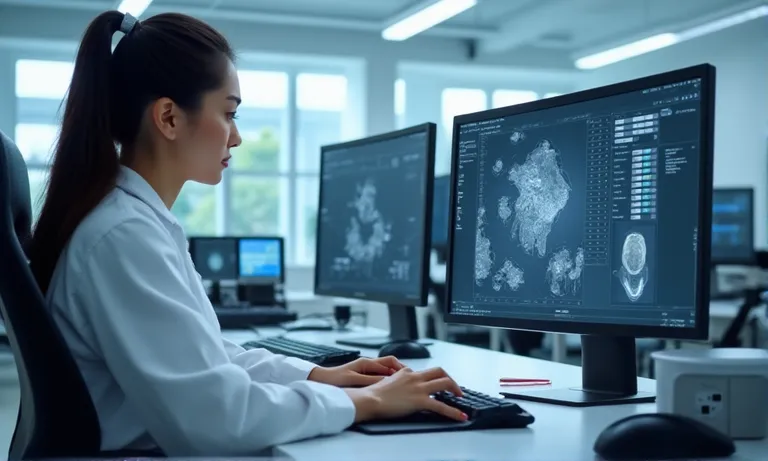
Digital maturity is not about owning CAD/CAM devices—it’s about how seamlessly design and production integrate to consistently deliver accurate, scalable outcomes. Labs with mature CAD/CAM workflows provide better fit rates, faster turnarounds, and predictable quality.
cad-cam-dental-lab-workstation
Design software determines how accurately and flexibly a lab can create restorations. Labs should support:
Supporting multiple platforms ensures compatibility with diverse clinic integration and minimizes file conversion errors.
The level of milling and printing equipment reveals production precision:
Industry analysis shows that 5-axis CNC systems enable higher precision and smoother surface finish compared to 3-axis setups
Hardware must be supported by robust quality protocols. A mature CAD/CAM workflow follows:
This structured chain ensures each restoration meets quality benchmarks and reduces reliance on technician intuition.
✅ 5-axis systems reduce manual adjustments and improve restoration fit – TRUE
Integration of rotational axes allows precise machining in complex geometries, resulting in restorations that seat better and require less modification.
❌ Owning CAD/CAM equipment alone indicates digital maturity – FALSE
True maturity stems from integrated software platforms, standardized workflows, and rigorous quality control, not just tools.
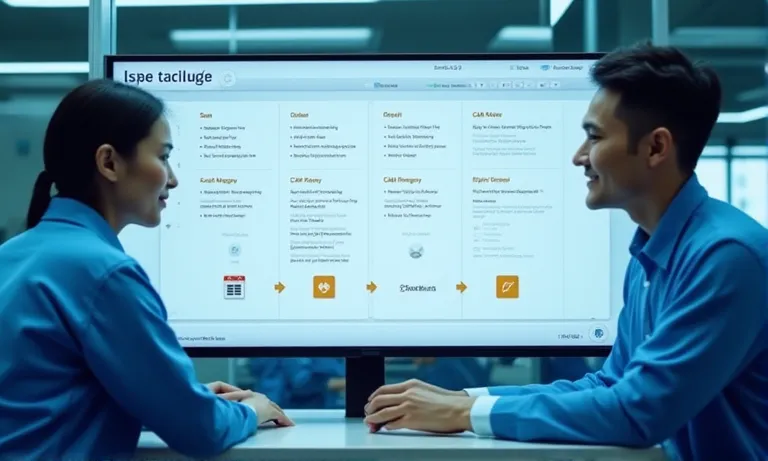
A lab’s ability to manage digital workflow isn’t just about equipment—it depends on how well the process is tracked, communicated, and coordinated from case intake to delivery. Without centralized systems, even the best digital scans can get lost in miscommunication, leading to delays, remakes, and frustration for clinics. The right tools can dramatically improve collaboration, visibility, and reliability.
dental-lab-workflow-management-dashboard
The intake portal is your lab’s front door. Mature labs use cloud-based portals that let clinics:
This eliminates fragmented email exchanges and lost files. According to Henry Schein’s lab, intake platforms significantly reduce communication bottlenecks and time spent on case clarification.
Communication must be embedded in the workflow—not handled separately through email or messaging apps. Look for:
These tools reduce errors caused by verbal confusion and support compliance documentation.
A transparent lab offers real-time case visibility across all phases. Your lab should enable:
This digital visibility helps clinics plan chair time and reduces follow-up messages to ask “Is it ready yet?”
✅ Using a workflow portal improves lab-clinic communication efficiency – TRUE
Portals centralize information, reduce misalignment, and enable faster response with visible status updates.
❌ Email and phone calls are sufficient for managing digital cases – FALSE
Traditional tools don’t scale, lack traceability, and introduce avoidable risk when managing high digital case volumes.
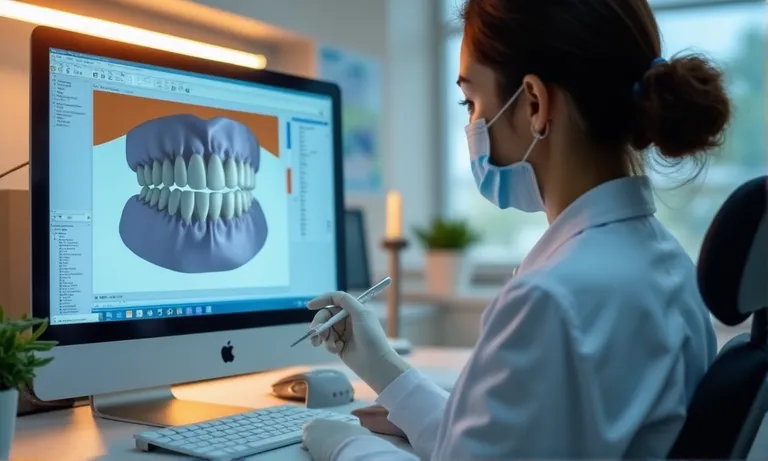
Not all scans are created equal. Even with advanced intraoral scanners, clinics often submit files that are incomplete, poorly margined, or require correction. A digitally capable dental lab should not passively accept flawed inputs—it must have clear protocols to clean, validate, and elevate incoming data before design begins. This is where true value is created.
dental-lab-digital-scan-cleaning-process
Most raw scans—even from top-tier scanners—require fine-tuning. A qualified lab will:
These actions prevent downstream design errors and reduce the risk of misfit.
Digital QA is critical. Before entering the CAD phase, a competent lab performs:
This avoids wasted time designing on bad data—and builds trust with the clinic.
Instead of silent rejection or “best effort” design, the lab should:
Proactive communication sets mature labs apart from passive ones—and saves clinicians from chairside surprises.
✅ Digital QA steps reduce remakes and delivery delays – TRUE
Early scan validation and cleanup prevent costly rework, improve lab efficiency, and deliver better-fitting restorations on first try.
❌ If the file opens, it’s ready for design – FALSE
Opening a file isn’t the same as validating it. Ignoring missing data, noise, or margin defects introduces hidden risks in downstream production.
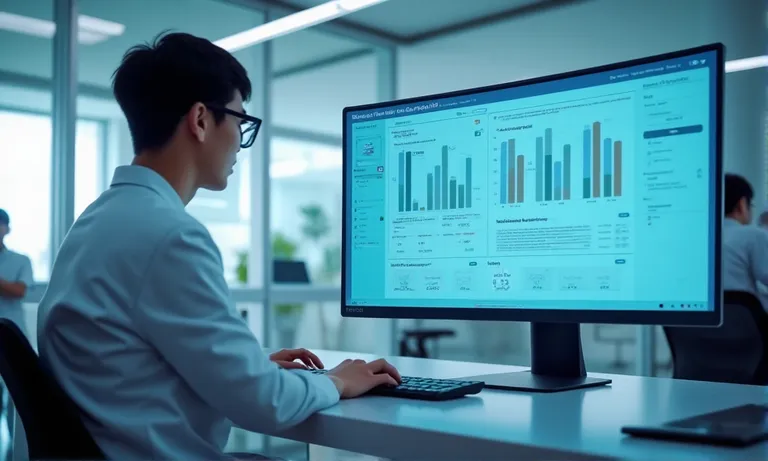
A lab’s ability to scale digital workflows consistently over time depends on measurable performance data—not promises. Evaluating specific indicators such as case volume, remake rates, and SOP implementation can offer a clear picture of how experienced and reliable a dental lab is in digital collaboration.
digital-lab-performance-metrics-dashboard
Volume indicates exposure and process maturity. Labs that handle hundreds to thousands of digital cases per month are more likely to have tested systems and smoother workflows.
Labs that only process a few digital orders sporadically often lack robust digital infrastructure, and may rely on manual intervention.
Remake rate is a key signal of real-world performance. While 0% is unrealistic, a rate consistently below 3% is generally acceptable in full-digital workflows.
| Metric | Benchmark Standard | Evaluation Insight |
|---|---|---|
| Digital Remake Rate | <3% | Indicates strong data validation and QC processes |
| Margin Adjustment Requests | <10% | Reflects scan clarity and technician interpretation |
| First-Time Fit Rate | >90% | Measures design precision and CAM alignment |
Low remake rates mean fewer disruptions for clinics and reduced cost of corrections, especially important in high-volume DSO collaborations.
Standard Operating Procedures (SOPs) create consistency and ensure team alignment, especially in multi-technician labs. Labs that use SOPs at every step of the digital flow minimize error due to technician variability.
Without SOPs, even a high-tech lab can suffer from human error and miscommunication, especially under load.
✅ More cases mean more maturity – TRUE
Labs with higher case volumes generally build faster feedback loops, resolve compatibility issues earlier, and stabilize workflow through repetition.
❌ Digital experience is just about having CAD machines – FALSE
Hardware alone doesn’t reflect digital readiness. Metrics like remake rate and SOP compliance show true capability.
Procurement teams evaluating a dental lab’s digital capability need clear, actionable questions to test readiness, compatibility, and real-world support. A well-prepared lab should be able to respond confidently with specific workflow details, not vague reassurances.
dental-lab-digital-capability-assessment-checklist
A digitally fluent lab should have a documented list of supported scanners and software versions. This includes open systems like 3Shape and Medit, as well as closed systems such as iTero and CEREC. Labs should also be able to advise on how to export files from less interoperable platforms.
A lab that cannot provide version-specific compatibility details may be prone to file rejection or misalignment issues.
Understanding the full toolchain—from design software to fabrication—is key to evaluating technical maturity.
| Component | Preferred Configuration | Evaluation Insight |
|---|---|---|
| CAD Software | exocad, 3Shape (licensed versions) | Signals design precision + workflow control |
| Milling Machines | 4-axis / 5-axis (Roland, VHF, etc.) | Indicates fine margin control |
| 3D Printers | High-res resin printers (Asiga, NextDent, etc.) | Enables flexible delivery options |
This level of transparency shows readiness and eliminates assumptions during trial collaboration.
Before committing to high-volume orders, labs should welcome small-scale test submissions to validate compatibility and turnaround.
A trial run uncovers friction points early—whether in file transfer, design logic, or communication delays—and helps both sides build trust.
✅ Prepared labs welcome detailed digital capability questions – TRUE
Labs with mature systems and equipment are transparent and supportive during technical evaluations.
❌ All scanners produce the same output, so any lab can work with them – FALSE
Scanner ecosystems vary widely. File integrity, margin clarity, and color depth can differ by system. Compatibility isn’t universal.
Raytops Dental Lab supports clinics and distributors across digital workflows by offering full compatibility, collaborative protocols, and infrastructure tailored for modern restorative dentistry. Our focus is not on directing the clinical process, but on strengthening the lab-side execution that empowers seamless collaboration.
raytops-dental-lab-digital-integration-support
Raytops accepts and verifies all industry-standard formats including STL, PLY, and DCM. Our systems are preconfigured for smooth integration with 3Shape, iTero, Medit, and Planmeca scanners. For labs and clinics with closed ecosystems, we assist with file export protocols and interoperability checks before onboarding.
Before entering CAD design, each submitted scan passes through a dedicated QC checkpoint. If issues are found—such as margin fuzziness or missing anatomy—our team offers suggestions, not clinical decisions.
This proactive support reduces remake rates and speeds case turnaround while staying within our technical role.
Our digital engineers are available during production hours to provide real-time feedback, address questions, or assist in cross-platform issues. This support is particularly valuable for clinics transitioning to fully digital workflows or conducting trial runs.
We don’t just receive files—we collaborate. That’s the core of our integration promise.
Raytops’ digital coordination systems are built to complement and empower your workflow—not to replace it. By focusing on compatibility, transparency, and rapid response, we aim to make digital dentistry easier, faster, and more reliable for every client.
Digital integration is no longer a bonus—it’s the baseline for effective lab-clinic collaboration. For dental practices and distributors seeking stable, scalable partnerships, a lab’s ability to handle digital files, support scanner compatibility, and maintain workflow transparency can directly impact both clinical outcomes and operational efficiency.
At Raytops Dental Lab, we approach digital dentistry not as a trend, but as a long-term infrastructure commitment. From STL validation to platform support and responsive engineering coordination, our systems are designed to align with yours—quietly, reliably, and efficiently. By working with a digitally mature lab, clients gain more than just production; they gain a partner who understands the cost of errors, the value of speed, and the importance of being seen, heard, and supported across time zones.
Digital collaboration doesn’t mean handing over control—it means unlocking smoother execution through the right partnerships.