Inconsistent reorder submissions, missed feedback, and capacity mismatches often derail what could be a productive lab-client relationship. These gaps slow production, trigger avoidable remakes, and strain communication—especially for clinics scaling case volume. By standardizing submission formats, structuring feedback workflows, and applying KPI-driven oversight through digital tools, labs can support reliable, efficient cooperation over the long term.
Long-term dental lab cooperation is supported by standardized reorder formats, default case preferences, structured client feedback loops, and KPI monitoring. Digital portals and SLA planning further enhance reordering accuracy and responsiveness, helping labs meet expectations at scale.
What Triggers a Successful Reordering Workflow Between Dental Labs and Clients?
Efficient reordering starts with consistency. A well-structured submission system—with saved templates, default preferences, and clear file formats—helps reduce back-and-forth, speeds up delivery, and minimizes the risk of remakes.
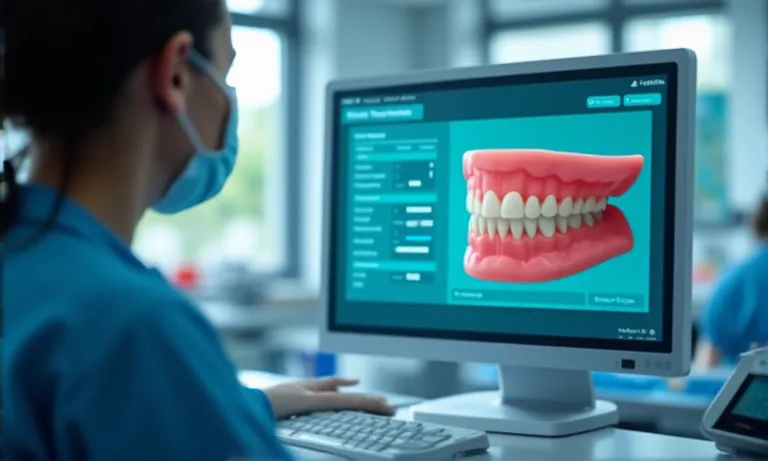
Dental-Reorder-Template-System
Standardizing Case Submission Formats for Repeat Orders
Inconsistent case files slow down production. Reorder-friendly workflows depend on predictability.
Use consistent STL naming conventions across all orders
Include full documentation even if the design is “same as last”
Predefine Rx format for repeat cases to minimize interpretation gaps
Use standard photo angles and shade reference formats across all uploads
Setting Default Material, Design, and Occlusion Preferences
Labs can store client preferences to streamline each future submission.
Set material defaults per indication (e.g., monolithic zirconia for molars)
Predefine margin types (shoulder, chamfer) per doctor preference
Specify contact tightness and occlusion clearance targets
Using Templates and Saved Profiles to Minimize Rework
Saved profiles allow labs to launch reorders without starting from scratch.
Clients can request profile setup after 2–3 successful cases
Profiles include design notes, model types, finish line detail, etc.
Future orders can reference a case number or label as “follow-up”
Internal tags in lab system help assign technician continuity when possible
✅ Standardized profiles and file formats reduce errors in repeat orders – TRUE A structured reorder system helps both sides save time, cut remakes, and reduce ambiguity.
❌ Every repeat case needs full redesign and fresh discussion – FALSE With stored preferences and templates, labs can process reorders confidently—even with minimal new instructions.
How Should Dental Labs Collect and Act on Ongoing Feedback?
Consistent feedback is critical for long-term quality control. To turn feedback into meaningful improvements, labs need structured channels, defined follow-up timelines, and clear responsibility paths.
Dental-Feedback-Loop-Portal
Types of Feedback That Matter: Fit, Aesthetics, Turnaround, Communication
Labs need actionable feedback to optimize production accuracy and service quality.
Fit & occlusion: Passive seating, tightness, or excessive adjustment
Esthetics: Shade mismatch, layering concerns, or surface texture
Turnaround time: Missed delivery window or inconsistent lead time
Communication: Unclear replies, delays in design confirmation, Rx handling
Feedback must be captured in a usable, traceable way—beyond informal messages.
Web-based forms or feedback sections in lab portals
Post-delivery surveys triggered after each order
Dedicated email for recurring clients with response logging
Quarterly follow-ups for high-volume clients by account manager
Tracking and Resolving Issues Raised by Clinical Teams
Once feedback is received, timely internal action ensures client confidence.
Feedback logged and assigned to account coordinator or case lead
Cross-check with original Rx, STL, or photos
Escalate to design or QC team for resolution if needed
Response and action documented within 2–3 business days
Update sent to client with resolution summary and improvement note
Building a strong feedback loop isn’t just about hearing clients—it’s about making improvements visible. When feedback becomes part of daily operations, labs and clients move together toward long-term consistency.
What Lab-side Mechanisms Help Respond to Client Feedback Proactively?
Proactive feedback handling is not about apologizing—it’s about anticipating. At Raytops, we’ve built layered mechanisms to turn clinical feedback into internal process upgrades, reducing repeat issues and building long-term trust.
Dental-Lab-QA-Feedback-Workflow
Internal Review and Case Escalation Systems
Every flagged case is logged and routed through a structured QA system.
Account coordinators tag issues in our internal feedback module
QC managers review cases with repeated complaints
Escalation to production leads for recurring design or technician-specific issues
Issues are scored and tracked for closure time and resolution quality
Design Revision Protocols Based on Recurring Issues
Clinical feedback often reflects deeper design misalignment—not just production error.
Adjust model trimming protocols for margin preservation if repeated distortion noted
Review design notes embedded in STL to align with real-world chairside results
Maintain “before and after” STL records for internal review and future benchmarking
Cross-team Learning: Sharing Insights from Repeated Feedback
One clinic’s comment often helps multiple teams improve.
Weekly technician debriefs to review case issues and outcomes
Knowledge-base entries updated for new scenarios (e.g., implant scan body misalignment)
Training sessions based on cumulative trends, not isolated feedback
Select cases anonymized for internal study and visual documentation
We treat every piece of feedback as a collaborative tool. If you’re managing clinical feedback across multiple sites or clinicians, we can help implement structured tracking, escalation response, and monthly case reviews to support your team’s consistency goals. Contact us to explore how we handle case QA resolution and feedback continuity.
How Do Volume Clients Manage Reordering Cadence and Prioritization?
For high-frequency clients like DSOs or multi-clinic groups, consistent reordering requires more than sending files—it needs a planned cadence, agreed capacity, and calendar coordination.
Dental-Lab-Volume-Reorder-Schedule
Standing Order Agreements and SLA Planning
Volume clients often benefit from structured standing order arrangements.
Define recurring case volume (e.g., “15 units per week on Mon-Wed”)
Establish SLA terms: turnaround, remake window, communication protocol
Allocate dedicated technician groups or CAD operators for client continuity
Joint holiday calendars shared at start of fiscal or contract cycle
Priority tagging for cases submitted near known closures
Optional “pre-batch” model: clients front-load key cases before breaks
Labs keep “protected capacity” for long-term clients with forecast alignment
✅ Structured cadence and planning reduce chaos in high-volume reordering – TRUE Volume doesn’t mean confusion—when supported by SLA, forecasting, and joint planning, large clients gain consistency and lab-side focus.
❌ More orders automatically lead to longer turnaround and higher error rate – FALSE With aligned rhythm and visibility, high-frequency clients often experience better performance than irregular ones.
What KPI Monitoring and Feedback Metrics Improve Cooperation Quality Over Time?
Tracking key performance metrics helps labs and clients align expectations, reduce misunderstandings, and build trust over time. At Raytops, we treat KPI transparency as a long-term cooperation tool—not just a scorecard.
Dental-Lab-KPI-Dashboard
Setting Quality KPIs: Remake Rate, On-Time Delivery, Communication Score
We monitor multiple indicators that directly impact client experience:
Remake rate: Tracks accuracy and quality consistency (target <2%)
On-time delivery rate: Measures reliability across standard & rush cases
Rx completeness rate: Percentage of cases received with full documentation
Case communication score: Based on timeliness and clarity of lab responses
Creating Performance Dashboards and Monthly Review Templates
Data is useful only when visible and contextualized.
Visual dashboards shared monthly or quarterly with volume clients
Trend lines highlight improvements or recurring issues
Templates include commentary from account managers & QA team
Optional benchmarks by case type (e.g., crowns vs bridges vs implants)
Leveraging KPI Data for Continuous Improvement
KPI reviews aren’t just about tracking—they should trigger actions.
Identify if a remake spike links to specific doctors, materials, or scan types
Adjust technician assignments or material protocols where needed
Use trends to update client-specific design profiles or clarify instructions
Prioritize training in response to communication or Rx gaps
KPI transparency builds mutual accountability. By sharing the same indicators, both labs and clients can work from facts—not assumptions—to refine workflow, cut delays, and grow trust.
How Can Digital Tools Enhance Reordering and Feedback Efficiency?
Efficient cooperation doesn’t rely on memory or email threads—it’s powered by systems. At Raytops, we’ve integrated digital tools that streamline reordering, improve traceability, and turn scattered feedback into structured action.
Flag if current case deviates from standard protocol
Review case previews or post-op notes for comparison
Integrating Feedback Collection into Case Management Platforms
Feedback becomes manageable when it’s part of the system—not an afterthought.
Feedback fields embedded in post-delivery screens or portals
Categorize input by topic: fit, esthetics, communication, turnaround
Auto-tag recurring issues for analytics or technician notification
Keep all feedback linked to original case for future audits
Digital tools bring clarity to scale. To explore how our portal system supports structured reorders and case tracking, reach out for a demo or share your clinic’s current tools—we’ll help map a compatible integration.
Conclusion
Building sustainable cooperation between dental labs and clients hinges on operational clarity, repeatable processes, and transparent communication. As case volume grows, standardizing reorders, tracking performance, and turning feedback into measurable action become the cornerstones of efficiency and trust.