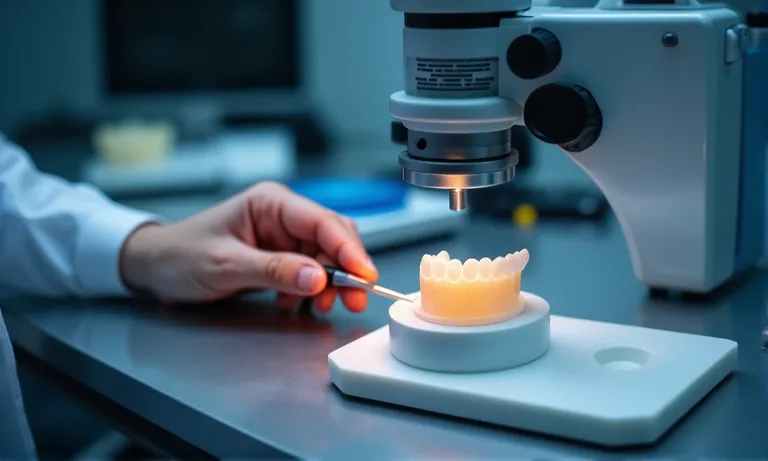
Quality issues in crown & bridge production don’t start at delivery—they begin when labs lack embedded checks across the process. When margin fit, shade accuracy, or documentation isn’t verified at each stage, avoidable remakes compromise trust and efficiency. Raytops Dental Lab supports clients with layered QC systems that span intake to shipment, helping clinics receive restorations that fit—both clinically and professionally.
Conduct in-process checks during design, milling, and layering
Perform a final inspection for fit, esthetics, and packaging accuracy
These QC steps help ensure clinical precision and minimize remakes.
What Quality Control Steps Should a Crown & Bridge Lab Follow?
A professional crown & bridge lab’s quality control (QC) process should be embedded across every production stage—from case intake to final shipment. This ensures each restoration meets clinical expectations, reduces remakes, and protects long-term client trust.
Milling QC: verify tool paths, material integrity, fit to printed model
Layering checks: anatomy consistency, internal stain positioning, porcelain application order
Stage-wise technician signatures: confirm check completion before proceeding
These checkpoints control output quality long before final delivery.
Pre‑shipping final inspection and QC sign‑off
Model fit verification: crown seats fully without rocking or pressure points
Contact and occlusion check: articulator used for dynamic assessment
Esthetics check: surface finish, shade accuracy, anatomical form
Documentation verification: packaging with correct labels, instructions, and certificates
Supervisor or senior technician sign-off
Final QC ensures clinical fit, aesthetics, and compliance before shipment.
✅ QC is a multi-stage process involving intake, design, and finishing – TRUE Well-structured labs embed QC across production, not just at the end.
❌ Final shipping inspection alone ensures quality – FALSE Last-minute checks can’t fix design flaws or upstream errors; layered control is essential.
How should a lab verify margin fit and passive fit before shipping?
Verifying margin fit and passive fit is essential before a crown or bridge leaves the lab. These checks help ensure the restoration seats accurately, avoids pressure points, and fits passively—especially important in implant or long-span cases.
Mismatch between scan and margin trace is flagged for revision
Technicians double-check prep clearance and emergence profile for restoration feasibility
Special attention is given to deep subgingival or rotated preps
A precise margin trace is foundational to a proper-fitting restoration.
Model seating/contact and occlusal testing on articulator
Printed model fit: crown or bridge is seated on model to confirm full seating without pressure
Static contact testing: articulating paper used to check occlusion points
Dynamic articulation: semi-adjustable articulators test lateral and protrusive function
Contact tightness: floss pass-through or shim test checks for open/tight contact
Proximal contour validation: ensures anatomical contact with adjacent units
These steps catch contact and occlusion errors before shipment.
Passive fit assessment especially for implant‑supported cases
Sectional model fit: bridges placed on sectioned model for passive seating
Screw channel stress test: bridge must seat without tension during screw tightening
Visual and tactile assessment: technician evaluates if slight pressure is needed
CAD verification: emergence profile, insertion path, and multi-unit platform matching are confirmed
Implant analog stability: confirms proper positioning and minimal tolerance issues
Passive fit prevents biomechanical complications in implant restorations.
A restoration that looks beautiful but fails to seat passively can compromise the entire case. Integrating both visual tools and physical verification steps ensures every unit sent is truly seatable and safe.
What protocols catch aesthetic and shade inconsistencies?
Consistent esthetics—especially shade, translucency, and surface detail—is critical to patient satisfaction. A crown or bridge may fit perfectly but still fail clinically if it appears mismatched in the mouth. That’s why every lab needs layered aesthetic QC protocols beyond mechanical checks.
VITA guide and internal shade references ensure consistent interpretation
Reference photos from clinics are cross-checked where available
Technicians use neutral background surfaces to avoid color distortion
Documented shade deviation reports help identify repeat patterns
Correct shade perception starts with lighting and standardization.
Layering/translucency quality checks
Porcelain layering consistency is compared across similar cases
Translucency zones (incisal, cervical) are visually examined under different angles
Stain and glaze patterning checked for even application and natural blending
Internal bubbles, delamination signs are flagged for remaking
Reference samples help standardize expectations in layered cases
Esthetic integrity requires both color and depth consistency.
Surface finish and anatomy verification
Microsurface texture checked for natural enamel-like reflection
Anatomical landmarks such as cusp angles, mamelons, and grooves verified
Final polish inspection under raking light reveals inconsistencies
Matched to the provided anatomical design references when available
Surface contamination or glaze pooling leads to rework if detected
A visually correct crown should reflect both beauty and natural form.
Esthetics may be subjective, but QC protocols make it reproducible. Proper lighting, clear reference inputs, and technical discipline ensure the crown delivered doesn’t just fit—but looks like it belongs.
How should quality data be tracked and analyzed?
Tracking quality data allows a crown & bridge lab to identify repeat errors, monitor technician performance, and reduce remake rates over time. A structured data system turns case-level QC into lab-wide insight—and ensures accountability.
Trend reports track category frequency, case type errors, and time lost to remake
Reports used for technician review and retraining
Data helps clinics track lab-side errors vs. clinic-side issues
Clients may request anonymized QA summaries as part of review cycle
Consistent data analysis builds continuous improvement culture.
Even the best lab has occasional remakes. What defines a reliable partner is how transparent the process is—and how clearly the data points to real improvement. Request our sample QA dashboard summary to see how your cases could be tracked and reviewed.
What mechanisms integrate lab‑clinic feedback and accountability?
Effective crown & bridge partnerships require more than technical skill—they need structured feedback loops and clear accountability. Labs that embed clinical response protocols and post-case tracking are better positioned for long-term collaboration.
Responsibility split defined: lab, clinic, or mutual
Escalation protocol for urgent remake cases with priority workflow
Fee waivers or discounts applied based on root-cause
Clients informed in advance of any exceptions or thresholds
Accountability builds trust, especially when things go wrong.
Documentation of technician‑clinic notes and resolution tracking
Case histories include technician notes on margin, design rationale, or client preferences
Each case includes a follow-up log, especially for complex bridges or implant cases
Resolution reports documented and reviewed monthly
QA team uses these records for technician retraining or SOP updates
Clients may request shared summary during performance review sessions
A transparent history creates continuity across reorders and evolving preferences.
✅ Structured feedback loops support long-term collaboration – TRUE Shared tracking tools and documented actions strengthen clinic-lab partnerships.
❌ Quality issues can be managed without feedback documentation – FALSE Without written records and resolution paths, problems repeat and accountability fades.
Conclusion
In crown & bridge restorations, consistency and accountability depend on structured quality control—not just experience. A reliable dental lab integrates verification and feedback from start to finish, supporting clients with traceable processes and proactive review cycles that prevent remakes before they happen.
A dependable lab should implement multi-stage quality control checks across intake, production, and final inspection—not rely on last-minute fixes.
Labs must confirm margin and passive fit accuracy before shipping, especially for implant or long-span cases where pressure-free seating is essential.
Aesthetic consistency protocols ensure that shade, surface finish, and layering meet patient-facing expectations, not just technical specs.