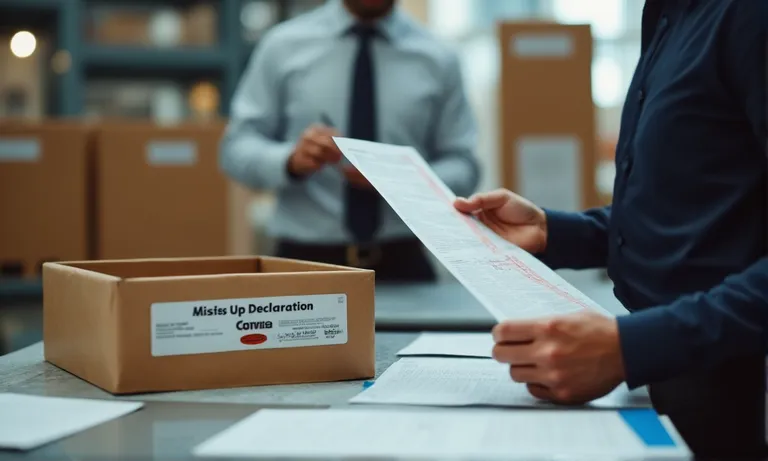
Shipping dental prosthetics internationally isn’t just about packaging—it’s about compliance.
Without the right documentation, shipments can be delayed, rejected, or fined at customs, disrupting workflows for both clinics and labs.
Understanding which documents are required—and how your lab can support them—is critical to smooth, compliant delivery.
This guide outlines the essential paperwork, classification codes, and region-specific rules you need to get right:
Whether you’re managing a first-time export or scaling international volumes, getting documentation right means faster clearance, fewer surprises—and a more reliable working relationship with your overseas dental lab.
Incomplete or inaccurate shipping documentation can cause customs delays, fines, and even confiscation of dental prosthetics—damaging patient outcomes and clinic-lab trust. When dental prosthetics cross international borders, paperwork is as important as product quality. A well-made crown means nothing if it’s stuck at customs.
dental-lab-customs-delay-shipment-box-opened
The risks go beyond inconvenience:
📌 In one case, a UK clinic ordered a rush zirconia bridge shipment. The lab listed the product simply as “Dental Material” with no HS code or device category. The package was held at Heathrow for five days, released only after re-submitting documents—past the patient’s scheduled appointment.
Even a minor documentation issue can disrupt weeks of planning:
| Scenario | Direct Impact | Clinic Consequence | Business Risk |
|---|---|---|---|
| No HS code on invoice | Shipment held for clarification | Missed surgery slot | Client dissatisfaction |
| Vague product description | Customs flags for inspection | Need for rework if deadline missed | Extra cost, loss of trust |
| Value declared too low | Customs imposes fines | Clinic asked to explain | Reputation damage |
Labs that treat paperwork as “just admin” often face escalating indirect costs—remakes, refunds, and client churn.
Both parties have defined roles. Here’s a typical division:
| Task | Lab Responsibility | Clinic/Buyer Responsibility |
|---|---|---|
| Generate commercial invoice | ✅ Yes | 🔲 No |
| Ensure HS code and device description | ✅ Yes | 🔲 No |
| Provide case ID and patient reference (if needed) | ✅ Yes | ✅ Yes |
| Select declared value | 🔄 Shared (must agree) | 🔄 Shared |
| Confirm destination/import license details | 🔲 No | ✅ Yes |
| Respond to customs inquiries | ✅ Yes (for origin-side) | ✅ Yes (for receiver-side) |
At Raytops, we train our logistics team to review every outbound case’s documentation checklist before shipment. That includes cross-checking HS codes, invoice details, and declared value based on clinic input. It’s not just about clearing customs—it’s about keeping cooperation smooth and predictable.
Exporting dental prosthetics internationally requires a specific set of documents—each serving a distinct legal, logistical, or financial purpose. Missing or poorly filled paperwork is one of the top causes of customs clearance delays, even when the products are accurate and properly packed.
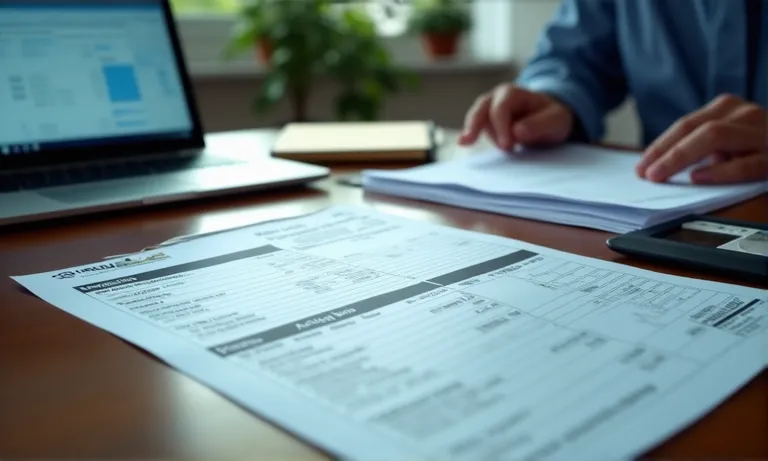
dental-export-shipping-documents-desk-review
The commercial invoice is the cornerstone of all cross-border shipments—it acts as both a declaration and a contract.
It should include:
Customs officers often rely on the invoice for classification, tax calculation, and legality of movement. Mislabeling a crown as “plastic model” or “lab sample” risks seizure or revaluation.
Each document serves a unique role in the shipment chain:
In our lab, we prepare all three for every outbound shipment. Even if not all are requested by the destination country, having them ready reduces friction.
Yes—especially when your client benefits from free trade agreements (e.g., EU-China, ASEAN-China).
A certificate of origin (COO) verifies the country where the product was manufactured. It can:
We’ve seen clinics in Canada reduce VAT impact by 8–10% when the COO was submitted upfront.
These documents are optional—but highly recommended for high-value or time-sensitive shipments:
Using LOIs, some clients specify “no refrigeration” or “no x-ray scanning” when needed.
Having a full document pack—commercial invoice, packing list, airway bill, certificate of origin, and (if needed) insurance or LOI—greatly increases the success rate of cross-border deliveries. As a global dental lab, we generate these documents in-house for every shipment, ensuring our partners spend less time chasing paperwork and more time with patients.
To export dental prosthetics legally and smoothly, labs must correctly declare the right HS codes, device classifications, and—in some cases—medical export licensing details. Misclassification may trigger customs delays, overpayment of duties, or even legal inquiries in certain jurisdictions.

dental-prosthetics-hs-code-declaration-form
Most dental restorations fall under the following HS code:
Important considerations:
We once supported a client shipping to the UAE who had used a generic code for their PFM crowns. Customs reclassified the item, imposed a 5% revaluation fee, and held the shipment for 72 hours.
Yes—if your destination country regulates dental prosthetics as medical devices, which most developed markets do.
Key markers include:
Including these markers speeds up border clearance, especially for first-time shipments.
In most cases, dental prosthetics are considered Class I non-invasive medical devices and do not require a specific export license or ECCN (Export Control Classification Number).
However:
At Raytops, we maintain a classification database to ensure every shipment’s HS code, device class, and regulatory reference match the destination country’s import rules. This reduces inquiry rates and ensures customs documentation is correct the first time.
For official reference, see the WCO HS Nomenclature tool for updated dental product codes by country.
Correct classification isn’t just about getting past customs—it’s about ensuring your shipment reflects professionalism, compliance, and transparency. That’s how long-term partnerships are built across borders.
Incorrect declared value or vague product descriptions can trigger customs audits, insurance disputes, and delivery delays. Clinics and labs must agree on how to describe and value dental prosthetics in a way that is truthful, compliant, and defensible—without unnecessarily increasing tax or risk exposure.

dental-prosthetic-declared-value-customs-form
Attempting to minimize duties by declaring a low product value or using ambiguous descriptions like “dental item” or “sample” can lead to:
One lab-client shipment to Singapore was declared as “lab test sample – no commercial value” and valued at $1. Customs held the item for three days, imposed a 10% fine based on market valuation, and flagged the sender’s future shipments for manual review.
Declared value should meet three criteria:
For insurance purposes, over-declaring (e.g., claiming $500 on a $120 case) may raise issues. Under-declaring puts the lab or clinic at financial risk if claims arise.
We recommend keeping value declarations consistent with your actual invoicing records—this protects both customs trust and claim eligibility.
Responsibility should be shared and explicitly confirmed before shipment. Here’s a typical division:
| Decision Point | Lab | Clinic/Buyer |
|---|---|---|
| Prepare commercial invoice | ✅ | 🔲 |
| Assign base product cost | ✅ | 🔲 |
| Request specific declared value (e.g., for tax optimization) | 🔲 | ✅ |
| Final value confirmation before dispatch | 🔄 | 🔄 |
At Raytops, we confirm the declared value with the client before every international shipment. If no preference is expressed, we default to the invoiced production cost plus handling, rounded conservatively for customs transparency.
Uniformity matters. If your invoice, airway bill, insurance form, and customs declaration all list slightly different terms (e.g., “zirconia crown,” “dental product,” “Class I prosthetic”), this increases the chance of:
Use one standardized phrasing across all documents:
“Custom-made zirconia dental crown – Class I non-invasive medical device, not for resale.”
This type of description meets most customs classification standards and removes ambiguity about purpose, device class, and commercial intent.
Careful coordination of declared value and product description isn’t about pleasing customs—it’s about avoiding unnecessary disruption, protecting shipments, and maintaining smooth collaboration. As an overseas dental lab, we work closely with each client to ensure the numbers and language we submit reflect accuracy, fairness, and mutual trust.
Documentation requirements for dental prosthetics vary significantly across regions. A document set that clears customs in the U.S. may be insufficient or noncompliant in the EU or Southeast Asia. Understanding these differences—and working with a lab that proactively manages them—is essential for smooth international delivery.
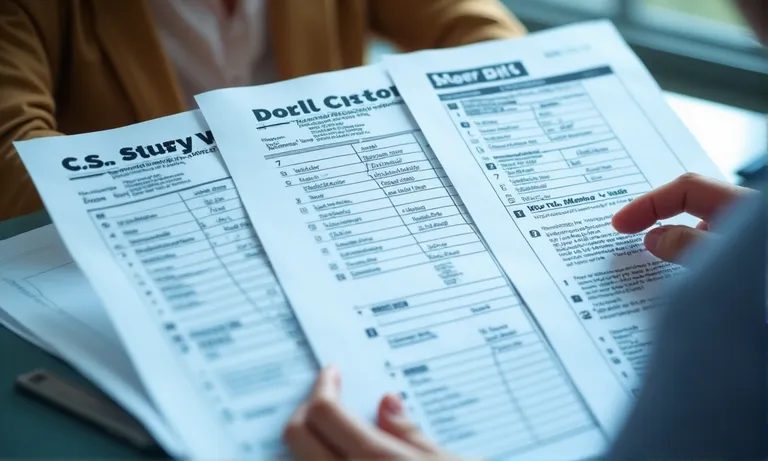
dental-export-documents-us-eu-sea-variants
Here’s a comparison of common documentation requirements across major markets:
| Requirement | U.S. | EU | Southeast Asia |
|---|---|---|---|
| Commercial Invoice | ✅ Required | ✅ Required | ✅ Required |
| HS Code | ✅ Must match FDA import | ✅ Must match TARIC entry | ✅ Often loosely enforced but needed |
| CE Marking | 🔲 Not required | ✅ Mandatory | ⚠ May be requested in Singapore, Thailand |
| FDA Registration | ✅ Must appear for medical goods | 🔲 Not applicable | 🔲 Rarely requested |
| Certificate of Origin | 🔲 Optional | ✅ Often required for FTA | ✅ Encouraged for tax exemption |
| Language Requirements | English only | Native + English (optional) | English or local variant (e.g., Bahasa, Thai) |
We’ve seen EU-bound shipments rejected for missing CE symbol on the invoice, while a similar package cleared the U.S. with no issue. Labs that copy-paste documentation across destinations risk non-compliance without realizing it.
Yes—in certain countries, dental prosthetics fall under controlled medical goods requiring clinic-side or buyer-side import permits.
Examples include:
These permits are usually the clinic’s responsibility, but the lab must align documentation accordingly (e.g., invoice language, device labeling).
Yes. While most countries treat crowns and bridges as low-risk devices, some require additional declarations such as:
In our experience, some Southeast Asian authorities may request stainless-steel component composition details, especially if there are material import restrictions.
We support clients by pre-approving documentation formats that include these items when needed, and flagging additional certificate needs during case intake—not when the package is already en route.
Understanding country-specific rules isn’t just about compliance—it’s a signal that your lab partner is capable, reliable, and globally aware. As a dental lab with multi-region export experience, we help clients adapt documents for each market, rather than sending a one-size-fits-all file.
Reliable documentation support is no longer a bonus—it’s an operational necessity. When exporting dental prosthetics, clinics and procurement teams increasingly expect labs to not only produce devices, but also help prepare, verify, and coordinate the necessary paperwork for international compliance.

A professional dental lab should be able to provide all basic export documents, including:
At Raytops, our shipping team uses pre-approved templates for all core documents, reviewed periodically to stay aligned with customs practices in the U.S., EU, and Asia-Pacific.
Each of these elements has specific implications:
This alignment ensures customs accuracy and minimizes dispute or delay risks at the point of entry.
We remain actively involved post-shipment. Typical support includes:
In one recent case to France, the package was held because the airway bill lacked CE marking reference. Our team reissued an updated invoice within two hours, which cleared the item without penalty the same day.
While export licensing typically falls on the importer or distributor, some labs can offer additional help:
We’ve supported partners in Saudi Arabia, Indonesia, and Chile by providing origin traceability files, material specs, and purpose-of-use declarations—all within the lab’s role as manufacturer and shipper, not legal exporter.
Documentation support is part of building trust—not an extra task. A responsive lab partner should help ensure paperwork doesn’t become the weakest link in cross-border cooperation.
Exporting dental prosthetics successfully depends on more than just high-quality manufacturing—it requires precise, compliant documentation at every step. From HS codes and declared values to airway bills and country-specific permits, getting the paperwork wrong can mean delays, fines, or even lost cases.
That’s why choosing a lab that understands international shipping protocols is essential. As an experienced overseas dental lab, we work closely with clients to prepare export-ready files, align on compliance standards, and respond quickly when customs issues arise.
When your documentation is right the first time, your logistics become smoother, your shipments arrive faster—and your trust in your lab partner grows stronger.