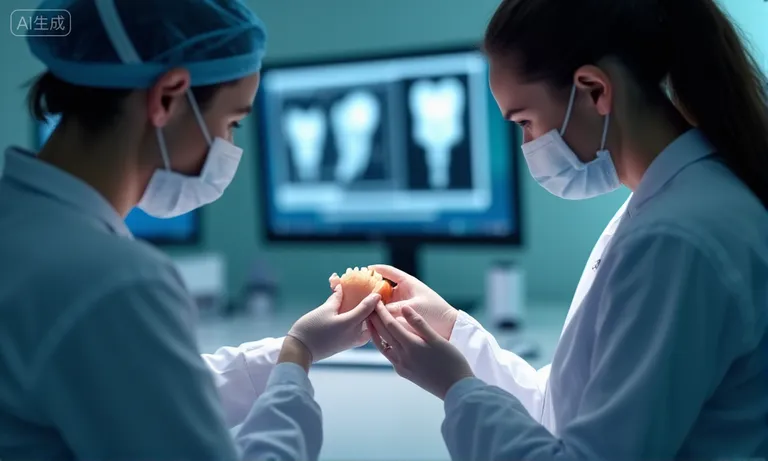
Choosing a dental lab with 3D printing capabilities can directly improve the efficiency, accuracy, and consistency of implant restorations. Unlike traditional workflows that rely on manual steps, digital scanning and additive manufacturing deliver restorations with greater precision and fewer errors, leading to more predictable outcomes. This shift reduces the risks of remakes and delivery delays while strengthening clinical and procurement confidence.
Key factors buyers should evaluate include:
By focusing on these dimensions, procurement leaders can identify lab partners who not only meet today’s demands but also enable long-term collaboration built on reliability and scalability. In this context, 3D printing is not just a technological upgrade—it is a strategic advantage in supplier selection.
3D printing improves implant precision by eliminating distortions from traditional methods, producing restorations with consistent marginal fit, and using design software to ensure repeatable accuracy. For clinics and procurement teams, this means fewer remakes, smoother chairside adjustments, and greater confidence in long-term outcomes.
Dental-3D-Printing-Precision-Accuracy
Traditional impressions can shrink, tear, or trap bubbles, which often leads to misaligned stone models. Digital impressions captured with intraoral scanners record data at micron-level precision, eliminating these distortions. For labs, this creates a consistent and trustworthy baseline for restoration design, significantly reducing the chance of early-stage errors that later cause remakes.
With 3D printing, restorations are built directly from CAD designs rather than hand-waxed or cast.
Design software integrates with digital scans to define exact margins, occlusion, and anatomy. Once a case is designed, the same file can be reproduced as many times as needed with identical precision. This repeatability ensures that even when multiple restorations are fabricated—such as crowns across different quadrants—accuracy remains consistent, avoiding variation across cases.
From the perspective of an overseas dental lab, 3D printing is not just about producing restorations faster; it is about producing them right the first time. Buyers working with labs that integrate digital impressions, CAD design, and 3D printing can expect lower error rates, fewer remakes, and greater reliability in implant restoration outcomes.
3D printing accelerates implant restorations by shortening design-to-production workflows, reducing delays in case submission, and ensuring outsourcing partners can deliver predictable turnaround without compromising quality. For buyers, this means smoother logistics and faster chairside readiness.
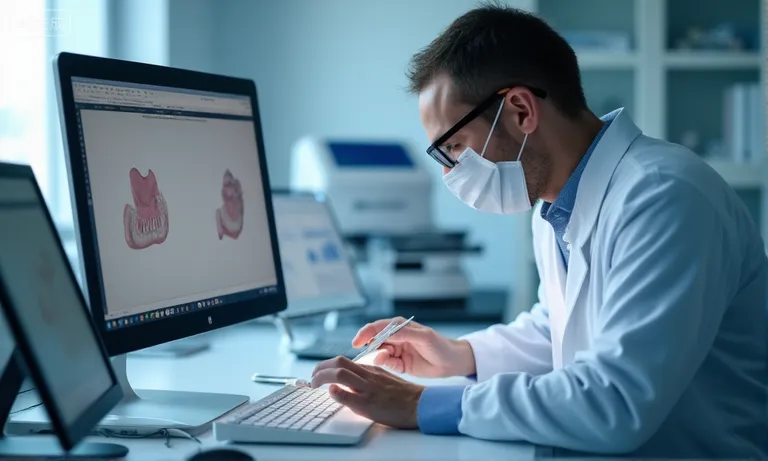
Dental-3D-Printing-Speed-Workflow
With digital scanning and 3D printing, several workflow stages speed up significantly:
Digital compatibility ensures smoother collaboration between clinics and labs:
One dental group in Australia used to face turnaround times of nearly four weeks when working with a traditional lab. By outsourcing to a 3D-enabled overseas dental lab, the group cut delivery to under two weeks—even with international shipping. The combination of digital submissions, automated modeling, and 3D printing allowed them to serve patients faster without sacrificing quality, proving that outsourcing can improve both speed and consistency.
For procurement teams, the value lies not only in faster fabrication but in the reliability of delivery schedules. A lab with 3D printing capability turns workflow acceleration into predictable, scalable results.
3D printing enables labs to deliver highly customized implant restorations while maintaining the efficiency needed for large-scale case volumes. From full-arch restorations to material flexibility and workflow balance, it ensures that personalization does not come at the cost of reliability.
Full-arch and multi-unit restorations demand precision across multiple implants. Traditional casting methods often lead to misalignment and repeat adjustments. With 3D printing, frameworks and surgical guides are generated directly from digital plans, ensuring consistent accuracy across every implant site. This allows labs to handle complex cases in fewer steps, improving efficiency while reducing the risk of errors.
Different clinical scenarios require different materials:
A U.S. distributor once shared a challenge: their clinics struggled with full-arch restorations that required multiple remakes due to poor framework adaptation. When they shifted to working with a 3D-enabled overseas dental lab, each framework was printed directly from digital scans, and the restorations seated correctly on the first try. The lab also managed to standardize timelines so that even highly customized full-arch cases were delivered within three weeks, instead of the two-month delays they previously faced. This balance of personalization with predictable scheduling allowed the distributor to scale its service offering while keeping client trust intact.
For procurement teams, 3D printing offers not only case-by-case customization but also the operational reliability needed to scale implant restorations across multiple clinics and regions.
3D printing-enabled dental labs deliver cost savings and collaboration benefits by reducing remake rates, eliminating hidden workflow inefficiencies, and offering transparent pricing models. For buyers, this combination translates into stronger ROI and more predictable long-term partnerships.
Dental-3D-Printing-Cost-Collaboration
Every remake represents wasted material, technician time, and shipping expense. By minimizing errors through digital workflows and 3D printing, labs dramatically cut these costs. For procurement teams, the savings compound over time, making the total cost of ownership lower than working with a lab that has higher remake rates—even if unit pricing appears similar.
Workflow interruptions often create expenses that are not captured in quotations:
A Canadian DSO once noted that one of their biggest frustrations with previous partners was vague pricing that excluded remake and reshipment costs. When they switched to a 3D-enabled overseas dental lab, the quotations clearly listed remake rates, shipping terms, and volume-based pricing tiers. This transparency allowed the DSO to forecast budgets more accurately and strengthened collaboration. For buyers, clear cost models are not just about pricing—they are signals of reliability and partnership readiness.
From the perspective of an overseas dental lab, cost and collaboration advantages are built on both precision and openness. Buyers who prioritize remake control, workflow stability, and transparent pricing will see stronger financial and operational outcomes from their implant restoration partnerships.
Evaluating a lab’s 3D printing capability requires more than checking if they own printers. Buyers need to examine certifications, operational performance, and how fairly the lab can be compared against alternatives. These factors reveal whether a lab can consistently deliver implant restorations at scale and with accountability.

Dental-3D-Printing-Lab-Evaluation
Certifications validate that a lab’s processes meet international standards. ISO 13485 confirms medical device quality systems, while CE or FDA clearance ensures materials and devices meet regulatory requirements. Beyond paperwork, documented QA policies—such as incoming material checks and routine printer calibration—demonstrate that the lab treats quality as an ongoing process, not a one-time achievement.
Key performance indicators signal whether a lab is equipped for reliable scale-up:
A U.K. distributor once compared two labs: both advertised 3D printing, but the results were vastly different. One lab had cutting-edge printers but no clear QA reporting, leading to frequent delays and unexplained remakes. The other—an overseas dental lab—combined ISO certification, transparent remake statistics, and clear turnaround commitments. Although both promoted “3D printing,” only the second demonstrated reliability at scale. The distributor chose the latter, and within six months, case delays dropped by 40%. The lesson: true evaluation means looking beyond technology claims to the lab’s proven processes and accountability.
For buyers, evaluating certifications, operational benchmarks, and transparency ensures that selecting a 3D-enabled lab is not a gamble but a strategic decision.
3D printing offers clear benefits for implant restorations by reducing errors, improving precision, and accelerating turnaround without compromising quality. For procurement teams, the advantages go beyond technology: lower remake rates, predictable delivery schedules, and transparent cost structures create measurable value in long-term partnerships. Reliable labs combine advanced digital workflows with robust QA systems, ensuring that customization and scalability can coexist. As an overseas dental lab, Raytops Dental Lab supports clinics, DSOs, and distributors worldwide by aligning 3D printing capability with accountability, giving buyers confidence that implant restorations will be delivered accurately, efficiently, and consistently.