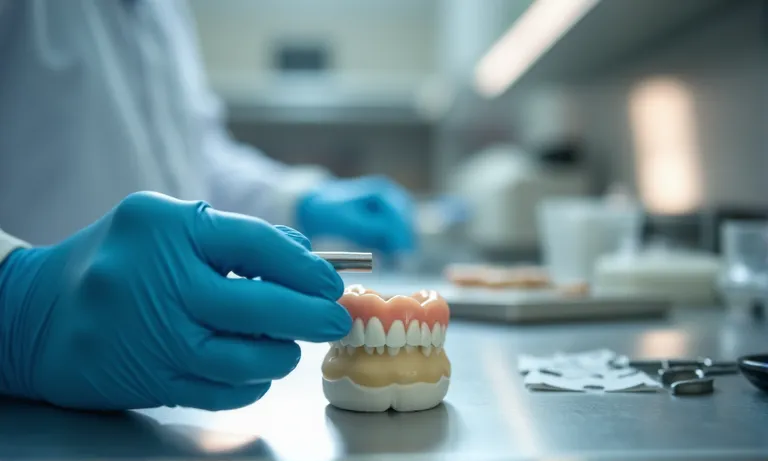
Custom metal post & core restorations are critical for cases with compromised tooth structure, where standard prefabricated posts fall short. This article breaks down the cost-influencing factors of these restorations from both clinical and dental lab perspectives, helping dental professionals and procurement managers make informed, cost-effective decisions without compromising quality.
Custom metal post & core restorations are influenced by multiple factors including case complexity, canal anatomy, lab fabrication method, material choice, and communication accuracy between clinic and lab. These elements determine technician time, material waste, and fit precision, which collectively drive the final restoration cost.
Custom metal post & core restorations are used when a tooth has extensive structural loss and cannot retain a crown on its own. These restorations offer a custom-fit substructure for optimal support and long-term crown stability. For dental clinics and private practitioners, understanding when customization is needed—and how it differs from prefabricated options—can directly impact restoration success rates and lab collaboration efficiency.
Custom-metal-post-core-fit-dental-lab
Custom post & core restorations are typically required when canal shapes or alignments deviate from standard anatomy. At Raytops Dental Lab, we often encounter such cases from clinics dealing with:
In these scenarios, custom metal posts ensure full adaptation to the internal anatomy, reducing micromovement, improving retention, and ultimately minimizing the risk of post debonding or core fracture.
Not all cases require a custom solution, but understanding the trade-offs is key to making an informed choice. Below is a side-by-side comparison based on common clinic scenarios:
| Feature | ✅ Custom Post & Core | ❌ Prefabricated Post |
|---|---|---|
| Fit accuracy in irregular canals | Tailored to canal shape | Often suboptimal, may require cement buildup |
| Time required at chairside | Minimal adjustments needed | May require modification or multiple tries |
| Risk of post debonding | Lower due to intimate adaptation | Higher due to poor fit |
| Initial unit cost | Higher upfront | Lower upfront |
| Long-term stability | High with proper case selection | Variable based on fit |
In practice, we recommend custom metal posts when anatomical complexity, alignment challenges, or high occlusal loads are present. Prefabricated posts remain suitable for straightforward, single-rooted cases with good canal geometry.
✅ Custom posts ensure longevity in complex cases – TRUE
When canal anatomy is atypical or when long-term retention is critical, a lab-made custom post offers a significantly better fit, reducing long-term complications.
❌ Prefabricated posts are always suitable – FALSE
While they serve well in standard cases, relying solely on stock posts in complex anatomies often leads to compromise in fit, function, or aesthetics.
The workflow choices made by your dental lab partner directly influence the cost and consistency of custom metal post & core restorations. For dental clinics, DSOs, and procurement managers, understanding how lab-side decisions—such as modeling method, technician labor, and material handling—translate into cost variability can support better collaboration and case planning.
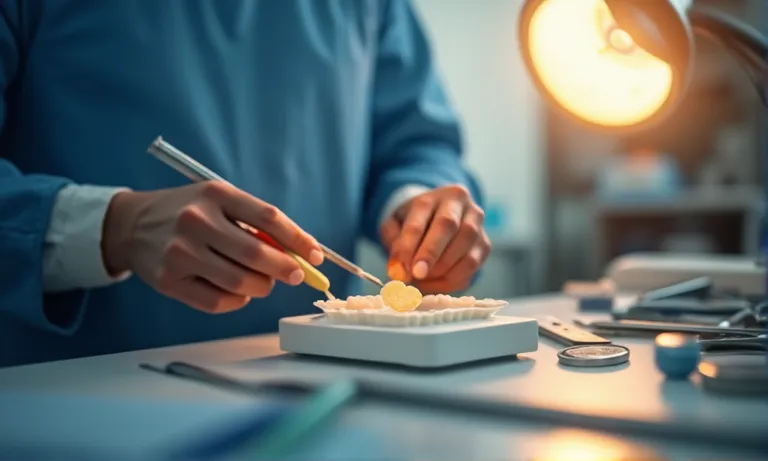
Dental-lab-post-core-casting-process
Cases that require custom posts often share certain clinical or structural indicators. For labs like Raytops Dental, these signs influence not only case planning but also time and resource allocation:
From a lab’s perspective, identifying these indicators early—especially through detailed Rx forms or intraoral scans—streamlines case prep and minimizes remakes. When these complexities are communicated late or insufficiently, labs must allocate additional technician time, re-modeling, and fitting checks, all of which increase unit cost.
Below is a breakdown of key workflow decisions that commonly drive cost increases:
✅ Detailed case planning reduces lab-side rework – TRUE
Clear communication of canal shape, margin location, and post space improves workflow efficiency and helps control costs.
❌ All lab workflows cost the same regardless of case complexity – FALSE
Custom posts vary widely in design and technical demands. More complex cases require more steps, time, and quality assurance, all of which impact final pricing.
The cost of a custom metal post & core is closely tied to material selection. Each alloy carries different implications for strength, biocompatibility, radiographic visibility, and market volatility. For procurement leads in DSOs, private dentists, and partner labs, understanding how these factors affect pricing helps in both clinical planning and vendor negotiation.

Dental-metal-materials-comparison-post-core
Choosing between different metals isn’t just about price—it’s about balancing cost with clinical needs and lab capability. Below is a comparative breakdown we use internally when clients are unsure about their material direction:
| Metal Type | 💡 Strength & Fit | 🔬 Biocompatibility | 💰 Relative Cost | 🦷 Use Case Scenario |
|---|---|---|---|---|
| Titanium | High | Excellent | Moderate | Long-term restorations, high biocompatibility priority |
| Stainless Steel | Moderate | Acceptable | Low | Posterior cases with low esthetic demand |
| Noble Alloy (e.g., Gold) | Excellent | Excellent | High | Premium anterior cases, patient preference for longevity |
Titanium is often the best all-around option, while stainless steel remains a budget-conscious choice. Noble alloys are reserved for specialty requests due to their high and fluctuating cost.
From a lab’s perspective, alloy purity directly impacts:
We often see rework or lab-client misalignment when alloy selection is not aligned with the patient’s history or clinician’s priority.
Clinics often ask us to prioritize radiopacity for post-operative assessment. Material choice affects this:
Lab input can help balance radiopacity needs with overall restoration goals—especially when clinicians submit imaging as part of the prescription.
Global commodity pricing significantly affects custom post costs—especially for noble metals. Lab pricing models must flexibly adapt to:
At Raytops Dental, we maintain a rolling cost tracker for high-volatility metals and offer clients quarterly updates to support long-term cost planning.
To summarize, the metal you choose affects not just unit cost but long-term performance and patient safety. A material that aligns with case demands, imaging preferences, and supply stability ensures smoother collaboration between lab and clinic.
If you’re weighing material options for specific case types or patient profiles, we’re happy to share how we typically approach these selections across different markets.
Fabrication choices within the dental lab play a significant role in determining the total cost of a custom post & core restoration. For dental clinics and procurement teams, understanding these variables helps explain price differences across cases—and informs more efficient collaboration with labs like Raytops Dental.
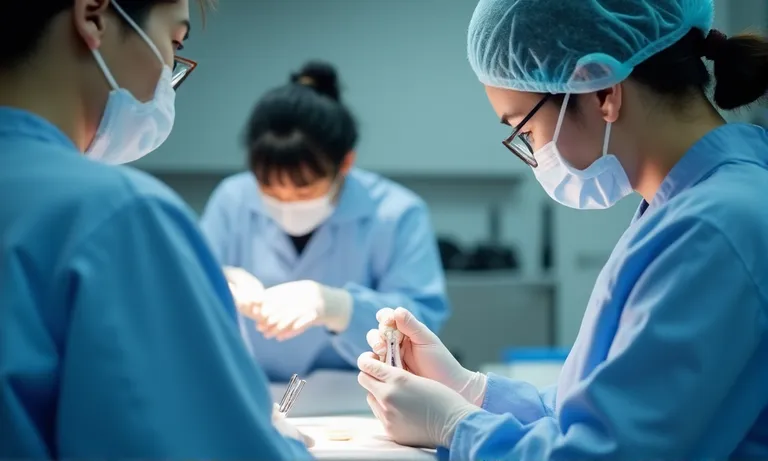
Dental-lab-CADCAM-vs-manual-post-fabrication
The production method directly affects turnaround time, material waste, and technician labor. Here’s how the two approaches typically differ:
| Aspect | 🔧 Manual Fabrication | 💻 CAD/CAM Fabrication |
|---|---|---|
| Technician labor | High | Lower once design is digital |
| Reproducibility | Depends on technician skill | High precision, consistent |
| Setup time | Low (simple wax-up) | Higher initial scan/design |
| Cost per unit (small batch) | Often lower | Higher (due to setup time) |
| Cost per unit (large batch) | Higher | More economical at scale |
At Raytops, we evaluate case complexity, margin visibility, and restoration volume before deciding which method is more appropriate—always balancing cost with accuracy.
Cases involving multiple components—such as separate core build-ups, cast-in-place ferrules, or parallel-sleeve systems—increase lab workload and materials usage:
Clinics submitting such cases should include clear diagrams or scan files to reduce remakes and delays.
High-precision fit requires:
Poor die models or unclear path angulation data often require repeat attempts—driving up both time and unit cost.
Rush orders or re-fabrication requests compress normal production timelines. Cost increases typically result from:
We recommend aligning expectations on turnaround time during the planning phase—especially when post fabrication is part of a multi-unit or temporized case.
✅ CAD/CAM offers cost efficiency in scaled cases – TRUE
Once digital design is established, CAD/CAM delivers consistent, time-efficient units—especially beneficial in bulk or standardized cases.
❌ Manual wax-ups are always cheaper – FALSE
For complex anatomies or multi-part components, manual processes demand more time, quality checks, and post-cast refinements—often making them more expensive per case.
The clinical realities of root canal morphology and tooth preparation significantly influence the complexity—and cost—of custom metal post & core restorations. For clinicians and purchasing managers alike, understanding these variables helps anticipate lab effort, avoid rework, and ensure realistic expectations in both planning and pricing.
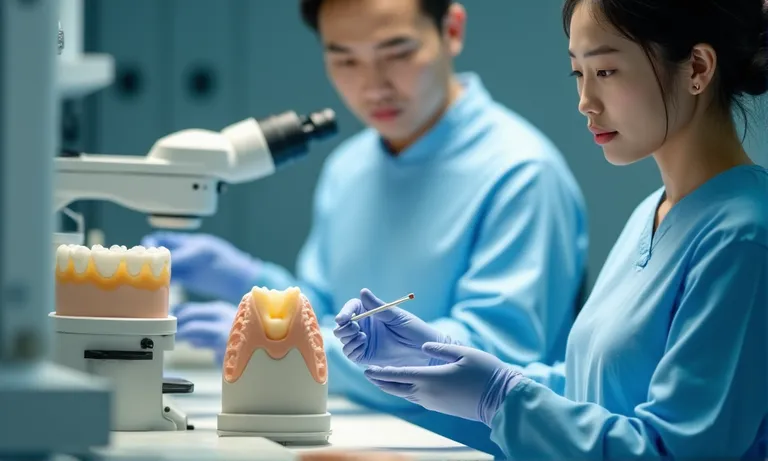
Complex-root-canal-custom-post-prep
Canals that deviate from the norm require custom adaptation:
From a lab’s perspective, these traits often lead to extended wax-up and casting refinement time. They may also limit the use of standard digital modeling libraries.
Cases with misaligned or multi-rooted canals are particularly demanding:
Such cases demand additional technician calibration and often a secondary verification model. Communicating angulation via scan or diagram saves both cost and time.
Retention grooves and ferrules serve biomechanical purposes—but they’re not cost-neutral:
We recommend labs and clinicians clarify when such design elements are “functional musts” vs. esthetic preferences, as this directly affects workload and price.
In some cases, the post and core are fabricated as a monoblock. In others, the core is built separately:
We often discuss this trade-off during pre-case planning to align both function and cost expectation.
✅ Unusual canal anatomy increases lab time and cost – TRUE
Non-standard canal paths, curves, and post depth all demand more adaptation, often beyond what digital workflows can automate.
❌ All post cases require the same lab process – FALSE
Anteriors with straight roots and good prep differ vastly from molars with curved, flared, or dual canals. Lab workflows must scale accordingly.
Beyond materials and fabrication, the logistics and support services bundled into a custom post & core order can significantly affect pricing. For distributors, dental clinics, and procurement teams, knowing what’s typically included—and what may incur additional charges—helps align expectations and avoid surprise costs.

Dental-lab-case-logistics-qa-documents
While less critical for post & core than for crowns, shade matching and visual records may still be included when:
At Raytops, we often review reference photos if sent, and include a basic color mapping sheet when needed—this adds technician time but supports clinical clarity.
These operational factors influence per-case cost:
We recommend partners clarify shipping expectations at the start of collaboration to avoid delays or unplanned costs.
Structured case reporting and support policies are often overlooked—but they add real operational value:
These inclusions enhance traceability and reliability, especially for DSOs or labs that require documentation for internal QA or compliance.
Some service components—like detailed case notes or rush prep—are optional. Others, like packaging and base QA checks, are embedded into our production workflow. Understanding what’s included versus what’s elective supports transparent pricing discussions from the outset.
If you’re coordinating multiple cases across regions or need help aligning shipping and documentation preferences, feel free to reach out—we’re happy to walk you through how we manage this across different markets.
Balancing cost-efficiency with clinical performance is a shared goal between clinics, DSOs, and dental labs. At Raytops Dental, we’ve found that consistent protocols and transparent collaboration reduce unnecessary rework and help both sides deliver stable, quality outcomes at controlled costs.
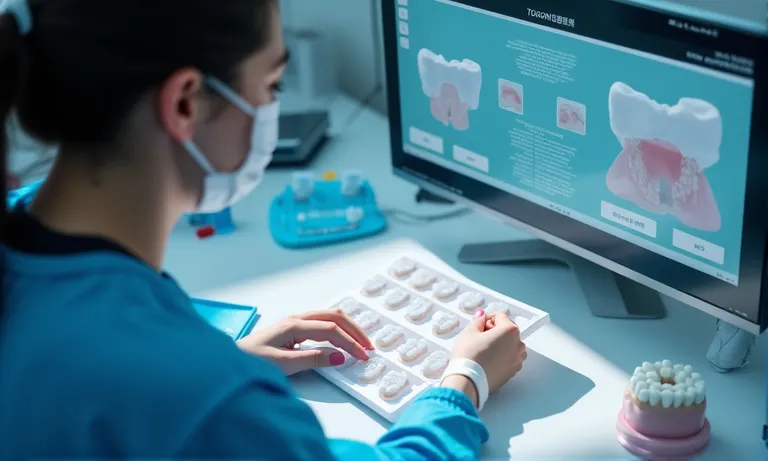
Dental-lab-cost-optimization-custom-posts
Inconsistent preparations can lead to increased lab time and rework. We recommend:
When clinics follow standardized prep templates, fabrication becomes more predictable and efficient.
For DSOs or partner labs, tiered pricing helps balance high-volume and complex-case costs:
This structure avoids flat-rate overcharges while protecting quality on demanding cases.
Tracking remakes and reworks helps identify improvement opportunities:
We often work with partners to review these trends quarterly, jointly adjusting lab and clinic-side practices.
Batch submissions allow economies of scale in:
Even for custom posts, bulk handling improves throughput and consistency when volume allows.
By focusing on preparation quality, communication clarity, and thoughtful batching, clinics and labs can reduce cost pressure without sacrificing precision or longevity.
That’s where the value of collaboration becomes most visible.
Efficiently managing the cost of custom metal post & core restorations requires understanding the technical, clinical, and operational factors that drive pricing. For dental clinics and procurement teams, aligning expectations with your dental lab partner—especially on prep standards, material use, and workflow transparency—ensures better outcomes at controlled costs.
For case planning support or material selection advice, feel free to contact Raytops Dental Lab to discuss how we can help streamline your restoration workflow across markets.