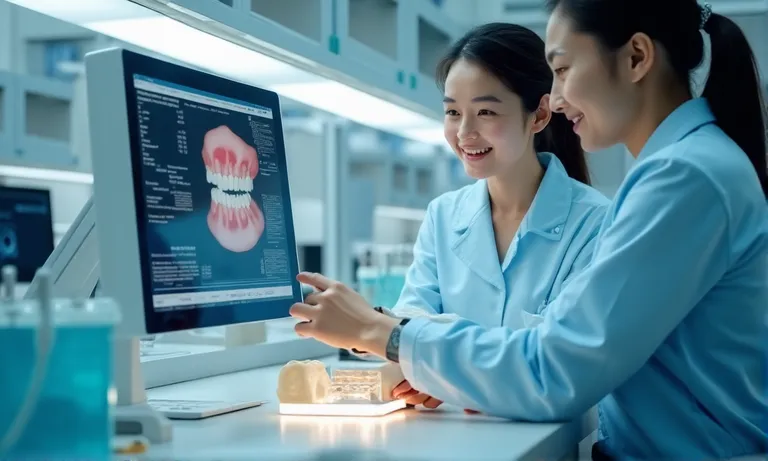
Choosing between a local dental lab and an outsourced production partner is no longer just a geographic decision—it’s a strategic choice shaped by turnaround speed, digital integration, communication flow, and cost predictability. For dental buyers aiming for consistency and scale, the decision requires balancing operational control with system maturity.
Procurement teams typically assess five core factors when comparing options:
Turnaround Time & Delivery Reliability
Local labs often provide faster case returns and better responsiveness for urgent needs. Outsourcing, by contrast, requires proactive planning for cross-border shipping and customs timelines.
Digital Workflow Compatibility
Specialized outsourcing labs offer robust CAD/CAM systems, portal-based file access, and SLA-backed tracking. Local labs, however, may provide quicker file adjustments and hands-on feedback for early-stage digital adopters.
Communication and Case Coordination
Physical proximity enables immediate updates and real-time case clarification. Offshore partners need to bridge time zone differences through structured portals and defined communication protocols.
Cost and Volume Scalability
Outsourced labs can reduce per-unit costs and offer tiered pricing across materials and case types. Local labs may charge more but offer agile handling for low-volume or highly customized cases.
Quality Assurance and Accountability
Key evaluation criteria include remake rates, material transparency, and documentation quality. Trial cases and onboarding protocols are essential to validate consistency under real workflow conditions.
Rather than defaulting to one model, successful buyers conduct structured side-by-side comparisons based on performance data, system compatibility, and long-term workflow alignment.
Working with a local dental lab offers faster turnaround times, closer collaboration, and greater control over cases—especially for urgent or customized restorations. When clinics prioritize speed, in-person feedback, and material visibility, a nearby lab can significantly streamline communication and increase operational certainty. However, these advantages often depend on the lab’s infrastructure and digital maturity.
Local-Dental-Lab-In-Person-Consultation
Physical closeness often translates to hours saved in transportation, coordination, and last-minute adjustments. Local labs can offer same-day pickup or hand delivery, which is nearly impossible with cross-border shipping. This flexibility is especially valuable when handling fractured temporaries, aesthetic shade matching, or remakes required before patient reappointments.
In-person interaction allows real-time clarification, which is particularly helpful for margin lines, bite registration, and scanner integration quirks. When clinics and labs operate within driving distance, physical visits, live demos, or real-time joint file reviews are possible—even if most workflows are digital-first.
Local labs often provide clinics with more hands-on influence over materials, case priority, and aesthetic decisions. Especially for practices with strong internal protocols, the ability to inspect materials in person, verify shade tabs, or discuss options with technicians helps bridge the gap between lab and chair.
✅ Face-to-face collaboration improves confidence and speeds resolution — TRUE
Clinics gain real-time assurance on design and case direction when working closely with technicians.
❌ Digital files eliminate the need for lab communication — FALSE
Digital systems require precise coordination and frequent confirmation, especially across unique platforms or scanner brands.
Outsourcing to specialized digital dental labs provides advanced technology access, cost efficiencies, and scalable workflows that many local labs struggle to match. For clinics managing high case volumes or requiring precision in implant planning, digital outsourcing labs offer a structured, repeatable, and cost-effective alternative. These benefits are especially evident in clinics pursuing full digital integration.
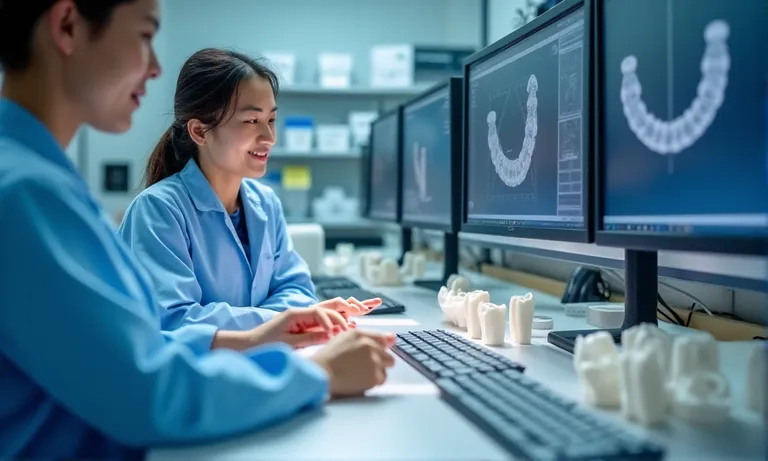
Digital-Dental-Lab-Technician-Handling-Multi-Screen-Zirconia-Cases
Digital outsourcing labs often operate on integrated CAD/CAM systems, enabling high repeatability, consistency, and complex case planning. They invest in software licenses, scanner compatibility, milling units, and post-processing workflows that allow for smoother digital integration than many local labs.
Outsourced labs often consolidate costs across clients, resulting in economies of scale unavailable to smaller or local operators. By standardizing case types and distributing labor across digital workflows, they can reduce per-unit costs while offering transparent pricing tiers.
| Comparison Area | Local Lab Average | Outsourced Digital Lab |
|---|---|---|
| Single crown unit price | $110 – $140 | $65 – $90 |
| CAD design included? | Sometimes extra | Included |
| Implant complexity pricing | Tiered/manual | Standardized workflows |
| Remake policy | Case-by-case | SLA-based, documented |
Specialized digital labs typically employ technicians with segmented expertise—CAD designers, CAM operators, QA teams—which enhances quality assurance across high-demand workflows. Instead of generalists juggling multiple roles, these labs invest in team structures that mirror enterprise standards.
✅ Digital outsourcing offers repeatability, cost control, and access to expert segmentation — TRUE
These advantages are particularly evident for clinics handling complex or bulk cases.
❌ Outsourced labs are only useful for basic restorations — FALSE
Most specialized digital labs excel at complex multi-unit, implant-supported, or esthetic-sensitive restorations with greater consistency than small local teams.
While outsourcing to dental labs offers scalability and cost benefits, it introduces challenges around communication, compatibility, and cross-border logistics. These issues aren’t always deal-breakers—but they do require workflow maturity, proactive planning, and clear protocols to ensure consistent results.
Global-Dental-Lab-Shipping-Cross-Border-Tracking
Working across time zones can slow down feedback loops, especially when urgent corrections or design changes are needed. Some outsourced labs operate 6–12 hours ahead or behind clinics, making real-time back-and-forth difficult unless protocols are clearly defined.
Compatibility issues can emerge when scanner exports, file formats, or lab software versions aren’t fully aligned—especially if the lab uses a different design ecosystem. Without shared calibration protocols or scanner model awareness, unexpected artifacts or marginal gaps may appear.
Logistics delays are an unavoidable risk when working across borders—ranging from courier backlogs to customs holds. Even express services may encounter unpredictable events that disrupt otherwise well-planned delivery schedules.
✅ Cross-border workflows require clear expectations and risk buffers — TRUE
Proactive coordination can significantly reduce the impact of timezone and logistics friction.
❌ Once outsourced, labs handle everything without input — FALSE
Active participation from the clinic remains crucial in managing design approvals, file quality, and delivery timelines.
To make an informed choice between local and outsourced dental labs, buyers must evaluate digital compatibility, turnaround reliability, and workflow validation options—not just pricing. A structured comparison of technical integration, SLA commitments, and trial case protocols helps clinics and DSOs align lab partnerships with long-term operational goals.
Image
ALT: Digital-Lab-Comparison-Workflow-Dashboard
Prompt: A highly realistic, ultra-detailed, professional-quality image showing a split-screen of two dental workflow dashboards: one from a local lab showing manual logs, and another from an outsourced digital lab displaying live SLA tracking, scanner input, QA checklist, and delivery status. The lighting is clean and white, emphasizing modern vs analog differences.
File format alignment, scanner integration, and shared design protocols determine how seamlessly a clinic can collaborate with a lab. When systems mismatch—even slightly—delays, misinterpretations, and remakes often follow.
A lab’s ability to meet stated delivery windows—especially during peak volume—has a direct impact on clinical scheduling and patient satisfaction. Look beyond average turnaround times and evaluate SLA enforcement, consistency, and escalation mechanisms.
| SLA Attribute | Local Lab (Typical) | Outsourced Digital Lab (Standard) |
|---|---|---|
| Turnaround visibility | Manual updates, emails | Live tracking dashboard |
| SLA guarantee | Informal or verbal | Written SLA (48–72hr standard) |
| Peak load handling | Bottleneck-prone | Load balanced across teams |
| Remake escalation | Ad hoc or by request | Structured with defined timelines |
Before committing to a full-scale partnership, clinics should run a structured trial covering multiple case types and digital conditions. This reveals gaps in compatibility, communication, and responsiveness without risking large patient volume.
✅ Digital lab comparisons should prioritize technical fit and workflow reliability — TRUE
Without compatibility and consistent delivery, even low prices can’t prevent clinical disruption.
❌ A lab’s location is more important than its system integration — FALSE
In digital workflows, file compatibility, SLA performance, and team responsiveness matter more than proximity.
To evaluate dental lab partners effectively, buyers should use a structured set of questions covering communication, pricing, turnaround, material options, and quality metrics. A well-designed checklist ensures decisions are based on repeatable performance criteria—not just assumptions or geography.

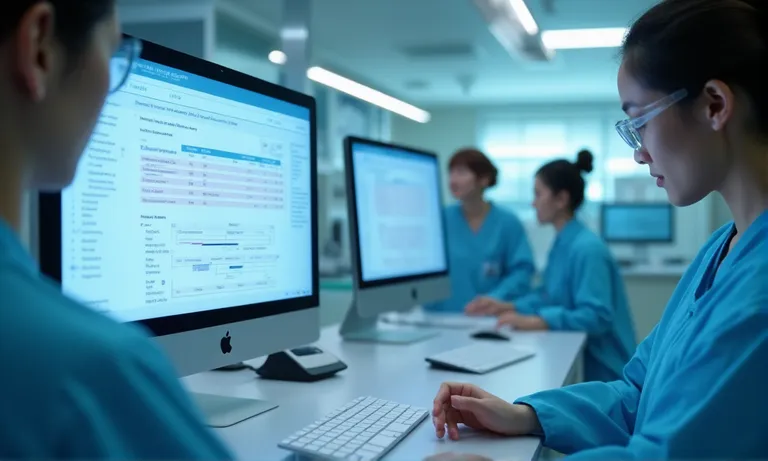
Dental-Lab-Comparison-Checklist-Screen
| Evaluation Area | Local Lab | Outsourced Digital Lab |
|---|---|---|
| Case tracking portal | Rare; typically via phone/email | Yes; real-time dashboard, timestamps |
| Response time (in urgent cases) | Same-day possible in person | Scheduled response, timezone-sensitive |
| SLA documentation | Often verbal | Formal SLA policy with escalation rules |
| Communication method | Calls, personal visits | Structured email, messaging, portal logs |
Labs differ significantly in pricing models, material sourcing, and turnaround control. Hidden charges, tiered case pricing, or inconsistent material substitutions may all impact your long-term satisfaction.
High remake rates often point to deeper workflow or communication breakdowns—and labs that track and share these numbers transparently show more operational maturity.
✅ Asking the right questions reveals deeper alignment than pricing alone — TRUE
A clear evaluation process builds trust and exposes potential risks before they escalate.
❌ Choosing a lab is just about finding the lowest cost — FALSE
Labs with better process visibility and quality control often prevent expensive clinical consequences later.
Raytops Dental Lab supports digital lab buyers through a structured onboarding process, transparent material-pricing policies, and SLA-driven international coordination. Rather than emphasizing sales, we focus on being a responsive, technically capable partner for clinics and DSOs navigating full or partial digital outsourcing transitions.

Raytops-Digital-Onboarding-Workflow
We begin each collaboration with compatibility tests across scanner types, file formats, and design software versions. This ensures that the clinic’s intraoral scanner data integrates smoothly into our CAD/CAM production flow, minimizing guesswork or rejections.
Raytops offers volume-based pricing tiers and clear documentation of materials used, along with real-time access to SLA metrics and issue logs. This creates pricing predictability and traceability in ongoing collaboration.
| Service Component | Our Approach |
|---|---|
| Zirconia sourcing | Identified by brand and strength class (e.g., HT, STML) |
| Unit pricing | Transparent across crowns, implants, temporaries |
| SLA tracking | Available per case via shared dashboard access |
| Remake policy | Linked to technical thresholds, with issue tagging |
| Volume discounts | Tiered pricing visible from initial onboarding |
To mitigate timezone and customs risks, we align each client with a dedicated account handler, define SLA expectations, and integrate live shipping coordination.
At Raytops, we focus on digital compatibility, operational visibility, and accountable support—so our partners can scale with confidence.
From onboarding to daily case handling, we aim to remove uncertainty and deliver trust through predictable execution.
Choosing between a local and outsourced dental lab isn’t about location—it’s about alignment.
From digital compatibility and turnaround consistency to communication flow and quality assurance, the real differentiator lies in how well a lab integrates with your digital workflow and supports your clinical standards.
Local labs offer immediacy and hands-on control, while outsourced partners—when structured properly—provide scale, technology, and repeatability. Smart buyers evaluate labs based on system integration, performance metrics, and real-world responsiveness, not just cost or distance.
At Raytops, we don’t believe in one-size-fits-all. Instead, we support clinics and DSOs with predictable digital onboarding, transparent collaboration protocols, and infrastructure built for cross-border success.
If you’re exploring lab partnerships beyond borders, start with compatibility, not commitment—let your first few test cases validate the future.