Selecting the right dental lab supplier requires more than reviewing a product catalog—it involves asking the right questions before any cases are submitted. Procurement teams and practice owners need clarity on how a lab ensures consistent quality, communicates effectively, handles remakes, and integrates with digital systems. Yet many labs sound similar on the surface, making due diligence essential.
To support smarter decision-making, here are eight essential areas to explore when vetting a dental lab partner:
Certifications & QA protocols: Confirm ISO, FDA, or MDR compliance, and ask who oversees the quality process.
Turnaround time reliability: Understand average lead times, handling of rush cases, and workflow tracking transparency.
Material sourcing & traceability: Ensure ADA-approved materials, verify documentation, and identify any subcontracting risks.
Digital compatibility: Check if the lab supports your CAD/CAM formats and offers integrated workflow tools.
Communication structure: Evaluate if there’s a dedicated contact and whether your team will receive prompt, informed support.
Remake policy: Clarify remake eligibility, turnaround expectations, and root-cause transparency.
Trial or pilot option: Inquire about test cases, onboarding phases, and measurable success criteria before large-scale collaboration.
Cost transparency: Ask about fees beyond the unit price—minimums, rush surcharges, remake terms, and import costs.
These questions help uncover the true operational readiness of a lab—not just what’s promised, but how things are delivered, measured, and supported at scale. That’s where a strategic lab partner makes the difference.
Certifications and quality protocols are not just formalities—they signal a lab’s readiness for scalable, traceable, and accountable collaboration. For dental procurement teams, verifying a supplier’s regulatory and operational compliance is the first filter before deeper technical validation.
dental-lab-iso-fda-compliance-check
The lab should have valid documentation for ISO 13485, FDA registration (if serving the U.S. market), and MDR compliance for EU.
These documents ensure traceability, device safety, and systemic quality control.
A robust QC structure should clearly outline ownership, checkpoints, and tools used to verify output before shipment.
| Element | Description |
|---|---|
| QC Team | Should include at least one certified technician or supervisor with documented responsibility |
| Checkpoints | Incoming case inspection → Production stage QC → Final polish + shade match check |
| Documentation | Each case should be tied to digital logs, including technician ID, QC time, and material batch number |
These records help ensure not only accountability but also trend monitoring over time.
Look for whether the lab has a standardized, traceable process for identifying and resolving remakes:
This process should be transparent, logged, and open to client review—particularly for DSO or multi-site buyers tracking case quality over time.
✅ Certificates alone do not guarantee outcomes – TRUE
Compliance documents are necessary, but consistent delivery depends on execution-level quality protocols.
❌ As long as a lab has FDA or ISO, there’s no need to ask about QC – FALSE
Many labs hold certifications, but lack structured case-level QA mechanisms—this gap often leads to downstream rework or inconsistency.
Reliable turnaround times are foundational to a functioning lab-clinic relationship. Overseas dental labs must align production speed with clinical realities, and delays in even a small percentage of cases can create cascading impacts. Structured production schedules, tiered prioritization, and real-time tracking mechanisms are essential.

dental-lab-case-tracking-turnaround
A transparent turnaround framework is a baseline requirement. Ask for:
Many ADA Guidelines offer expected ranges by product class. Labs should benchmark against these and state their average performance.
Emergency flexibility often determines whether a lab can truly scale with clinical needs.
| Service Tier | Response Strategy | Timeframe |
|---|---|---|
| Standard cases | Queued production, by order date | 5–7 working days |
| Rush orders | Pre-scheduled rush block capacity | 2–3 days |
| After-hours | Optional weekend/extended shifts | Case-by-case basis |
Labs that operate globally must provide a clear rush protocol and support timezone-sensitive cases for DSO or urgent chairside situations.
Without real-time visibility, case bottlenecks often remain invisible until too late.
Look for labs offering:
Some labs also use client portals integrated with shipping time standards for full transparency.
✅ Turnaround time is predictable when production is tiered – TRUE
Tier-based scheduling and defined blocks for rush work improve reliability across volume fluctuations.
❌ Shipping delays are unavoidable with overseas labs – FALSE
Labs with regional hubs or synchronized dispatch windows can achieve parity with domestic logistics if properly structured.
The quality and safety of restorations begin with the materials and extend to the processes behind them. For overseas dental labs, it is essential to demonstrate traceable sourcing, certified materials, and full disclosure on whether production is in-house or subcontracted.
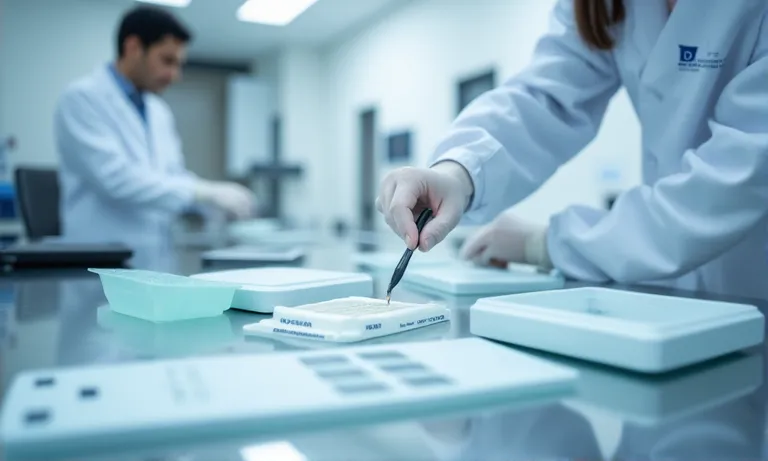
dental-lab-material-verification-zirconia-pmma-alloy
Labs must use only medically approved, biocompatible materials with valid certifications.
For DSOs or regulated markets, this documentation is not optional—it’s a procurement baseline.
A reliable supplier should be able to produce verifiable certificates for core materials:
| Material Type | Documentation Example |
|---|---|
| Zirconia | Zirconia Material Certificate Example with shade consistency data |
| PMMA | Lot traceability sheet with wear resistance test results |
| Alloy | Certificate with element breakdown and country of origin |
These documents serve not only quality purposes, but also support regulatory and audit readiness for clinical buyers.
Outsourcing to third-party vendors can introduce risks to quality control, timelines, and traceability. Ask:
✅ Material origin and handling affect long-term case performance – TRUE
Consistency in batches, proper storage, and documented sourcing prevent structural failures and discoloration.
❌ Labs can use any available material brand as long as they deliver fast – FALSE
Using non-certified or unknown-source materials can lead to allergic reactions, fractures, or case rejection.
Smooth digital integration is essential for reducing turnaround time and minimizing human error. Overseas dental labs must support a wide range of file formats, enable collaborative interactions, and align with cloud-based systems already in use by clinics.

dental-lab-cadcam-workstation-stl-integration
Modern digital labs should handle all standard formats without requiring manual conversion.
Labs should provide compatibility sheets or format capability disclosures at the onboarding phase.
While automation accelerates turnaround, human oversight ensures case viability.
✅ Technician-reviewed STL data ensures marginal clarity
Cases are flagged for distortion, improper scan paths, or missing reference data.
❌ Full automation guarantees faster output without compromise
Unscreened STL imports often lead to remakes due to undetected issues.
A hybrid model—AI pre-check + technician verification—balances speed with control.
For DSOs or clinics with intraoral scanner systems, direct integration avoids redundant file transfers.
Typical integration flow:
Labs integrated with systems like exocad cloud or 3Shape Communicate can provide seamless collaboration.
✅ Digital compatibility reduces friction in global workflows – TRUE
Without manual transfers or email-based uploads, labs receive cleaner data and clinics avoid delays.
❌ All STL files are equal regardless of source – FALSE
Scanner type, export settings, and post-processing steps greatly affect usability.
Effective communication isn’t just about responsiveness—it’s about having the right people, protocols, and tools to ensure each case is handled proactively. A qualified overseas dental lab should demonstrate structured case ownership and role clarity from day one.
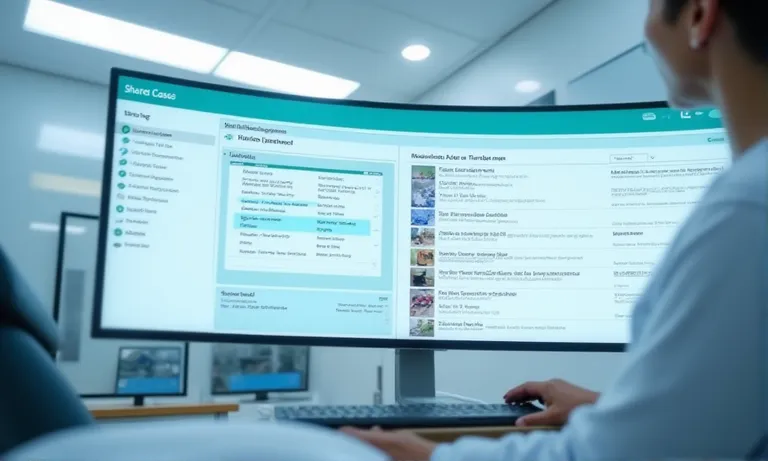
dental-lab-case-management-dashboard-chat
High-performing labs assign a single point of contact (SPOC) per clinic or client group.
This prevents confusion from fragmented communication.
Turnaround time for communications should follow internal SLAs. For example:
✅ Dedicated SPOC responds to queries within 12–24 hours – TRUE
This includes material clarifications, design suggestions, and remakes.
❌ Any available team member can answer any question anytime – FALSE
Lack of ownership often leads to delays or contradictory instructions.
Labs should document response times for different types of queries.
Structured templates streamline collaboration and reduce ambiguity.
| Communication Tool | Purpose |
|---|---|
| Case intake form | Captures case type, material, photos, turnaround |
| Feedback log | Documents remake reason, resolution, timestamps |
| Visual checklist | Ensures esthetic goals, shade, and margin detail are clear |
For best practice, centralized dashboards help teams monitor case status, priorities, and instructions.
✅ Case communication should be structured and trackable – TRUE
Unstructured notes or verbal messages easily get lost, especially across time zones.
❌ Labs can handle cases efficiently with just email threads – FALSE
Email-only workflows often lead to version control issues and miscommunication.
Reliable remake policies are critical for managing clinical risk and maintaining trust. Overseas dental labs should outline remake criteria, resolution timelines, and provide data transparency for repeated errors.
dental-lab-sla-remake-dashboard
Labs typically define remake eligibility by material type, turnaround stage, and clinical input accuracy.
| Criteria | Covered? |
|---|---|
| Internal technical error | ✅ Full remake, no charge |
| Incompatible STL or missing bite | ❌ Client-corrected, billed again |
| Shade or margin mismatch (if specs provided) | ✅ Case reworked or reprinted |
| Client-side prep change post-design | ❌ Treated as new order |
Top labs clearly document remake policies in their QA policy documentation.
Clear timelines help manage expectations and case rescheduling.
For repeated issues, some labs assign case manager follow-up within 72 hours.
Top-performing labs maintain a feedback loop for quality improvement.
✅ Root cause analysis identifies systemic lab or clinician errors – TRUE
This includes design misalignment, margin inconsistency, or scan quality issues.
❌ All remakes are isolated incidents needing no further review – FALSE
Recurring issues often point to workflow gaps or documentation flaws.
Labs should offer root-cause summaries when a case fails twice or more.
Pilot phases allow procurement teams to validate alignment before committing to full-scale outsourcing. Overseas dental labs with structured trial processes demonstrate maturity, transparency, and readiness for long-term collaboration.
dental-lab-trial-case-review-dashboard
Structured pilot programs often include:
Some labs allow trial onboarding for 30 days before contract finalization.
Labs should transparently share key indicators to help clients evaluate fit.
| Metric | Purpose |
|---|---|
| Remake rate (%) | Measures quality precision |
| On-time delivery rate | Tracks SLA consistency |
| Case notes completeness | Evaluates clinical information flow |
| Communication response time | Benchmarks support efficiency |
These KPIs create an objective foundation for selection.
Alignment ensures clinical and lab teams speak the same “workflow language”.
This structured feedback loop prevents scope drift and sets shared standards.
Transparent pricing is the foundation of a predictable lab partnership. Before finalizing any agreement, dental procurement teams should ensure that the lab offers full visibility into all cost components, payment timelines, and non-obvious charges.

dental-lab-cost-breakdown-invoice-dashboard
Labs may present low unit costs but add significant surcharges elsewhere. Key items to verify:
Payment structures vary. Typical terms include:
| Term Type | Description |
|---|---|
| Net 15 / 30 / 60 days | Post-invoice due periods |
| Monthly consolidated | One invoice for all cases monthly |
| Prepaid / Retainer model | Upfront credits for discounted rates |
Some labs offer flexible terms during onboarding or high-volume periods.
Labs working globally must include:
✅ Transparent TCO structures reduce long-term disputes – TRUE
Predictable billing enables better budget control and avoids surprises.
❌ Unit price alone reflects the true cost – FALSE
Total cost of ownership includes workflow friction, remake frequency, and payment delay risks.
Choosing the right dental lab supplier isn’t just about unit price—it’s about aligning on quality, communication, and workflow efficiency. When these foundations are clear, outsourcing becomes not only scalable but dependable.