Asking the right questions when selecting a tech-enabled dental lab helps uncover the lab’s actual digital maturity and alignment with your clinical or operational workflows—going beyond surface-level claims to assess future-ready capabilities.
Choosing a lab based on website claims or a list of equipment brands can lead to critical risks in long-term collaboration. Many labs highlight their adoption of CAD/CAM or 3D printing, but the real differentiator lies in how consistently and effectively these technologies are used in live workflows. For procurement teams, especially in group practices and DSOs, understanding the lab’s operational depth—not just its tech labels—directly impacts remake rates, turnaround times, and case accuracy.
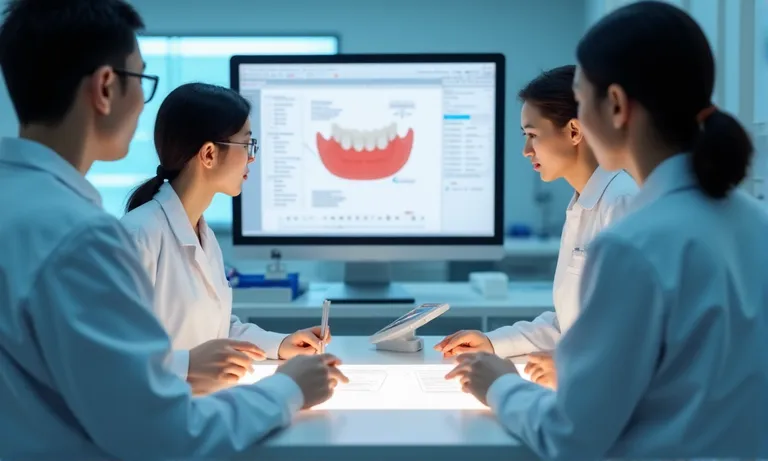
dental-lab-team-reviewing-digital-workflows
Labs often promote digital equipment like 3D printers or intraoral scanner compatibility, but without insight into how those tools are integrated into daily production, procurement teams risk entering unstable partnerships. We’ve seen clinics frustrated by labs that had the right hardware but lacked consistent protocols, leading to remake loops or misaligned timelines. One group practice client shared that a previous lab “had great tech but couldn’t explain how it was used in crown quality checks.” That resulted in unpredictable outcomes—despite seemingly advanced infrastructure.
Procurement teams should assess the lab’s digital maturity across multiple operational checkpoints:
These dimensions distinguish a truly tech-enabled lab from one that’s partially digitized for marketing purposes.
Digital maturity isn’t just a current-state indicator—it’s a predictor of a lab’s ability to scale, integrate, and adapt as your own workflows evolve. For practices considering intraoral scan adoption, multi-location expansion, or AI-assisted diagnostics, lab partners must be operationally prepared—not just aspirationally willing. Without this readiness, technical collaboration turns into troubleshooting, and trust erodes quickly.
Labs like Raytops Dental Lab have collaborated with practices transitioning to digital workflows, not by pushing new tools, but by co-building scanning protocols, integrating intake forms, and sharing QA data transparently. These are the quiet yet essential behaviors that define scalable partnerships.
Smart procurement starts with sharp questioning—because in a tech-driven environment, what you don’t ask may cost you more than what you do.
Choosing a tech-enabled lab requires more than reviewing a list of machines—it demands clear proof that the lab’s team, workflows, and QA processes truly rely on those tools in daily production. This ensures consistency, accuracy, and partnership readiness in real cases—not just in theory.
Labs may showcase CAD/CAM systems, 3D printers, or AI design tools, but only direct evidence of day-to-day usage confirms operational maturity. Procurement teams should look for signs that these technologies are used not just occasionally, but as standard practice embedded in the lab’s production culture.
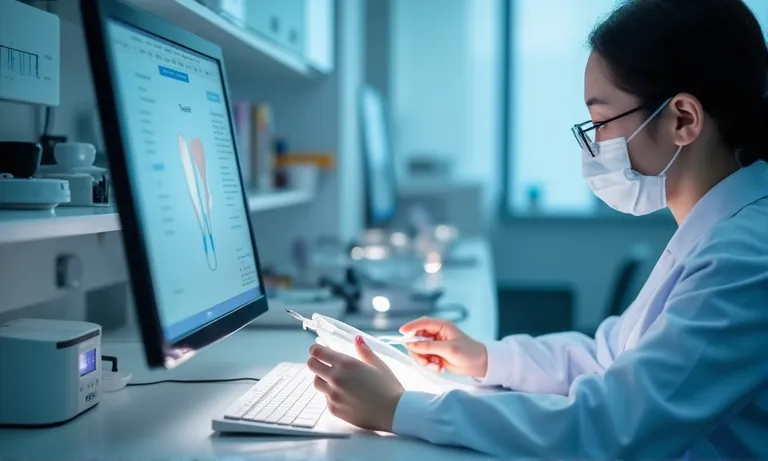
dental-lab-technician-operating-digital-tools
Technology must be integrated into the technician’s hands—not just in the lab’s marketing. We’ve worked with clinics that previously partnered with labs boasting AI-assisted design, only to discover it was limited to occasional test cases. In contrast, when Raytops Dental Lab was onboarded by a DSO migrating to intraoral scanning, over 85% of crown cases were designed through CAD workflows within the first month—enabled by trained staff and existing digital SOPs. This distinction isn’t about having the tools; it’s about embedding them into repeatable processes.
To validate a lab’s true digital maturity, check for the following:
Labs that rely on digital tools daily will have clear processes to match—these SOPs are not add-ons; they are the backbone of scale-ready production.
A structured path to verify a lab’s implementation readiness:
When one European clinic transitioned to digital impression capture, they faced initial frustration with their first lab—margin gaps and inconsistent contacts. The issue wasn’t scanner compatibility, but technician misinterpretation. In later onboarding with Raytops, training alignment sessions were held in advance of live cases—cutting remake rates by 12% in the first 60 days.
Labs that take digital seriously, invest seriously—in tools, people, and processes. That’s the difference between display technology and delivery technology.
To avoid workflow friction and costly miscommunication, ensure your dental lab fully supports your existing scan formats, software tools, and digital submission processes. Compatibility determines how smoothly your team and the lab can collaborate without delays or conversion errors.
Digital collaboration often fails not because of technical flaws, but because of mismatched file types, platform assumptions, or disjointed case handoffs. By asking the right compatibility questions upfront, you avoid future inefficiencies that are hard to unwind once the partnership begins.
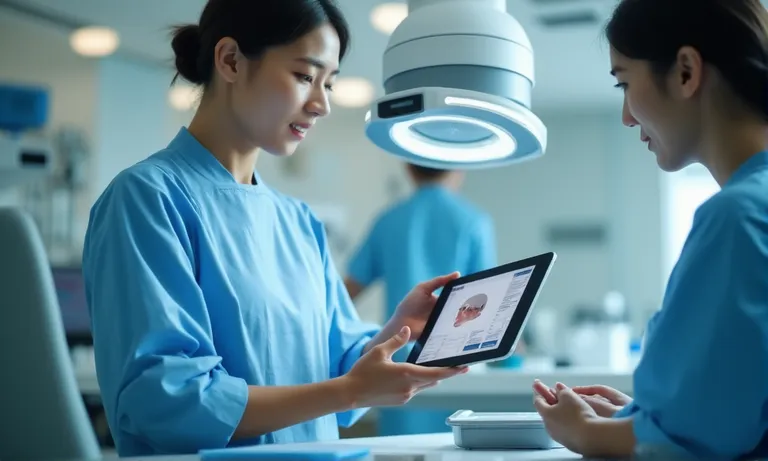
dental-digital-case-upload-portal
| Format Type | Importance | What to Confirm |
|---|---|---|
| STL | Standard for most IOS workflows | Does the lab accept raw and pre-aligned STL files? |
| PLY | Includes color/texture info | Is their design team trained to use color mapping for margin detection? |
| DICOM | Used in surgical and ortho planning | Can their platform process or overlay DICOM with prosthetic scans? |
Some labs claim “format compatibility” but rely on third-party conversion tools that add noise or data loss. One Australian practice we worked with had to re-export their scans multiple times due to a lab’s outdated design environment. Compatibility isn’t just about formats—it’s about native handling.
We’ve seen small clinics stuck in upgrade loops just to stay compatible with a “digital partner.” A truly collaborative lab works within your constraints, not theirs.
The method for case submission often reveals the lab’s operational maturity. Some labs still rely on emailed files or unstructured uploads, increasing risk for versioning errors or incomplete documentation.
At Raytops, we onboarded a new DSO partner by mirroring their existing case naming and intake structure. Their dentists preferred a structured portal workflow with built-in prescription fields and multi-format preview. By aligning case intake systems, we reduced back-and-forth emails by 15% within the first month—and brought average approval time down from 2.4 days to 1.1 days.
Submission isn’t just about upload—it’s about alignment, efficiency, and trust.
Strong digital labs don’t just deliver restorations—they support them. To assess support quality, evaluate how a lab communicates during case issues, what turnaround benchmarks they maintain, and how they handle remakes or technical mismatches. A reliable partner proves their value not only when things go right, but when things go wrong.
Labs may have the right tools, but it’s their service infrastructure that determines collaboration success. Digital maturity is incomplete without consistent, transparent support.
Image
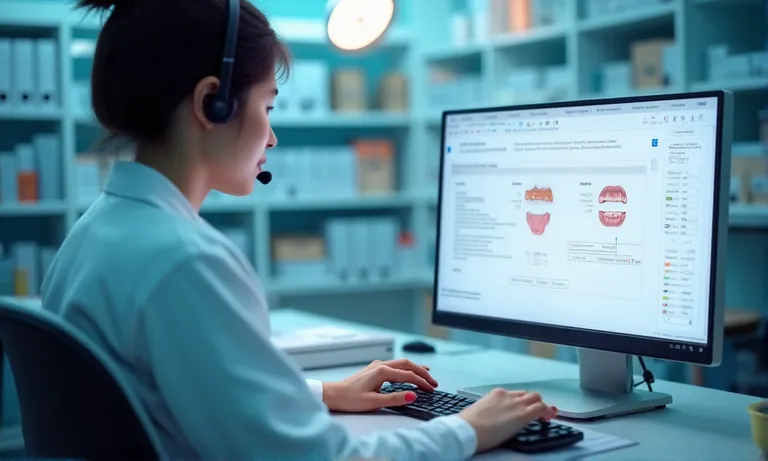
ALT: dental-lab-customer-support-chat
Prompt:
A highly realistic, ultra-detailed, professional-quality image captured in a clean, organized dental lab environment. Lighting is natural daylight. Show a customer support specialist responding to a case issue via live chat on a desktop, with digital dental files visible, headset on, and TAT tracker chart in the background.
We’ve seen clinics drop labs not for quality issues, but because “getting a question answered took 3 days.” A quick crown fix means little if your patient’s chair time is locked. Response time = confidence.
| Restoration Type | Standard TAT (Days) | Flag for Delay |
|---|---|---|
| Zirconia Crown | 5–7 days | >9 days repeatedly |
| E.max Veneer | 7–9 days | >10 days |
| Implant Crown | 8–10 days | >12 days |
| Remake Case | 3–5 days | >7 days |
Labs may list standard turnaround times, but only practice feedback confirms reliability. When Raytops onboarded a clinic that previously suffered from “hidden backlogs,” we started by sending weekly TAT reports and marking cases at risk of delay. This transparency helped restore client trust and reduce reactive escalations.
When remakes happen—and they will—it’s the lab’s handling process that sets them apart. Is there a structured way to report issues? How fast do they respond? Are remake cases tracked and learned from?
A Canadian group practice shared that their prior lab “insisted errors were on our side” without reviewing the files. In contrast, during onboarding with Raytops, our team flagged an abutment mismatch pre-fabrication, suggested a rescan, and logged it into a shared issue tracker. The case was delivered 48 hours later, with clear documentation and zero blame-shifting.
Support isn’t an extra feature—it’s the infrastructure that makes digital collaboration truly functional.
When evaluating a tech-enabled lab, don’t just trust their sales materials—ask for documented proof that demonstrates digital maturity, successful client transitions, and consistent quality. Verifiable evidence is the bridge between claims and confidence.
Labs that deliver real value are not afraid to show their work. Whether through client references, onboarding pilots, or performance dashboards, transparency is a sign of operational control—not just marketing polish.

dental-lab-digital-case-study-dashboard
Ask for specific examples of how the lab has supported other clinics in adopting or scaling digital workflows. Did they co-develop protocols? Provide training? Track results?
One DSO client told us that their biggest concern wasn’t scanner compatibility—but how to get 12 locations aligned under a unified prescription workflow. During onboarding, Raytops provided a three-week guided pilot using templated lab slips, file checklists, and preset margin instructions. Within 60 days, 88% of new cases followed the unified protocol—cutting order variations by nearly half.
Real proof doesn’t look like a sales deck. It looks like shared process improvements.
This level of openness signals both operational readiness and cultural fit for collaboration. If a lab avoids pilots or references, it’s worth asking: why?
| Metric | Why It Matters | What to Look For |
|---|---|---|
| Remake Rate (%) | Indicates quality and communication alignment | <3% is best-in-class |
| TAT Consistency | Predictability of delivery | >85% cases on-time |
| Adjustment Feedback | Captures chairside refinement needs | Data gathered + acted upon |
| First-pass Accuracy | Reduces wasted time | >90% without correction |
Labs like Raytops maintain weekly internal reports across these dimensions, and we share summary dashboards during quarterly reviews with long-term clients. These data points allow clients to move from “hoping” to “knowing” their supplier is consistent.
Numbers build trust—especially when things are going well.
Yes—your lab evaluation questions should reflect the specific needs, risks, and operational patterns of your practice size and model. A one-size-fits-all approach overlooks critical compatibility factors.
A solo practitioner may care most about file compatibility and turnaround time, while a DSO might prioritize SOP alignment, bulk validation, and cross-location consistency. Similarly, distributors often need to verify lab training capacity and product standardization before committing to scale.

dental-practice-size-vs-lab-requirements
Larger group practices often work across multiple locations, which means decentralized scan sources, varying clinician preferences, and strict internal QA benchmarks. They typically require:
When onboarding a 10-location DSO, Raytops provided version-controlled PDF guides for case intake, file naming conventions, and integrated feedback loops with each regional lead. This allowed local autonomy without sacrificing cross-site consistency.
Questions should reflect this complexity: “How do you ensure consistency across multiple clinics?” is far more useful than “Do you do crowns well?”
We’ve helped many first-time digital clinics bridge the gap by aligning scanner settings, redesigning prescription templates, and walking them through intraoral scan validations—without pressure to scale too fast.
Distributors and channel partners rely on consistency—they are not just buying a crown; they’re committing to a product line. For this group, lab vetting should include:
A German distributor we partnered with asked not about “price per unit,” but how we trained new hires to maintain the same finish quality. The answer? A four-week rotational program across design, milling, and QC, standardized in three languages.
When scale is your business model, repeatability is your survival strategy.
Choosing a tech-enabled dental lab isn’t about checking off equipment lists—it’s about evaluating how that lab collaborates, adapts, and delivers value in real-world conditions. The right questions help you look past marketing claims and understand a lab’s digital maturity, operational reliability, and partnership readiness.
As an overseas dental lab, we’ve supported practices of all sizes in aligning workflows, reducing remake risks, and scaling digital adoption with clarity and consistency. Whether you’re running a single-chair clinic or managing a multi-site DSO, asking the right questions leads to the right collaboration.