The success of outsourcing dental implant work overseas now hinges on a lab’s digital capabilities. From CAD/CAM integration to intraoral scan compatibility and advanced AI-driven tools, digital workflows shape the accuracy of restorations, turnaround time, and overall remake rates. Labs without strong digital systems risk communication delays, file errors, and regulatory setbacks that compromise both efficiency and trust.
The most critical areas to evaluate include:
By focusing on these benchmarks, procurement leaders can choose overseas implant labs that not only ensure predictable quality but also support long-term clinical efficiency and business growth.
Digital capabilities matter in implant outsourcing because they directly determine the accuracy of restorations, the efficiency of production, and the consistency of outcomes across borders. When a lab is digitally integrated, communication becomes seamless, remake rates drop, and the supply chain works more predictably. Without these capabilities, clinics often face costly delays, unpredictable quality, and frustration that undermines trust in cross-border collaboration
dental-lab-digital-quality-check
Digital workflows eliminate the variability of manual steps and reduce miscommunication between clinics and labs.
Labs without strong digital systems often introduce hidden costs.
Automation and AI-driven checks bring a new level of predictability.
When outsourcing dental implants, digital capabilities are not just “nice to have” but essential risk controls. Overseas dental labs that adopt digital workflows and AI-supported quality checks help clients minimize remakes, improve turnaround reliability, and build long-term trust across time zones and borders.
The most reliable overseas dental labs are those that fully integrate CAD/CAM, file compatibility, and digital libraries into their workflows. These systems are the foundation of efficient collaboration, because they allow data to move smoothly from clinic to lab without distortion or loss. For buyers, confirming that a lab supports these digital workflows is the single most effective way to avoid costly remakes and ensure predictable turnaround.
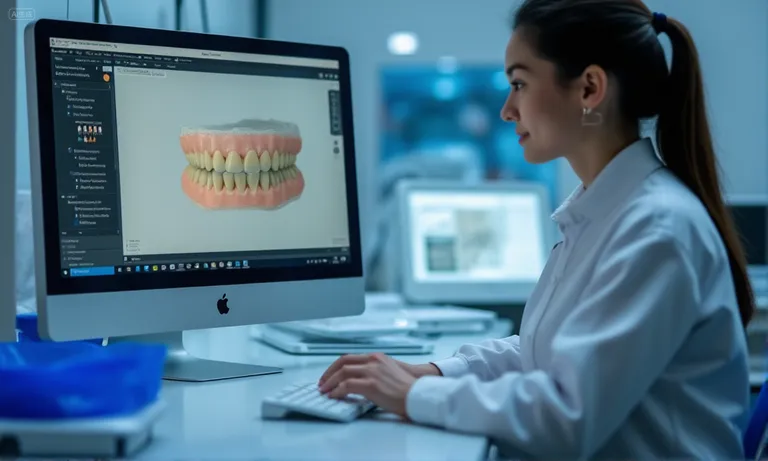
dental-lab-cadcam-digital-integration
CAD/CAM ensures that restorations are digitally designed and milled with high precision.
File compatibility is one of the biggest pain points in outsourcing. If a lab cannot open or process a clinic’s IOS files, delays and remakes are inevitable.
| File Type | What It Includes | Why It Matters in Outsourcing |
|---|---|---|
| STL | Geometry only | Standard for most CAD software, ensures basic shape accuracy |
| PLY | Geometry + color/texture | Important for matching shade and gingiva details |
| IOS Native Files | Proprietary scan formats | Must be supported to avoid extra conversion steps |
A lab fluent in these formats saves clinics hours of troubleshooting and prevents the loss of data detail during file conversion.
Digital implant libraries allow labs to reference exact components from major implant brands during design.
Labs that can demonstrate robust CAD/CAM, file compatibility, and digital libraries are far better positioned to support cross-border implant work. For clinics, this means smoother collaboration and fewer surprises when restorations arrive.
Advanced technologies like 3D printing, AI-driven design, and cloud-based platforms transform how overseas dental labs work with clinics. They shorten turnaround, improve restoration fit, and make cross-border communication smoother. Clinics that partner with labs using these tools experience fewer delays, more predictable quality, and better visibility throughout the case.

Image
ALT: dental-lab-3dprinting-ai-cloud
Prompt:
A highly realistic, ultra-detailed, professional-quality photo captured in a clean, well-lit dental lab environment. Materials must be photorealistic, anatomically accurate, and rendered with DSLR-level clarity. Lighting should be soft daylight or studio white light, avoiding cold or bluish clinical tones. Each tooth showing slight variation in contour, size, and cusp height, with natural occlusal grooves, realistic contact points, enamel translucency, and subtle shade gradient from incisal edge to cervical area; microscopic surface texture and slight asymmetry typical of natural dentition.
→ A Chinese dental technician is operating a desktop 3D printer producing implant models, while a second screen displays AI-driven margin detection software, and a cloud collaboration dashboard is visible in the background.
3D printing accelerates the production of surgical guides, implant models, and temporary restorations.
AI-powered software analyzes scan data and identifies margin lines with greater accuracy than manual input. This reduces technician subjectivity, a common cause of remakes. In one U.S. DSO pilot project, AI detection reduced design revision requests by nearly 25%. With AI supporting technicians, implant restorations achieve a consistent standard of fit, giving clinics greater confidence in cross-border deliveries.
Cloud-based platforms allow clinics and labs to work as if they were in the same room:
3D printing, AI, and cloud collaboration are no longer future trends but present-day differentiators. Overseas dental labs that integrate these tools make cross-border work smoother, helping clinics reduce turnaround uncertainty while ensuring predictable outcomes.
Digital capabilities reduce outsourcing risks by creating quality consistency, secure file handling, and standardized workflows that align with international regulations. Without them, overseas collaborations often suffer from avoidable remakes, miscommunication, and compliance gaps. Clinics that prioritize labs with strong digital QA systems and secure data handling enjoy smoother case flow and fewer surprises.
dental-lab-digital-quality-assurance
Digital QA systems embed checkpoints throughout the workflow.
In outsourcing, clarity of prescriptions and secure transfer of patient data are non-negotiable. If Rx instructions are vague or files are corrupted in transit, the result is confusion, remakes, and potential compliance risks. By using encrypted file platforms and structured Rx templates, overseas labs minimize data loss while protecting patient confidentiality. This builds confidence for clinics that must meet strict HIPAA or GDPR standards in their own regions.
Workflow standardization is what ensures that every case, no matter its origin, is processed under the same compliance rules.
| Standardization Element | Compliance Value | Impact on Clinics |
|---|---|---|
| Digital SOPs | Align with ISO and FDA/CE norms | Easier audits and cross-border validation |
| Traceable File Logs | Secure documentation trail | Reduces liability in case of disputes |
| Uniform QC Templates | Proof of consistent quality checks | Increases buyer trust in repeat orders |
For clinics outsourcing overseas, this means peace of mind: regulatory expectations are met, and every case has a documented chain of responsibility.
When overseas dental labs implement digital QA, secure file handling, and standardized workflows, they not only cut remake frequency but also give clinics confidence in regulatory compliance. As an overseas dental lab partner, our role is to align with these expectations and ensure smooth, transparent cooperation across borders.
Evaluating a lab’s digital capabilities is critical before committing to cross-border outsourcing. Clinics and procurement teams should look beyond pricing and confirm whether the lab can demonstrate proven workflows, deliver test results, and show readiness for digital innovation. A structured evaluation process helps avoid mismatched expectations and long-term inefficiencies.
ALT: dental-lab-digital-capabilities-evaluation
Procurement teams should focus on questions that uncover real capability, not just promises.
The most reliable way to evaluate is through a structured test order.
Future-ready labs demonstrate more than today’s minimum. They invest in emerging tools such as AI-assisted design, 3D printing scalability, and cloud-based collaboration dashboards. In one recent case, a European distributor chose a lab partner because it was already piloting AI-driven margin detection, showing commitment to long-term innovation. Labs that continuously upgrade are better positioned to support clinics as new digital standards become mainstream.
Clinics that evaluate labs with structured questions, test orders, and a focus on future-readiness can outsource with confidence. As an overseas dental lab partner, our role is to be transparent in digital capability assessments and show readiness for continuous innovation.
Outsourcing dental implants to an overseas dental lab is only as reliable as the lab’s digital capabilities. From CAD/CAM precision to secure file handling and AI-supported QA, each capability reduces risks, lowers remake rates, and ensures smoother collaboration across borders. Clinics and procurement teams that evaluate these factors gain predictable outcomes and long-term trust in their supply chain. As an overseas dental lab, our role is to integrate advanced digital workflows and remain transparent in quality reporting, so partners can focus on patient care with confidence rather than worrying about operational setbacks.