Starting collaboration with a new dental lab partner for implant cases requires structured preparation and early alignment. Success comes from defining clear requirements, standardizing case submissions, and integrating digital workflows so that both clinic and lab operate with shared expectations.
The biggest pain points often include unclear documentation, file incompatibility, communication gaps, and unpredictable turnaround times. These can be solved by standardizing digital case files, evaluating labs for certifications and implant expertise, and using secure platforms for updates and tracking. The result is fewer remakes, faster case delivery, and greater confidence in outcomes.
By following proven steps—from preparation and lab evaluation to workflow alignment, quality control, and procurement—you can turn a new collaboration into a reliable long-term partnership. Clear standards, transparent communication, and proactive risk management make implant case workflows more predictable, efficient, and sustainable.
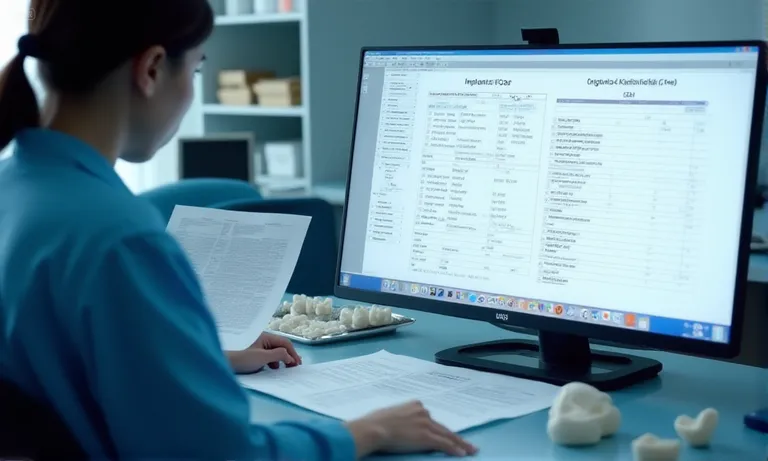
Successful implant collaboration starts with clear preparation before the first case submission. Clinics that take time to define case requirements, standardize documentation, and involve the lab early typically see fewer remakes and smoother workflows. These steps set the foundation for predictable outcomes and a stronger long-term partnership.
Dental-Lab-Case-Submission-Checklist
Clear case definition avoids delays and miscommunication. Before submitting a case, the clinic should specify:
In one collaboration, a U.K. clinic initially requested a zirconia bridge without specifying the shade system. The lab had to clarify midway, causing a four-day delay. After standardizing a form that required shade entry, later cases were delivered on schedule. This illustrates how clear upfront definitions prevent unnecessary back-and-forth.
Standardized submission ensures every case arrives with consistent information. Key elements include:
Some overseas dental labs now provide online portals where clinics can upload files and automatically check for missing information. This minimizes errors at intake and speeds up the production cycle.
Early involvement transforms the lab into a true collaborator rather than a passive fabricator. By sharing diagnostic wax-ups, implant placement plans, or provisional designs, the lab can advise on material feasibility, required scan bodies, or screw-retained vs. cement-retained choices.
One small DSO in Canada involved their lab before a complex anterior implant case. The lab flagged that a screw-retained design would provide better retrievability given the bone angulation. The clinic adjusted the plan, reducing the chance of future complications. This type of proactive input is only possible when the lab is engaged at the planning stage.
When preparations are handled with this level of clarity, both clinic and lab save time, reduce remakes, and enter collaboration with shared expectations. Partnering with an experienced overseas dental lab that supports standardized submission formats can make this transition much smoother.
Choosing the right dental lab partner is not just about price; it is about reliability, technical capacity, and compliance. A lab with strong digital capabilities, proven materials, and recognized certifications reduces clinical risk and ensures consistent outcomes. Evaluating these factors systematically allows clinics to make confident, long-term decisions.

Dental-Lab-Selection-Criteria-Comparison
Reliable implant labs share three characteristics:
One independent clinic in Australia tested three labs. Only the one with full CAD/CAM integration could return abutments without manual adjustments, saving the clinic hours of chairside work. Such differences directly impact daily efficiency.
Overseas and local labs each bring distinct advantages. A structured comparison helps clinics decide:
| Criteria | Overseas Dental Labs | Local Dental Labs |
|---|---|---|
| Cost | Often lower due to economies of scale | Typically higher due to local labor and overhead |
| Logistics | Requires shipping, customs, and longer lead times | Faster delivery, easier coordination |
| Reliability | Standardized large-scale processes, consistent output | Close proximity allows real-time issue resolution |
| Complex cases | Can provide specialized implant expertise | Easier chairside adjustments but may lack niche expertise |
A DSO in Germany initially preferred a local lab for speed. However, after experiencing high remake rates, they shifted complex implant cases to an overseas partner, where stricter digital QA protocols reduced errors despite longer shipping times.
Certifications are more than formality—they signal whether a lab can maintain consistency under scale.
Clinics working with ISO-certified partners often report fewer compliance issues during audits and smoother insurance reimbursements. An overseas dental lab with ISO 13485 provides peace of mind that both production and documentation meet international medical device standards. For more background, see ISO 13485 certification requirements.
Evaluating a lab through these lenses—digital workflow, material expertise, reputation, logistics trade-offs, and certifications—helps clinics select partners that not only meet immediate needs but also scale with future implant demand.
Smooth digital integration is one of the most decisive factors in avoiding costly remakes. When clinics and labs align CAD/CAM workflows, secure communication platforms, and clear turnaround expectations from the beginning, they reduce miscommunication and gain predictability. Establishing this alignment upfront ensures that technical precision is matched with reliable collaboration.

Dental-Lab-Digital-Workflow-Integration
File compatibility is the foundation of digital collaboration. Before sending the first case, clinics should confirm that the lab accepts their preferred formats (STL, DCM, Exocad, 3Shape). Even minor mismatches can cause distorted margins or missing scan data.
In practice, one clinic in France submitted intraoral scans in proprietary DCM format. Their overseas lab’s software initially misread gingival contours, leading to an inaccurate emergence profile. After both sides tested cross-compatibility and set up a shared conversion protocol, the error rate dropped to near zero. Such proactive alignment prevents hidden risks from disrupting production.
Clear communication reduces back-and-forth emails and lost updates. Clinics increasingly rely on:
Some global dental labs integrate tracking into their portals, so clinics see real-time updates alongside logistics status. This eliminates uncertainty and gives clinicians confidence that cases are progressing as planned.
Turnaround is not only about delivery dates—it is about rhythm and feedback. A reliable alignment process often follows three steps:
One independent practice in the U.S. adopted this cycle with its overseas lab. Within two months, remake rates dropped by 15% because small issues were caught early and corrected systematically.
When labs and clinics align workflows from the start—technically, digitally, and communicatively—both sides benefit from fewer disruptions and higher trust. Working with an overseas dental lab that offers CAD/CAM compatibility checks and secure communication platforms can make digital collaboration significantly more reliable.
Quality assurance and risk management are not afterthoughts—they are safeguards that determine whether a partnership is sustainable. Defining remake policies, implementing standardized checks, and preparing for potential delays or miscommunication protect both the clinic and the lab. When these systems are visible from the start, trust builds faster and problems are resolved with less disruption.
Dental-Lab-Quality-Control-Checklist
Every lab should have a transparent policy for remakes and adjustments. A clear remake policy defines turnaround time for corrections, whether shipping costs are covered, and what documentation is required. QA protocols—such as independent shade verification or margin checks—ensure errors are caught before delivery.
A U.S. clinic once faced repeated crown adjustments because its local lab lacked written remake terms. After moving to an overseas dental lab with documented QA protocols and remake guarantees, turnaround stabilized and frustration decreased. This shows that clarity on policies is not optional—it is foundational.
Standardized checks reduce variability across cases. Clinics should ask whether the lab consistently applies:
| Standardized Check | Purpose | Risk Avoided |
|---|---|---|
| Shade validation with photos + digital tools | Confirms esthetic accuracy before fabrication | Prevents mismatched crowns |
| Margin/fit verification under microscope | Ensures accurate seating and emergence profile | Reduces chairside adjustments |
| 3D printed verification model | Confirms occlusion before final milling | Avoids remake from occlusal discrepancies |
Labs that formalize these checks typically deliver fewer remakes and faster adjustments, even under heavy workloads.
Risk control means expecting the unexpected. Clinics can mitigate common risks by:
One Canadian DSO initially underestimated customs clearance delays, leading to patient rescheduling. After implementing a standardized buffer policy with its overseas lab, unplanned disruptions decreased significantly.
When remake policies, standardized checks, and risk buffers are embedded into the workflow, collaboration becomes less fragile. Partnering with a global dental lab that shares transparent QA protocols provides assurance that clinical schedules will not collapse under preventable errors.
A streamlined procurement system is what transforms a one-off order into a long-term collaboration. Standardized submissions, efficient logistics, and consistent reorder practices reduce friction and make both sides confident about scaling up. When these workflows are clarified early, clinics can focus on patient care instead of paperwork and shipping uncertainties.
Dental-Lab-Order-Submission-Workflow
Order submission should be predictable and repeatable. A typical process includes:
One European distributor cut average turnaround by two days after implementing this standardized five-step process with its overseas dental lab. Consistency eliminated hidden delays between request and approval.
Logistics are often underestimated, especially in cross-border workflows. Clinics should prepare for:
When these steps are defined, clinics can maintain predictable patient scheduling even when shipping across continents.
Reorder workflows are more than logistics—they are a trust-building mechanism. By setting up consistent pipelines, clinics and labs reduce negotiation time and improve cost transparency. Reliable reorder mechanisms also provide the lab with predictable volume, which often results in better pricing and priority handling for the clinic.
One small chain in the U.K. established a monthly batch order system with its global dental lab. This predictability gave the lab the ability to allocate capacity in advance, while the clinic gained priority slots for urgent cases. Over time, this routine strengthened collaboration into a true partnership.
When procurement and reorder workflows become systematic, both sides save time, reduce stress, and unlock the ability to grow together. Working with an overseas dental lab that offers structured submission portals and regional logistics support can make procurement smoother at every stage.
Building a smooth collaboration with a new dental lab partner requires more than sending cases—it requires preparation, careful selection, digital alignment, quality safeguards, and consistent procurement routines. Clinics that standardize submissions, evaluate partners by certifications and reputation, and involve labs early in planning see fewer remakes and faster, more predictable outcomes.
As an overseas dental lab, we understand that trust is earned through clear workflows, transparent quality control, and reliable logistics. When these elements are in place, both clinics and labs can focus on what matters most: delivering accurate, durable restorations to patients without disruption. Choosing the right partner ensures today’s efficiency becomes tomorrow’s long-term stability.