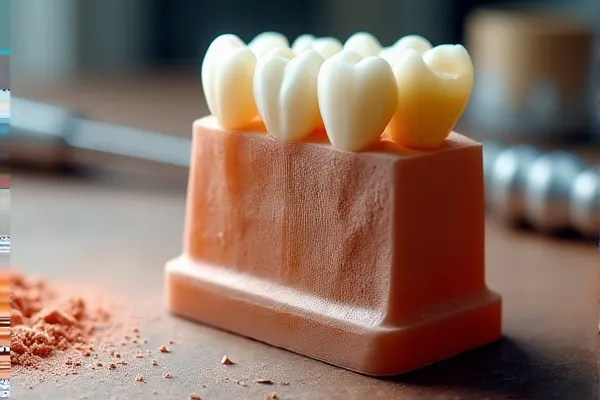
Selecting the wrong dental lab for semi-precious PFM crowns can lead to inconsistent results, remakes, and frustrated patients.
Poor material handling, unclear pricing, or communication delays often cause avoidable stress in clinical workflows.
By evaluating labs through material knowledge, QC systems, and partnership fit, dental teams can confidently select a lab that supports both predictable outcomes and operational clarity.
To select the right dental lab for semi-precious PFM crowns, evaluate alloy expertise, quality control, communication systems, pricing transparency, and risk mitigation practices. Labs with documented processes, material traceability, and responsive support help ensure predictable, high-quality outcomes while maintaining workflow efficiency.
Semi-precious PFM (Porcelain-Fused-to-Metal) crowns offer a middle ground between cost-efficiency and long-term clinical performance. They combine stable mechanical properties with good biocompatibility and aesthetics, making them a versatile option in both anterior and posterior restorations.
Semi-Precious-PFM-Crown-Layered-Structure
Semi-precious PFM crowns are made from noble metal-based alloys (typically palladium-based) layered with high-strength dental porcelain.
These crowns maintain marginal integrity and shade stability better than non-precious PFMs over time.
Each alloy category presents a different balance of cost, strength, and esthetics.
| Property | Non-Precious | Semi-Precious | High-Noble |
|---|---|---|---|
| Metal Cost | Low | Moderate | High |
| Corrosion Resistance | Variable (often lower) | Good | Excellent |
| Porcelain Bonding | Acceptable with treatment | Stable | Very stable |
| Biocompatibility | Risk of reaction (e.g. Ni) | Low risk (Pd-based) | Minimal risk |
| Indicated Use | Posterior, low-aesthetic | Universal | Aesthetic zones, premium cases |
Semi-precious crowns provide a strong functional and aesthetic performance without the premium price of high-noble systems.
Semi-precious crowns are well-suited for cases requiring durability, controlled esthetics, and budget balance.
These crowns provide dependable results with fewer remakes or adjustments, especially when produced by labs experienced in handling noble alloys.
Semi-precious PFM crowns represent a cost-aware, clinically reliable option that balances esthetics and strength.
To explore material options further, consider requesting a free materials guide tailored to your clinical needs.
Not all dental labs are equipped to fabricate semi-precious PFM crowns with consistency and precision. These cases demand not just material access but specific casting experience, alloy handling expertise, and compliance with international standards. Vetting a lab’s real capability is essential to avoid remakes and ensure predictable outcomes.
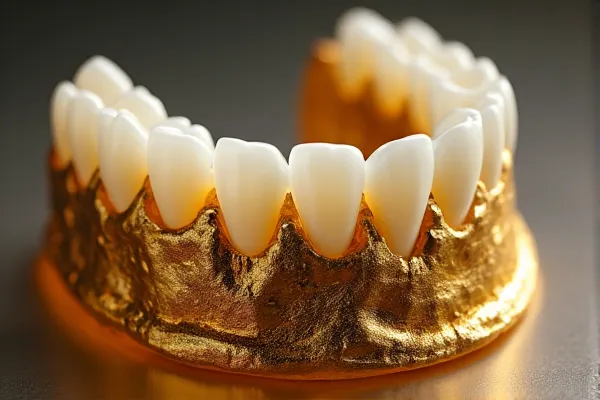
Semi-Precious-PFM-Dental-Lab-Requirements
Fabricating semi-precious PFMs requires more than just general crown-making skill.
Without this equipment and knowledge, even a competent lab can produce unpredictable results with noble alloys.
Reliable labs working with semi-precious alloys should follow strict process and material traceability standards.
These certifications help ensure consistency and accountability across cases and batches.
Case history is often a better indicator of lab expertise than portfolio images.
Ask how many semi-precious PFM cases the lab processes monthly—not just whether they “can” do it.
✅ Semi-precious PFM fabrication requires specialized tools and skills – TRUE
Handling noble alloys demands more than generic casting ability—it requires alloy-specific workflows and controls.
❌ Any dental lab can produce quality semi-precious crowns – FALSE
Without the right equipment, standards, and experience, labs risk miscasting, poor ceramic bonding, or uncontrolled shrinkage.
A dental lab’s quality control (QC) system directly influences crown fit, esthetics, and long-term performance. Especially for semi-precious PFM crowns, where alloy integrity and bonding precision matter, labs must follow strict, documented procedures to reduce remakes and chairside adjustments.

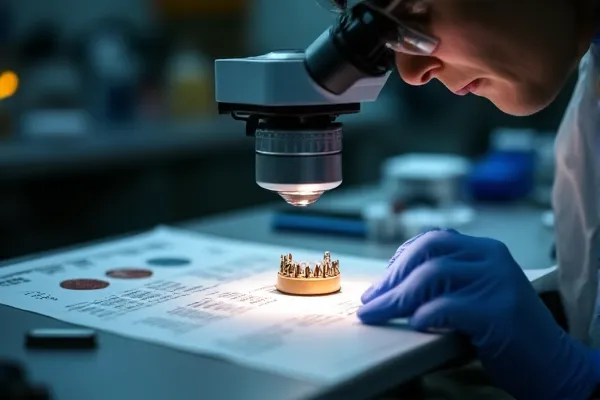
Dental-Lab-QC-Inspection-Semi-Precious-Crown
Material accuracy is the foundation of a reliable restoration.
Ask labs whether they perform these checks on every case or just selected batches.
Precision at the margin and correct shade layering impact both clinical success and patient satisfaction.
Consistency in these steps reduces the risk of adjustments or remakes at delivery.
Knowing a lab’s QC philosophy reveals how they handle issues when they arise.
Proactive labs should be transparent about thresholds, procedures, and continuous improvement efforts.
A well-defined QC system reduces surprises at chairside and helps you avoid costly remakes.
If you’re unsure where to start, consider requesting our lab quality checklist to guide your next lab evaluation.
Choosing a lab solely based on unit price often leads to hidden costs down the line. True cost-effectiveness comes from understanding what’s included, how timelines affect chairside efficiency, and whether payment structures align with your clinic’s financial rhythm.
Dental-Lab-Cost-Factors-Comparison
Price lists often omit variables that surface after case submission.
Always request a detailed breakdown, especially for multi-unit or esthetic zone cases.
Faster production isn’t always cheaper in the bigger picture.
A slightly higher-priced but time-reliable lab can yield better ROI through operational stability.
The financial relationship with a lab extends beyond a single case.
Look at total annual value, not just the line on the invoice.
✅ The lowest lab price doesn’t guarantee the lowest overall cost – TRUE
Chairside inefficiencies, remakes, and hidden fees often make “cheap” crowns more expensive in practice.
❌ All labs offer similar value if the unit price is the same – FALSE
Material quality, consistency, support, and financial terms vary significantly behind the same listed price.
Beyond technical output, a lab’s communication process often determines whether your cases arrive on time, fit correctly, and require fewer adjustments. Service consistency—especially in semi-precious crown work—depends heavily on how efficiently labs receive, process, and respond to clinic input.
Dental-Lab-Communication-Workflow
Efficient communication starts with compatible systems.
Confirm whether the lab supports your scanner brand, software platform, and image formats before scaling up.
Timely feedback prevents minor issues from becoming clinical problems.
A good lab partner helps you pre-empt problems—not just fix them afterward.
Strong lab partnerships are built on consistent, two-way communication.
Ongoing collaboration reduces back-and-forth, improves trust, and ultimately lowers cost-per-case over time.
Good labs don’t just receive your cases—they work with you to make them better.
Assess how easily you can communicate, escalate, and improve together before committing long-term.
Choosing a dental lab—especially for semi-precious PFM crowns—is a long-term decision that impacts patient outcomes, chairside efficiency, and practice costs. The right lab reduces operational friction, while the wrong one creates costly surprises. A structured vetting process helps clinics make confident, risk-aware choices.

Dental-Lab-Selection-Risk-Control
Be cautious of common warning signs that may lead to inconsistent results.
Labs that hesitate to share their processes may lack the systems to support long-term consistency.
Trial runs reveal more than sales brochures ever will.
A test cycle helps your team calibrate expectations before scaling up.
Sustainable partnerships rely on mutual accountability and data.
Labs that embrace metrics are more likely to grow with your practice—not just fulfill cases.
Even strong materials and pricing can’t compensate for poor process control or unclear commitments.
Before committing volume, request a pilot case plan and evaluation checklist to guide your lab decision with data.
Choosing a reliable dental lab for semi-precious PFM crowns requires more than just comparing price lists—it means assessing every part of the lab’s capability, consistency, and communication. A structured, metric-based selection approach empowers clinics to build lasting partnerships that deliver technical precision and operational trust.
To test if Raytops Dental Lab is the right fit for your clinic’s needs, request a sample case and evaluate our semi-precious PFM crown workflow in real conditions.