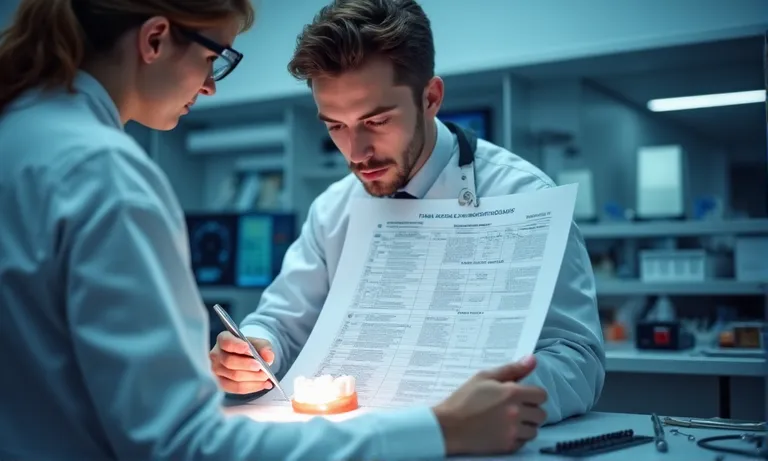
Choosing an Overseas Dental Lab for crown & bridge work is no longer just about cost or turnaround—it’s about consistency, precision, and the ability to meet clinical demands across every case. For procurement decision-makers, the real challenge is evaluating quality through visible outcomes and invisible processes—before the first case even ships.
To make a sound decision, there are six key dimensions that signal whether a lab is truly reliable:
Focusing on these markers helps procurement teams mitigate risk, maintain consistency, and build scalable partnerships with labs that behave like true extensions of the clinical workflow.
Crown and bridge restoration quality is defined by how well the final prosthesis integrates with function, aesthetics, and long-term clinical outcomes. From an Overseas Dental Lab perspective, quality is not a general promise—it’s a deliverable, achieved through measurable fit, material consistency, and technical alignment with the dentist’s expectations.
define crown & bridge restoration quality
Restoration success relies on measurable parameters that ensure accurate seating, patient comfort, and biomechanical performance.
| Material Type | Durability & Strength | Aesthetic Quality | Best Used In |
|---|---|---|---|
| Monolithic Zirconia | ~1000 MPa flexural strength, high wear resistance | Moderate translucency | Posterior crowns and bridges |
| Layered Zirconia | Strong zirconia core + ceramic layering | High translucency | Anterior crowns requiring esthetics |
| PFM | Proven longevity, veneer chipping possible | Moderate aesthetics | Cost-sensitive posterior restorations |
| E.max | ~400 MPa, glass-ceramic | Excellent natural esthetics | Single anterior crowns |
Material strength alone isn’t enough—labs must apply proper workflow and sintering curves. See independent test data on zirconia performance in dental restorations.
Lab-level inconsistencies often show up as reworks, chairside delays, or compromised patient satisfaction.
Proper crown and bridge quality depends on quantifiable clinical criteria like marginal gap, occlusal balance, and fit. Material selection should match functional zone and patient expectations. Most recurring issues stem from avoidable workflow breakdowns. At Raytops, our workflow ensures predictable outcomes through documented QC standards, verified measurements, and technician-level accountability.
Measurable benchmarks are essential for objectively evaluating lab work and minimizing remakes. Clear numeric ranges and documented checkpoints allow dental labs and clinicians to align expectations, especially in crown and bridge restorations where precision is critical to success.
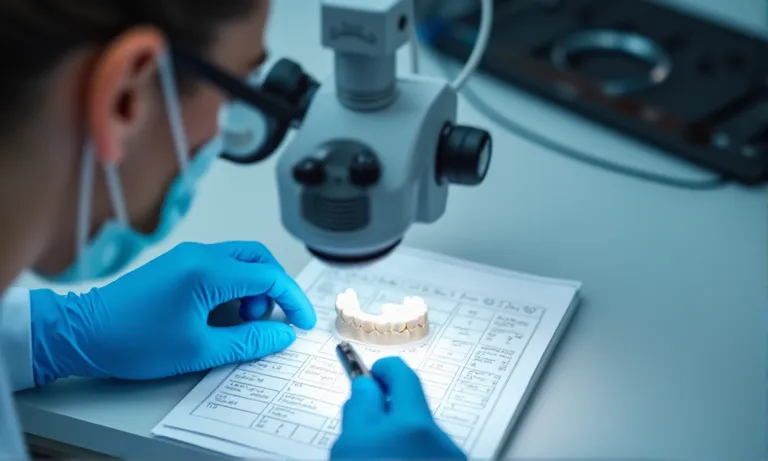
measurable benchmarks to assess crown & bridge quality
The marginal gap is one of the most cited clinical indicators for evaluating crown fit.
Using marginal gap data as a benchmarking metric helps establish a performance baseline and ensures comparability across batches.
Occlusion and contact tightness directly affect seating time, patient comfort, and chairside efficiency. Here’s how we benchmark them internally at Raytops:
This multi-step control process ensures consistent occlusal and proximal precision across units and technicians.
Labs that implement QC documentation workflows provide more transparency, accountability, and long-term trust.
If a lab doesn’t provide any data or visuals to support crown accuracy, clients are left to judge fit solely by chairside outcome—which increases remakes.
✅ Labs should provide key quality metrics for every case – TRUE
Measurable data like marginal gap, contact tightness, and QC sign-off improve transparency and help reduce remakes.
❌ Visual inspection alone is sufficient to judge crown fit – FALSE
Without objective measurements, errors may go unnoticed until chairside complications occur.
Consistent crown and bridge quality across batches depends on how well a dental lab controls its workflows, technician variability, and case documentation. From an Overseas Dental Lab’s standpoint, stability is engineered—not assumed—through systems, training, and process visibility.
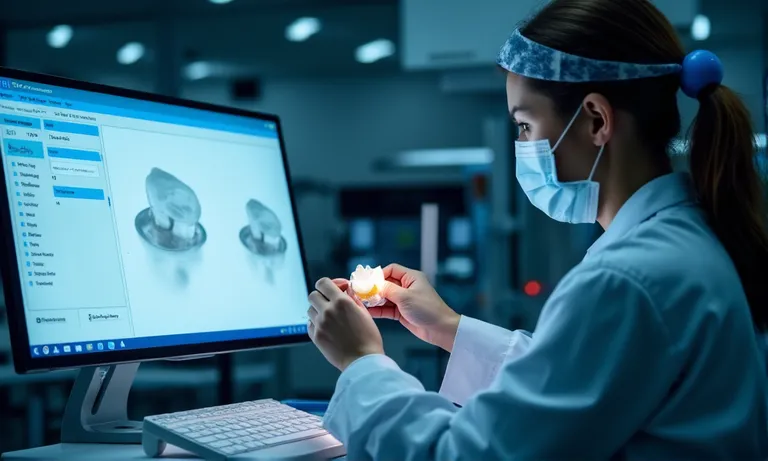
factors affect quality consistency across batches
Workflow standardization is the backbone of quality consistency. Every variable we fix reduces the chance of unpredictable outcomes.
Standardized workflows allow labs to scale production without compromising quality—key for high-volume clinics and DSOs.
Even with standardized systems, technician competence remains a major determinant of outcome predictability.
At Raytops, every technician’s case history and performance metrics are reviewed monthly to reinforce accountability and continuous learning.
Labs with inconsistent systems often see higher adjustment or remake ratios. The root causes often fall into three categories:
| Factor | Typical Outcome | Risk Impact |
|---|---|---|
| Inconsistent design SOPs | Variable fit, occlusal interference | More chairside adjustments |
| Technician reassignment | Different interpretation of anatomy | Increased intra-lab variation |
| Missing case documentation | No baseline to confirm or trace error | Higher remake risk on complex jobs |
Maintaining consistency isn’t just about machines or materials—it’s how well people, processes, and standards work together to protect case integrity.
Consistency in crown and bridge cases depends on whether the lab applies standard operating workflows, retains skilled technicians, and minimizes uncontrolled variables. Labs with process gaps or rotating technician assignments typically have less predictable results, which leads to higher chairside adjustments and remake risk.
Digital case submission directly shapes the precision and predictability of crown and bridge restorations. Poor file capture or incompatible formats create interpretation gaps, while clean, compatible STL files accelerate lab accuracy and reduce chairside adjustment needs.
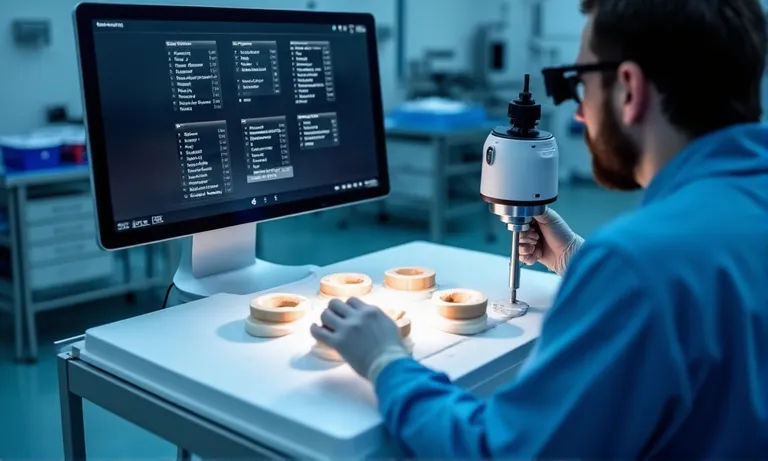
digital file submission impact final quality
The format and origin of a digital scan influence how seamlessly it integrates into lab workflows.
Proper format matching reduces time spent on file correction and maximizes first-pass production efficiency.
Margin clarity in scans determines how accurately the lab can define prep edges and create proper sealing zones.
| Issue Type | Design Consequence | Outcome Risk |
|---|---|---|
| Fuzzy or unclear margin | Guesswork during line marking | Poor fit, open margins |
| Debris or gingiva interference | Inaccurate path of insertion | Seating issues, rocking crowns |
| Over-scanning with voids | Misreading of emergence profile | Aesthetic compromise |
At Raytops, we perform margin evaluation in Exocad before moving forward. Cases with uncertain boundaries are flagged back to clients within 12 hours.
A sharp margin line is not optional—it’s foundational to restoration integrity.
Digital cases allow for structured internal validation steps prior to production.
These steps ensure digital submissions are not blindly milled—but actively interpreted for success.
Submitting clean digital files in supported formats dramatically improves restoration accuracy and turnaround. Key success factors include STL compatibility, margin clarity, and whether the lab follows defined digital QA steps—not all do.
A clearly defined remake policy and documented quality assurance (QA) system signal whether a dental lab is serious about long-term reliability. Labs that hide remake data or lack structured feedback mechanisms may cost clients time, money, and patient trust.
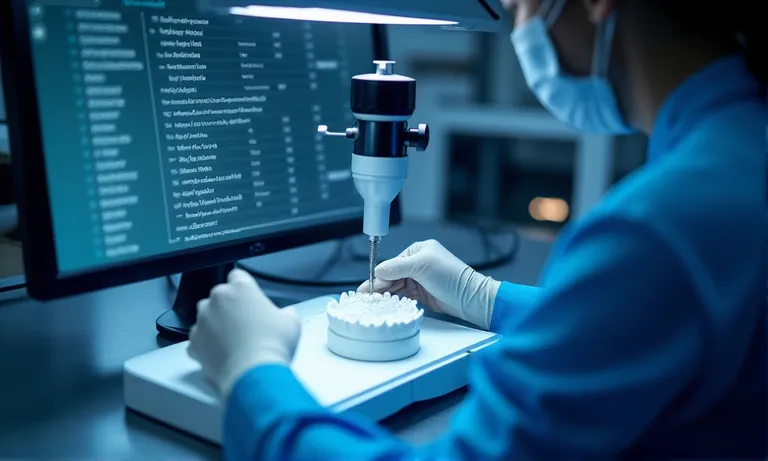
remake policy and quality assurance process
Remake rate is a key metric that reflects overall consistency and process control.
At Raytops, our monthly remake metrics are shared with repeat clients during QA reviews to maintain transparency and drive mutual improvement.
A reliable lab encourages feedback and uses it to prevent future issues—not just fix the immediate problem.
Transparent QA processes are not just about tracking errors—they reflect how seriously the lab takes long-term collaboration.
Remakes often occur due to missing or incomplete initial case data. Clients and labs must align on submission completeness.
Mutual documentation reduces blame-shifting and promotes predictable results.
✅ Labs with transparent remake policies are more reliable – TRUE
Open reporting, error tracking, and collaborative QA improve trust and reduce repeated mistakes.
❌ Remakes are inevitable and don’t require review – FALSE
Unexplained or untracked remakes often indicate larger systemic issues that will persist without correction.
A dependable outsourcing partner signals its reliability through visible certifications, predictable performance, and structured onboarding. These are the cues buyers should prioritize—not price alone—when selecting an Overseas Dental Lab.
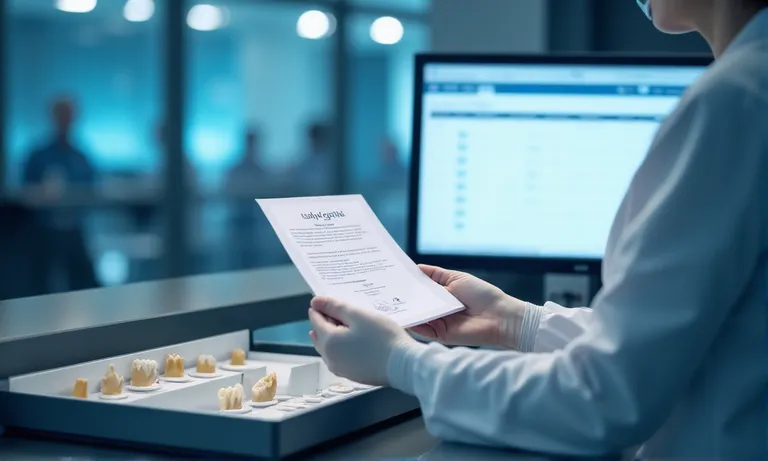
reliable crown & bridge outsourcing partner
Certifications validate that a lab operates under formalized systems—not just individual technician experience.
For example, Raytops holds both ISO 13485 and CE certification, with renewed audits completed annually and SOP logs digitally archived for traceability.
Delivery reliability reflects how well a lab manages internal planning, production, and communication.
| Performance Metric | Reliable Lab Benchmark | What to Ask Suppliers |
|---|---|---|
| On-time delivery rate | 95%+ | Do you track turnaround data monthly? |
| Avg. production time (C&B) | 4–6 working days | How are urgent cases prioritized? |
| Case tracking availability | Real-time or portal-based | Can we access live tracking? |
| Late case notification | Within 12 hours of delay | How are delays communicated? |
Without structured data, clients may only learn about a lab’s inconsistency after multiple delays.
Strong labs don’t “wing it”—they have structured onboarding frameworks that ensure alignment before volume scaling.
We apply a standard onboarding checklist reviewed over video call, and assign a technical liaison before scale-up.
A reliable outsourcing partner proves itself through compliance, consistency, and process clarity—not just verbal promises. Decision-makers should focus on external certifications, proven delivery history, and whether onboarding feels engineered or improvised.
Selecting the right Overseas Dental Lab for crown & bridge cases requires more than comparing unit prices or turnaround time. The most successful partnerships are built on measurable quality benchmarks, transparent remake policies, digital compatibility, and operational consistency.
From Raytops Dental Lab’s perspective, reliable crown & bridge outcomes are never accidental—they result from structured workflows, validated digital protocols, and a shared commitment to continuous improvement. We’ve seen how clinical fit, esthetics, and chairside adjustments all trace back to upstream decisions made during lab collaboration.
For decision-makers in DSOs, private clinics, or distribution networks, here are the three questions to keep top of mind:
If the answers aren’t clear, it’s time to re-evaluate the partnership.
At Raytops, we don’t just fabricate—we collaborate. And we’re ready to show what precision-driven outsourcing truly looks like.