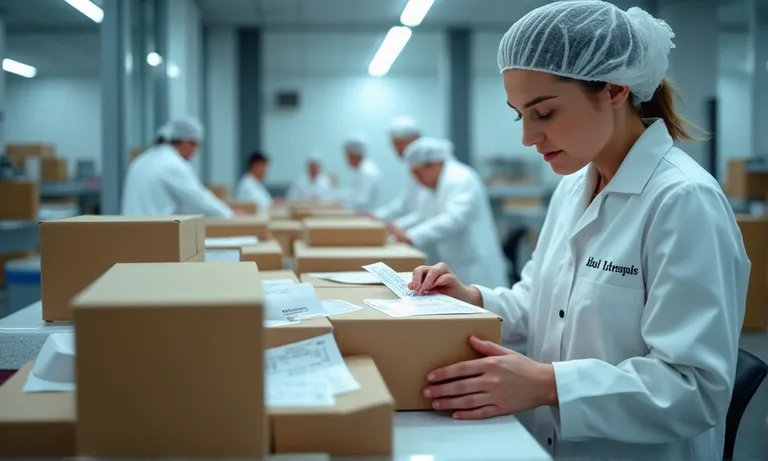
International logistics isn’t a back-office detail—it’s a core pillar of outsourcing success. For dental clinics, DSOs, and distributors working with overseas dental labs, evaluating logistics capabilities is essential to reduce delays, prevent remakes, and maintain patient trust.
Price and product quality matter—but they’re not enough. A truly capable lab should demonstrate:
Proven success with major international couriers (DHL, FedEx, UPS) and routine shipments across multiple regions
Trackable, transparent workflows, including real-time updates or client dashboards
Full compliance with global shipping standards, including HS codes, invoices, and labeling
Defined escalation protocols for lost, delayed, or damaged cases
Clear performance benchmarks and SLAs, ensuring timely and accountable delivery
This guide unpacks the key logistics questions to ask during lab evaluation—giving you a structured, actionable lens to select partners who can consistently deliver across borders.
Why Logistics Capabilities Matter When Working with Overseas Dental Labs
Logistics isn’t just an operational detail—it’s a trust mechanism. For clinics and distributors working across borders, poor logistics from a dental lab can result in delayed cases, damaged prosthetics, or customs complications that directly impact patient care and business continuity.
When shipments are late or unpredictable, chairs sit empty, appointments get rescheduled, and patients lose confidence. For distributors, unreliable fulfillment can damage brand reputation and strain downstream relationships. This makes logistics performance a core indicator of supplier reliability, not just an add-on function.
In our experience, successful global partnerships rely on labs that treat logistics as part of their product—not just a backend process. It’s not uncommon to see well-made crowns lose their value because of poorly timed deliveries or missing paperwork. That’s why understanding a lab’s shipping setup, issue response workflow, and regional reach is just as important as evaluating their craftsmanship.
Logistics is where physical work meets customer expectation. A lab’s ability to deliver consistently, accurately, and transparently reflects its readiness for long-term cooperation.
dental-lab-global-logistics-importance
What risks do poor logistics create for dental clinics and distributors?
Appointment disruption: Delayed shipments can force clinics to reschedule patients, damaging satisfaction and revenue.
Case remakes: Damaged or lost items often require urgent remakes, increasing cost and straining lab resources.
How do logistics issues affect turnaround time and patient outcomes?
Even if production time is fast, poor shipping can erase the benefit. For example, a crown ready in three days but stuck in customs for five can still result in a total turnaround of eight days or more—too late for time-sensitive patients.
Why is logistics a key indicator of supply chain reliability?
It reflects how well a lab handles cross-border uncertainty (customs, carrier issues, timezone differences).
Labs with structured shipping systems tend to have higher overall process maturity, which translates to better case handling.
Logistics performance can often predict future scale readiness—especially important for DSOs and distributors planning regional rollouts.
What Are the Key Indicators of a Dental Lab’s International Shipping Competence? The best dental labs treat logistics like a system—not a side task. Before starting a partnership, clinics and distributors should evaluate whether a lab’s international shipping setup is structured, data-driven, and globally experienced. These are not soft signals—they’re hard indicators of long-term reliability. Labs with proven courier experience, global shipment history, and performance metrics tend to operate with higher consistency and lower risk. That’s especially vital for dental groups scaling operations or distributors managing downstream commitments. Below are the critical markers to check when evaluating a lab’s shipping competence.
Does the lab have proven experience with major global couriers? Courier partnerships show readiness: Labs with long-term use of DHL, FedEx, or UPS are familiar with customs protocols, pickup scheduling, and global documentation standards. Local-to-global network awareness: Some labs may only serve a few regions. Look for partners with a history of stable shipments to multiple continents. Volume indicators: Ask how many cases are shipped internationally per week or month. High and stable volume usually signals process maturity. Are key shipping KPIs tracked and shared? The best labs track and share performance data, including: KPI Metric Description What to Look For On-time delivery rate % of cases arriving within committed timeframe ≥ 95% for reliable partners Damage or loss rate % of shipments damaged or lost in transit ≤ 1% for mature shipping system Customs clearance time Average delay at border per destination ≤ 48h (varies by region) Escalation response time Avg time to reply when logistics issue occurs < 12h preferred
These indicators help predict future service stability, especially in time-sensitive cases. Which countries or regions does the lab ship to regularly? Shipping geography matters: A lab that consistently ships to your country is likely familiar with the relevant HS codes, commercial invoice formats, and local courier practices. Ask for region-specific references: Has the lab served other clinics or distributors in your country? Past experience is often the best forecast of future reliability. You can also verify this by asking for real shipment tracking links (with identifying details masked), showing dispatch-to-delivery history.
How Transparent and Trackable Is the Lab’s Shipping Workflow?
Visibility is the new currency of cross-border logistics. When evaluating a dental lab’s international shipping capability, transparency isn’t a bonus—it’s a requirement. From real-time tracking to proactive issue alerts, how the lab communicates throughout the logistics journey directly impacts clinic scheduling, patient satisfaction, and operational confidence.
Labs that offer visible, predictable, and automated updates remove friction and reduce the need for constant follow-up. This transparency is particularly vital for multi-clinic groups or distributors managing high-volume case flow across time zones.
dental-lab-shipping-tracking-dashboard
Will the lab provide real-time tracking numbers and delivery status updates?
Automatic dispatch tracking: Labs with structured workflows typically send tracking numbers as soon as the airway bill is generated.
Courier-linked systems: Look for integrations with DHL, FedEx, or UPS that allow clients to follow delivery progress without requesting manual updates.
Single-case and batch-level visibility: Especially useful for distributors or DSOs managing dozens of cases simultaneously.
Does the lab use a case tracking portal or dashboard for clients?
Centralized access: Modern labs offer online client portals where shipment status, lab progress, invoices, and communication are consolidated.
Multi-user support: Some portals allow multiple clinic staff or procurement team members to access shared logistics views, reducing siloed communication.
Time zone-adjusted alerts: Top labs time notifications around the client’s local hours to ensure timely response windows.
Are clients notified proactively in case of customs delays or delivery issues?
While customs delays may be outside a lab’s control, how they respond is a core service indicator:
Labs with active monitoring will:
Alert clients when packages are held at customs.
Offer support documents (e.g., commercial invoices, airway bill scans).
Liaise with the courier or freight forwarder on behalf of the client.
This reduces uncertainty, helps with rebooking patient visits, and shows the lab’s operational maturity.
How Does the Lab Handle Packaging, Labeling, and Documentation?
Safe shipping starts long before the courier picks up the box. In international dental logistics, the quality of packaging, accuracy of labeling, and completeness of documentation can mean the difference between a smooth delivery—or a case stuck in customs or damaged in transit.
Clinics and distributors should assess how well a dental lab handles these core logistics fundamentals. What seems like a back-office task is actually a critical front-line defense for ensuring delivery integrity and regulatory compliance.
dental-lab-packaging-labeling-compliance
Are prosthetics packaged to prevent damage during long-distance transit?
Effective packaging involves more than placing items in a box:
Cushioning and moisture protection: Proper foam inserts, silica packs, and sealed containers are essential for fragile or multi-unit cases.
Tamper-evident sealing: Security tape or serialized bagging is often used to confirm package integrity.
Material consideration: Using crush-resistant outer cartons minimizes risk during air transit or stacking.
Are shipments labeled with the correct HS codes and commercial invoice values?
Mislabeled or incomplete paperwork can lead to customs delays:
HS Code inclusion: Commonly used code for dental prosthetics is 9021.21—labs should apply this correctly to airway bills and invoices.
Invoice alignment: Declared value, product description, and country of origin should be consistent across documents.
Proper document placement: Waybills and invoices must be placed on the outside of the box in a clear sleeve for customs inspection.
Document Type
Must Include
Notes
Commercial Invoice
Product name, HS code, declared value
Must match airway bill exactly
Packing List
Case ID, contents, unit count
Often attached with invoice
Airway Bill
Tracking ID, sender/receiver, contents
Courier-generated
Label Stickers
Fragile, temperature, customs code
Region-specific optionality
Can the lab follow country-specific labeling or documentation requirements?
For example:
EU: May require CE mark references on invoice.
Middle East: Some customs require Arabic translations.
Southeast Asia: Certain ports enforce stricter invoice formatting or require digital document pre-clearance.
Labs should be familiar with localized shipping nuances, especially if you’re working across multiple countries.
What Response Mechanism Is in Place for Lost, Delayed, or Damaged Shipments?
Great logistics isn’t just about what goes right—it’s about how fast issues get resolved when things go wrong. When dental prosthetics are delayed, lost, or arrive damaged, it can derail clinic schedules, disrupt patient care, and erode confidence in the lab relationship. That’s why a lab’s issue response mechanism is a key indicator of their reliability and maturity as a logistics partner.
Labs that proactively support problem-solving—not just passively forward courier updates—demonstrate a stronger commitment to outcome accountability.
dental-lab-logistics-escalation-response
Is there a standard escalation process or contact person for logistics issues?
Dedicated logistics contact: Labs with international clients should provide a clear point of contact for shipping-related concerns.
Defined escalation steps: From initial report → internal confirmation → courier communication → client update, each stage should be time-bounded.
Multi-time zone coverage: For overseas clients, labs that respond during local working hours are far easier to work with than those operating in limited China-only hours.
Can the lab assist with courier communication or customs reprocessing?
Proactive courier support: Strong labs don’t just share tracking numbers—they contact DHL/FedEx themselves when a package is stalled.
Document resubmission: In customs holds, they can quickly resend commercial invoices, airway bills, or certificates to unblock clearance.
Exception explanation: Labs should help explain the issue to clients in plain terms (e.g., “incorrect HS code” or “value mismatch”) to reduce misinterpretation.
Does the lab support corrective actions or remakes if delivery fails?
If damage or loss occurs, response quality matters more than blame assignment. Look for:
No-delay remake policy: Some labs immediately begin remake production in parallel while resolving courier claims.
Partial shipment restoration: If only part of a case is lost, labs may offer “priority fragment resends” to restore critical function first.
Credit + timeline transparency: Financial adjustments or timelines for remake delivery should be clearly stated—not negotiated case-by-case under pressure.
What Questions Should You Ask a Dental Lab Before Partnering?
Choosing a dental lab without assessing logistics can lead to costly surprises. Before entering any partnership, clinics and distributors should ask targeted, logistics-specific questions. These reveal whether the lab has real-world international experience—or is learning as they go.
Well-prepared labs will not only answer confidently but often provide documentation, metrics, or client examples to back it up.
dental-lab-partnership-evaluation-checklist
What is the lab’s average shipping time to your country or region?
Ask for recent delivery timelines—not estimates.
Labs that work routinely with your region should show customs clearance familiarity and optimized packaging for your route.
If possible, request a breakdown of average transit time vs customs delay vs lab prep time.
Can the lab provide documentation samples or SLA terms for logistics?
Look for proof, not promises:
Sample commercial invoice or airway bill (redacted OK)
Written SOPs for shipment prep, labeling, and exception handling
Service-level agreement (SLA) outlining expected turnaround times and communication commitments
Common Logistics Questions
What to Look for in a Good Answer
“Do you use DHL or FedEx?”
Lab confirms with tracking records and experience per region
“What HS code do you use for crowns?”
Lab names the code (e.g., 9021.21) and explains why
“Can you provide a sample packing list?”
Sends a sample PDF or screenshot within 24h
Are there references or case studies proving successful international delivery?
Labs that have handled repeat cases for similar clients are more likely to offer:
Proven ability to coordinate with international couriers
Logistics agility (e.g., route changes, emergency resends, case tracking fixes)
You don’t need dozens of references—but a few recent, relevant examples can speak volumes.
Conclusion
Reliable international logistics is not a bonus—it’s a baseline for global dental partnerships. A lab’s ability to deliver consistently, communicate clearly, and resolve issues quickly can directly impact your clinic’s performance and patient satisfaction.
From assessing courier experience to evaluating response protocols, every logistics detail contributes to long-term trust and operational smoothness. As an overseas dental lab, we’ve seen how clear processes, transparent timelines, and collaborative escalation paths transform logistics from a risk point into a competitive edge.
Whether you’re sourcing your first international partner or scaling global operations, asking the right questions upfront ensures your lab can truly deliver—on time, intact, and in sync.