Choosing the right veneer material can overwhelm clinicians balancing aesthetics, strength, and preparation depth.
Mismatched selection often leads to chairside adjustments, shade mismatch, or costly remakes, frustrating both dentists and patients.
This guide offers an in-depth comparison of porcelain, e.Max, and zirconia veneers—covering composition, strength, aesthetics, cost, and case-specific suitability—so you can make informed decisions that enhance clinical efficiency and patient satisfaction.
Porcelain, e.Max, and zirconia veneers differ in material composition, strength, aesthetics, and preparation needs. Porcelain is hand-layered and highly translucent, ideal for minimal-prep aesthetic zones. e.Max offers a strong, esthetic balance and suits most cases. Zirconia provides high strength for functional demands but is less lifelike. Selecting the right veneer material depends on case-specific clinical and visual requirements.
Choosing the right veneer material starts with understanding how they’re made, how they behave under stress, and how they respond to clinical preparation. From a dental lab’s perspective, knowing these differences helps clinicians avoid misalignment between aesthetic goals and material performance.
Veneer-material-differences-lab-setup
Each material has a distinct chemical structure and fabrication method that influences performance and aesthetics.
These structural differences influence processing time, contouring precision, and polishability.
Flexural strength plays a key role in how each material performs under functional load.
Higher strength materials allow thinner designs in high-stress areas but may trade off visual finesse.
Light transmission and internal reflection define natural-looking restorations.
Material choice influences how much tooth structure must be reduced.
✅ Each material has different strengths, aesthetics, and prep requirements – TRUE
Matching clinical goals with the right material reduces remakes and improves outcomes. Labs can advise based on preparation design and case type.
❌ All ceramic veneers perform equally if bonded well – FALSE
Bonding technique helps longevity, but material properties dictate strength, optical results, and long-term stability. Selection must be case-specific.
For patients prioritizing beauty over function, aesthetic performance becomes the deciding factor. Labs play a key role in guiding clinicians toward materials that balance light behavior, shade fidelity, and texture reproduction. Below is a breakdown of how each veneer system performs visually.
Veneer-translucency-color-match-comparison
Translucency is key to a natural look. It determines how well a veneer integrates with surrounding teeth.
| Material | Translucency Grade | Light Behavior | Suitable Zones |
|---|---|---|---|
| Porcelain | Very High | Excellent enamel-like light diffusion | All anterior cases |
| e.Max | High | Balanced depth and color stability | Anterior/posterior |
| Zirconia | Medium to Low | Opaque; reflects more than it transmits | Posterior or masked |
Multilayer zirconia improves on earlier opacity issues, but still lags behind in incisal zones.
Creating lifelike surface texture and color depth involves more than shade tabs—it’s about technique and material capability.
Labs using feldspathic or cut-back techniques can push e.Max and porcelain beyond standard shade guides.
Not all ceramics are equally suited for the smile zone, where patients scrutinize details under high visibility.
| Parameter | Porcelain | e.Max | Zirconia |
|---|---|---|---|
| Central Incisor Match | Excellent | Good (with cut-back) | Fair (limited nuance) |
| Incisal Edge Transparency | Excellent | Moderate | Low |
| Texture Reproduction | High | Moderate | Low |
A material’s response to layering determines how much visual depth a lab can build into the restoration.
Visual excellence requires the right combination of material and technician control—not just strength metrics.
Feldspathic and e.Max veneers remain the top aesthetic options for visible areas, especially where subtlety and enamel mimicry are essential. Zirconia excels functionally but is rarely the first choice for high-aesthetic demand.
Aesthetic appeal is important—but when restorations must endure years of mechanical stress, durability becomes critical. From flexural strength to long-term survival, here’s how these veneer materials compare based on lab experience and clinical evidence.
Veneer-material-fatigue-testing-comparison
Each material has a distinct resistance to bending or flexing forces, which determines how it handles chewing pressure over time.
Durability includes how well a material maintains polish, resists opposing tooth wear, and holds surface texture.
Restorations don’t always fail from breakage—they may chip, delaminate, or lose esthetic finish.
| Failure Type | Porcelain | e.Max | Zirconia |
|---|---|---|---|
| Incisal chipping | High | Moderate | Low |
| Crack propagation | High | Moderate | Low |
| Adhesive interface | Technique-sensitive | Stable | Stable |
While lab tests matter, clinical survival reflects the real-world performance dentists and patients care about.
✅ Zirconia is not the most durable veneer option in every case – TRUE
Its structural strength is unmatched, but in aesthetic veneers, bonding, polishing, and prep depth affect longevity just as much.
❌ Feldspathic veneers always fail faster than others – FALSE
In properly selected anterior cases, they can perform beautifully for a decade or more. Failures usually result from indication mismatch or bonding error—not the material itself.
Choosing veneer materials isn’t only a clinical decision—it’s also financial. Labs and clinics alike must balance visual outcomes with cost structures, remake risks, and equipment demands. Understanding the true cost per case goes beyond lab fees alone.
Veneer-lab-cost-structure-porcelain-emax-zirconia
Base lab pricing reflects both material cost and fabrication complexity.
| Material | Average Lab Fee (per unit) | Notes |
|---|---|---|
| Porcelain | $$–$$$ | Hand-layered; labor-intensive |
| e.Max | $$ | Efficient press or mill workflow |
| Zirconia | $–$$ | Low material cost; CAD/CAM dominant |
Fees vary by geography and whether the lab performs layering or monolithic finishing.
Fabrication cost includes the tools needed for pressing, milling, layering, and finishing.
Labs with in-house pressing or sintering capacity can deliver faster, more consistent results.
Lower up-front cost doesn’t always mean lower total cost.
Time lost in rework, remake, or chairside adjustment adds hidden costs rarely quoted.
Patient-side perception of value impacts material choice—some are willing to pay more for “natural” or “minimally invasive.”
Material cost is more than a number—it’s tied to expectations, case complexity, and clinical outcome.
Let us provide a sample cost comparison or walk you through material-specific pricing.
No veneer material is universally ideal. Matching material to case type requires balancing strength, translucency, prep depth, and patient habits. As a lab, we often assist clinicians by mapping these decisions step-by-step to minimize chairside adjustments and maximize aesthetic success.

Veneer-material-selection-clinical-scenario-map
| Scenario | Ideal Material | Why |
|---|---|---|
| Full smile makeover | e.Max or Porcelain | Tone and translucency coordination |
| Single central incisor | Feldspathic porcelain | Micro-layering ensures match |
| Posterior veneer (if indicated) | Zirconia | Load-bearing with longevity |
✅ Material selection should be driven by clinical case factors – TRUE
Each patient scenario has different stress patterns, visual demands, and enamel availability. Choosing based on indication—not just preference—yields more stable outcomes.
❌ One veneer material can work for every type of case – FALSE
Overgeneralization leads to remakes, fracture, or unmet expectations. No single material balances strength and aesthetics across all clinical conditions.
Even with the right material chosen clinically, success often hinges on how well patients understand that choice. Labs can support this communication by providing visual references and reinforcing realistic expectations. Here’s how clinics can align aesthetic goals with patient priorities.
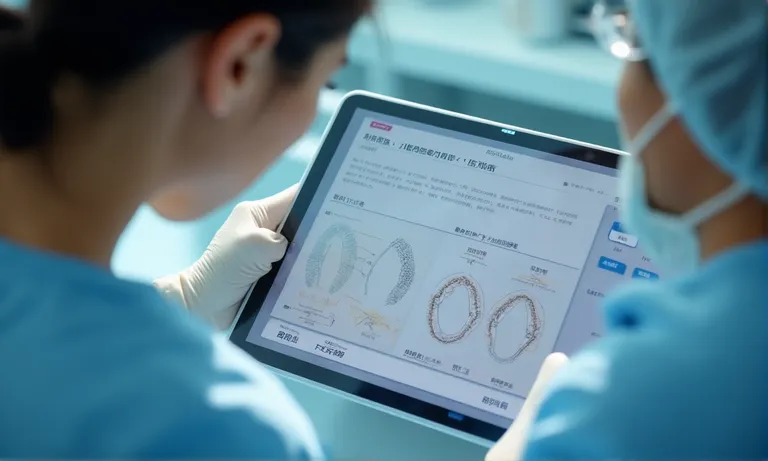
Dentist-discussing-veneer-materials-with-patient
Patients respond better to images than technical descriptions. Providing side-by-side comparisons helps frame the conversation.
Clinical jargon often creates distance. Explaining material differences through relatable analogies improves understanding.
Keep language centered on benefits vs. limitations in everyday terms.
Patients often equate “stronger” with “better” or expect veneers to last forever.
Cost can shape perception of value. Ensuring transparency helps patients make confident decisions.
Effective material selection isn’t just about technical fit—it’s about shared understanding. When labs support clinicians with visual tools and honest insight, patients are more likely to feel informed, satisfied, and confident in their choice.
Conclusion:
Choosing between veneer materials isn’t about picking the strongest or most beautiful—it’s about matching the right solution to each clinical situation. From enamel preservation to patient expectations, every case benefits from a tailored approach.
Need help choosing the right veneer material for your next case? Contact Raytops Dental Lab for case-by-case guidance, mock-up support, or material-specific pricing insights.