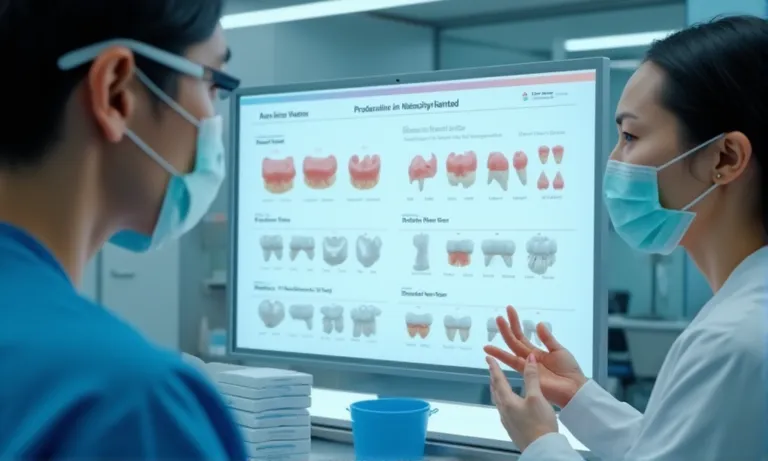
Long-term success with Chinese dental labs is built on more than case-by-case performance—it requires mutual trust, aligned expectations, and structured collaboration. While one-off orders may test technical ability, it’s the strength of the working relationship that determines whether a lab can scale with you, adapt to your feedback, and grow into a dependable strategic partner.
To build and sustain lasting collaboration, overseas clinics and DSOs should focus on:
This article breaks down each step of the journey—from building initial trust to scaling collaboration and choosing the right partners for the long run.
The shift from single-case orders to strategic partnerships with Chinese dental labs requires more than transactional success—it depends on relationship continuity, cultural understanding, and operational trust. Many overseas clinics start with small batches or pilot cases, but building a reliable long-term relationship hinges on how well both sides align expectations, resolve issues, and communicate transparently over time.
dental-lab-partnership-meeting-cross-border
Transactional performance can initiate a relationship, but it’s cultural fit and interpersonal trust that determine whether it lasts. Cross-border dental partnerships face added complexity from language differences, time zones, and interpretation gaps—trust becomes the bridge that connects both sides.
Trust and cultural fit influence:
From our experience, clients who clearly communicate their clinic culture and expectations early on tend to develop more stable, flexible working models with their Chinese lab partners.
“Guanxi” (关系) is often misunderstood by Western partners, but it remains one of the most enduring and practical features of long-term collaboration in China. It’s not favoritism—it’s reciprocal trust, accumulated over time through reliable action.
Guanxi shows up in dental outsourcing as:
Clinics that understand Guanxi as part of the business culture—not a workaround—often enjoy smoother collaboration and stronger lab commitment.
In long-term dental lab relationships, communication must be more than reactive. It should be proactive, structured, and mutual. Labs also need to feel safe raising issues or asking clarifying questions—without fear of jeopardizing the relationship.
Elements of effective cross-border communication:
Over time, labs become an extension of your team—not just an external vendor—when they feel equally responsible for the outcomes.
To move from transactional orders to lasting partnerships with Chinese dental labs, focus on:
Lasting relationships aren’t built on discounts—they’re built on shared reliability.
Scaling from a trial order to full-scale collaboration with a Chinese dental lab depends on how well you validate capabilities, standardize expectations, and document your next steps. Pilot projects are useful, but without clear criteria and a structured post-pilot process, promising starts often stall. Successful scale-up relies on turning insights into SOPs—and agreements into routines.
dental-lab-pilot-to-production-scaling-process
A pilot isn’t just a test of quality—it’s a simulation of long-term cooperation. Evaluating a lab only by how one crown fits misses the bigger picture of communication, reliability, and responsiveness.
Key pilot evaluation metrics include:
| Metric | What It Reveals |
|---|---|
| Case turnaround consistency | Can the lab deliver on time, every time? |
| Remake rate & root-cause clarity | Is the lab proactive in resolving issues? |
| Communication speed & clarity | Are responses timely, complete, and aligned? |
| File handling & version tracking | Are uploads organized, labeled, and retrievable? |
| Post-delivery support | Does the lab follow up and adjust if needed? |
Labs like Raytops often include pilot check-ins at week 2 and week 4 to align on results before clients scale.
A successful pilot is only valuable if its outcomes translate into working protocols. Too often, clients move to full production without documenting what worked—and what still needs alignment.
Steps to formalize the scale-up:
Scaling isn’t just about higher volume—it’s about predictability. The more you clarify, the easier it is for the lab to assign the right people, tools, and quality checks.
To scale successfully from pilot to production, focus on:
Scaling is not the end of testing—it’s the beginning of standardization.
The strongest lab partners aren’t just skilled—they’re invested. For overseas clinics and distributors, long-term success depends on working with Chinese dental labs that treat collaboration as a shared journey, not just an order pipeline. What differentiates a transactional vendor from a long-term partner is their willingness to innovate, solve problems, and grow with you over time.

dental-lab-long-term-investment-technology-support
In digital dentistry, tools evolve rapidly—and so do client expectations. Labs that proactively invest in technology show they’re not only prepared for today’s needs but ready for tomorrow’s complexities.
Signals of tech-forward labs:
These investments often don’t show up on the first invoice—but they’ll show in long-term turnaround speed, remake rates, and design precision.
When things go smoothly, most labs perform well. The real test of a partnership is how your lab responds when something breaks, is unclear, or needs urgent resolution. Proactivity is often what separates reliable partners from forgettable vendors.
Ways to evaluate support quality:
Labs that take ownership of outcomes—even when it’s inconvenient—are the ones that consistently support client retention and satisfaction.
A strong long-term lab partner typically shows:
Long-term partnerships thrive when labs see your growth as their responsibility too.
Sustainable partnerships with Chinese dental labs aren’t forged in a single order—they’re shaped over time through trust, clarity, and shared improvement. The clinics and distributors that succeed long-term are those who treat their lab not as a vendor, but as an operational partner—one that learns with them, adapts with them, and builds alongside them.
We’ve seen partnerships flourish when early pilots turn into codified routines, when feedback loops are open and respected, and when both sides view quality not as a checkbox, but as a shared responsibility.
If you’re looking for more than a quote—and aiming to build a dependable, scalable dental lab relationship—let’s explore what that growth path could look like together.