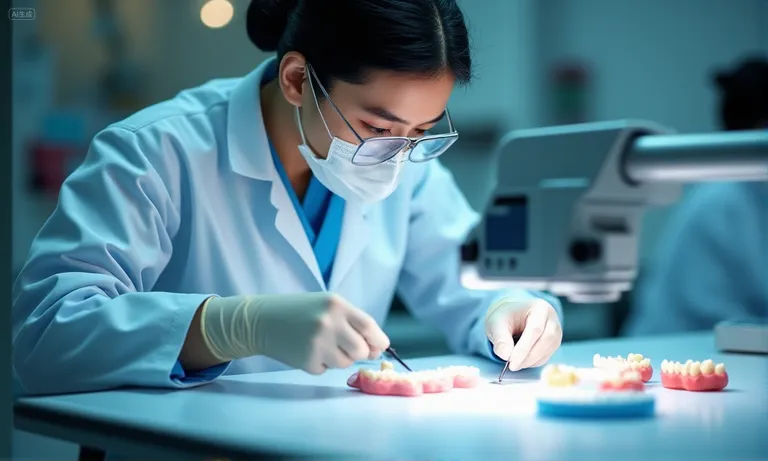
Evaluating quality assurance (QA) and remake rates is one of the clearest ways to judge whether a dental implant lab can support sustainable long-term collaboration. A lab with transparent remake data, proven compliance (ISO, FDA, CE), and structured QA systems provides procurement teams confidence not only in today’s case outcomes but also in the stability of future supply chains.
Procurement managers often face recurring challenges:
By treating QA and remake rates as structured evaluation criteria, procurement leaders can identify labs that combine low remake rates, robust QA protocols, and operational transparency. The result is fewer remakes, reduced hidden costs, and a stronger foundation for predictable quality, resilient partnerships, and long-term supply chain stability.
The remake rate of a dental implant lab provides one of the clearest windows into its reliability. While many labs may claim high-quality standards, the percentage of cases that require rework reveals whether their processes consistently deliver on expectations. Procurement teams evaluating potential partners should treat remake data as a measurable KPI for long-term stability.
dental-lab-remake-rate-quality-control
Most international benchmarks suggest that remake rates under 3–5% are acceptable for dental implant restorations. Rates above this threshold signal issues in material selection, technician consistency, or workflow accuracy. When labs can demonstrate remake percentages consistently below the industry average, it indicates that their QA systems are well established.
High remake frequency directly translates into hidden costs—not only for additional lab work but also for shipping delays, lost chair time, and dissatisfied patients. A clinic or DSO relying on a lab with unstable remake performance may face bottlenecks in delivery schedules and increased overheads. Conversely, a lab with a proven track record of low remake rates helps ensure predictable turnaround times and cost control.
Unlike marketing claims, remake data is quantifiable and comparable across suppliers. Requesting monthly or quarterly remake reports, ideally broken down by restoration type, gives procurement teams a transparent view of actual performance. Labs willing to disclose these figures demonstrate confidence in their processes and accountability toward long-term partners.
For clinics seeking a dependable overseas dental lab, remake rates function as a trust metric—an early indicator that prevents costly trial-and-error. Evaluating this data alongside quality assurance practices builds confidence that the chosen partner will deliver consistently over years of collaboration.
A strong quality assurance (QA) system is the foundation of a reliable dental implant lab. It ensures that every case—from single crowns to complex full-arch restorations—follows structured controls that minimize errors, reduce remake rates, and maintain compliance with global standards. Buyers evaluating suppliers should always look for these core components.

dental-lab-quality-assurance-procedures
A reliable lab follows documented SOPs at every production stage, from digital file intake to final polish. Key checkpoints include:
Certifications provide external validation of a lab’s QA. Procurement teams should verify:
| Certification | What It Ensures | Why It Matters |
|---|---|---|
| ISO 13485 | Medical device quality system | Standardized procedures & traceability |
| FDA registration | Compliance for U.S. market | Legal access and safety assurance |
| CE marking | EU conformity | Confidence for EU distribution |
Labs with valid, updated certifications demonstrate a commitment to international standards, not just local practices.
Every lot of zirconia, alloy, or resin should be traceable back to the supplier batch. Proper QA systems keep logs of:
This protects clinics against recalls, ensures biocompatibility, and provides documentation for audits.
The most reliable labs run periodic internal audits, reviewing remake trends, technician performance, and compliance gaps. By using this feedback loop, they improve consistency while preventing recurring issues. For overseas dental labs, sharing audit summaries with clients builds additional trust and transparency.
A robust QA system is not just about catching mistakes—it is about preventing them. For procurement teams, verifying these elements helps distinguish between labs that talk about quality and those that consistently deliver it.
Comparing remake data and QA practices across multiple dental labs is one of the most effective ways to separate reliable partners from average vendors. Procurement teams should not rely solely on claims but instead request and analyze documented evidence before making a long-term decision.

dental-lab-qa-remake-data-comparison
The first step is to formally request detailed remake statistics. A structured process should include:
Labs that respond quickly with clear data demonstrate operational maturity and transparency.
| Lab | Reported Remake Rate | Industry Benchmark | Transparency Level |
|---|---|---|---|
| Lab A | 2.8% | 3–5% | Full documentation provided |
| Lab B | 6.1% | 3–5% | Partial disclosure |
| Lab C | 3.5% | 3–5% | Regular updates, detailed by case type |
By placing labs side by side, procurement teams can immediately spot outliers and prioritize partners that fall below or within benchmark ranges.
Paper reports alone may not tell the whole story. Running trial cases with multiple suppliers helps verify:
Trial validation gives procurement managers a real-world baseline that complements formal documentation.
Evaluating remake and QA data across labs avoids the pitfall of relying on one-sided marketing claims. Instead, it enables a structured, evidence-driven selection process where performance can be quantified and verified before scaling up cooperation.
The quality of a dental implant lab is not only reflected in individual cases but also in its long-term performance. Low remake rates and robust QA systems translate into stability, predictable costs, and trust—factors that shape whether a partnership grows or breaks down over time.

ALT: dental-lab-long-term-partnership-trust
Every remake consumes time, resources, and clinical chairside adjustments. Over years of cooperation, even a small difference in remake rate—say 3% versus 6%—can add up to thousands of extra hours and significant cost increases. Consistent outcomes strengthen the buyer’s confidence that the lab can handle volume growth without hidden inefficiencies.
When remake rates are low, delivery timelines remain steady. Procurement managers benefit from:
Predictability in logistics is often the hidden advantage of strong QA systems.
A partnership’s value is measured not just by initial unit cost, but by the total cost of ownership. Lower remake rates reduce rework costs and chairside time, delivering better ROI for clinics and procurement teams. Over time, transparency in QA reporting and consistently low remakes build trust, creating a partnership that evolves from transactional purchasing into a strategic collaboration.
For overseas dental labs like Raytops, proving long-term reliability means showing that QA is embedded into daily operations. This commitment helps clients feel secure scaling their case volume, knowing that costs and outcomes will remain under control.
Procurement teams evaluating dental implant labs need more than generic promises—they need clear, practical answers. Asking the right questions during early conversations uncovers how transparent a supplier is about their QA and remake practices. This step is crucial when comparing both local and overseas partners.
ALT: dental-lab-procurement-qa-discussion
Prompt: A highly realistic, professional photo of a procurement manager interviewing a dental lab representative in a meeting room. Documents with remake statistics and QA checklists are visible on the table. Soft daylight, DSLR clarity, serious but collaborative tone.
Request exact percentages, broken down by case type. A credible supplier will explain both numerator (remake cases) and denominator (total cases), avoiding inflated claims.
Look for labs that provide clear remake policies, including how cases are reworked, turnaround time for corrected items, and whether additional costs are absorbed by the lab.
Ask about inspection checkpoints, material traceability, and batch-level reviews. A mature lab will show how problems are minimized upfront, not just fixed afterward.
Transparency here includes how files are checked for compatibility, how shipping delays are mitigated, and what communication channels exist for troubleshooting across time zones.
By structuring procurement conversations around these questions, decision-makers gain a transparent picture of QA maturity and remake risk. Labs that provide direct, well-documented answers are more likely to be dependable partners for long-term collaboration.
Reliable partnerships in dental implant outsourcing are built on more than pricing—they depend on consistent quality assurance and transparent remake rates. By asking the right questions, comparing data across suppliers, and validating performance with trial cases, procurement teams can minimize hidden risks and ensure stable outcomes. For clinics and DSOs, this means fewer remakes, predictable scheduling, and cost efficiency. As an overseas dental lab, Raytops works with partners who value transparency and consistency, ensuring long-term cooperation that supports both clinical reliability and supply chain stability.