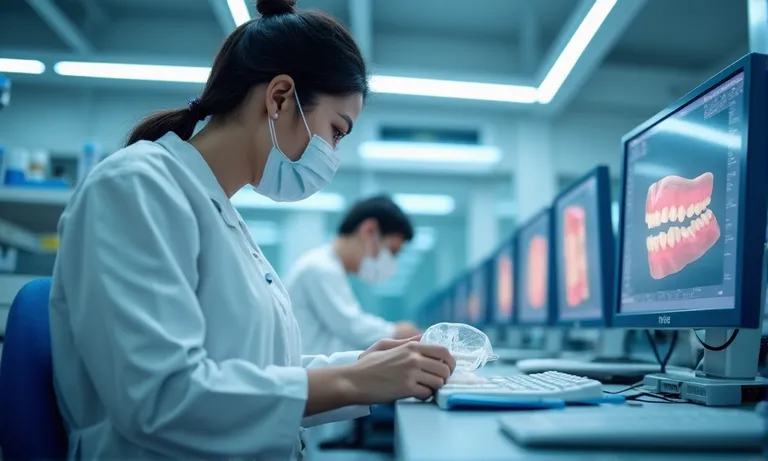
As crown and bridge manufacturing evolves, dental labs are adopting technologies that promise greater precision, faster turnaround, and improved consistency. But for procurement professionals, the key question is no longer who has the latest tools—it’s who uses them effectively to deliver measurable outcomes.
From 3D printing and AI-assisted design to advanced milling workflows and high-performance materials, each innovation introduces both opportunity and complexity. Some labs implement these technologies with proven results—others simply add them to a capabilities list.
This article breaks down seven evaluation areas to help procurement teams assess a lab’s true digital readiness:
These insights equip buyers to move beyond marketing claims—toward partnerships with labs that are not only tech-capable, but also workflow-aligned, reliable, and ready to scale with modern dental demands.
New technologies are reshaping crown and bridge manufacturing by driving improvements in precision, efficiency, and scalability—all essential for meeting modern clinical and procurement demands. Labs that embrace advanced digital systems are better positioned to deliver faster turnarounds, tighter quality control, and predictable outcomes across complex restorative cases.
dental-lab-digital-transformation-equipment-overview
Innovation in crown and bridge production is driven by evolving clinical expectations and the pressure for higher efficiency in dental workflows. Key drivers include:
At Raytops, we saw case volumes triple for multi-unit zirconia in the past 18 months—driven in part by DSOs shifting to fully digital design protocols. This growth would not have been manageable without scalable digital tooling and pre-milling validation steps.
The adoption of digital technologies significantly enhances multiple performance metrics.
| Impact Area | Traditional Workflow | Tech-Enabled Workflow |
|---|---|---|
| Quality control | Manual checks, visual only | Digital margin validation, connector analysis |
| Consistency | Technician-dependent output | Template-driven, repeatable CAD designs |
| Lead time | 7–10+ days avg. (manual steps, shipping) | 3–5 days avg. with digital-first case intake |
Clinics working with digital-first labs consistently report smoother seating experiences, fewer remakes, and better predictability in patient scheduling—especially in cases involving 4+ units or esthetic zones.
Because the quality of your restorative outcomes—and your procurement efficiency—now depends on how tech-enabled your lab partner is. Buyers who don’t assess this risk working with labs that may fall behind in accuracy, speed, or traceability.
In 2023, a U.S.-based procurement lead told us their previous lab couldn’t align scanned data from their Trios systems with final zirconia designs—resulting in four remakes across two months. After switching to a lab with native scanner integration, remake frequency dropped by over 70%.
Whether you’re sourcing for a DSO, private clinic, or distributor, understanding a lab’s digital maturity isn’t optional anymore—it’s operationally essential.
3D printing is becoming a critical enabler in crown and bridge workflows—offering speed, precision, and flexibility in areas where milling or manual work may fall short. For buyers and procurement teams, the key is not just whether a lab owns a printer, but how well that technology is integrated into the restorative process with validated materials and protocols.

dental-lab-3d-printing-model-prosthetic-comparison
In crown and bridge workflows, 3D printing is primarily used to accelerate support processes—not always final restorations. Key applications include:
In our lab, we routinely print resin models for complex anterior cases where shade and contour need technician validation before final pressing. It allows for same-day feedback loops with clients using digital viewers.
While 3D printing offers flexibility and cost savings, its performance varies depending on application and post-processing quality.
| Application Type | Milled Version | 3D Printed Version |
|---|---|---|
| Working models | Highly durable, slow to produce | Faster, lower cost, less abrasion-proof |
| Provisional crowns | Limited esthetics | High esthetics, suitable for short term |
| Full-contour crowns | Superior strength | Not yet widely validated for final use |
| Custom trays/bite guards | CNC-formed, durable | Cost-effective, easier to iterate |
Printed models are ideal for diagnostics and temporaries, but final crowns still favor milling or pressing due to strength and long-term intraoral stability.
Procurement teams should look beyond brand names and ask for evidence of print calibration, resin certification, and case-level validation. Good questions include:
A distributor client in Australia once reported bite misalignment across printed models from a previous lab. Upon review, we discovered they were skipping post-cure exposure times. After standardizing their curing cycles and introducing batch control logs, remake rates dropped by 60% over the next 6 weeks.
AI and automation are streamlining core steps in dental lab workflows—from margin detection to model segmentation—while reducing manual variability and increasing throughput. But alongside the benefits come real considerations: how much control is retained, what gets validated, and where over-reliance may lead to risk.

dental-ai-margin-detection-vs-manual-design
AI has become particularly effective in early-stage design tasks where speed and repeatability matter most.
In our workflow, AI tools are often used to generate the first design pass. Technicians then refine and validate output—ensuring both speed and clinical relevance remain balanced.
When used properly, automation can standardize high-variability steps and eliminate fatigue-driven errors.
| Workflow Step | Manual Execution | AI/Automation Support |
|---|---|---|
| Margin marking | Technician-dependent, variable across shifts | Consistent output with visual confidence score |
| Bridge connector sizing | Manual input prone to miscalculation | AI suggests optimal width based on span |
| Occlusion adjustment | Relies on technician feel | Simulated occlusal analysis pre-manufacturing |
We’ve worked with several labs scaling up full-arch workflows who found that switching to AI-based connector validation reduced fracture-related remakes by 40% in under 3 months.
Over-automation without technician oversight can introduce blind spots—particularly in complex, esthetic, or borderline-prep cases.
A DSO client once submitted a 4-unit anterior case for automated margin detection. The system misinterpreted a subgingival margin on lateral #7, producing a short crown. The lab had skipped visual verification due to high volume. The case was remade—delaying the patient appointment and increasing tension with the clinic.
Procurement teams should ask labs not just if they use AI, but how oversight is maintained. Responsible automation means human-in-the-loop protocols, approval checkpoints, and risk-based exceptions—not blind handoffs.
Recent advancements in milling and CAM technologies have redefined how dental labs handle anatomical complexity, speed, and restoration predictability—especially in full-arch and multi-unit bridge cases. For procurement teams, understanding what equipment a lab uses (and how they use it) directly affects case consistency, margin integrity, and structural longevity.

5-axis-dental-milling-cam-zirconia-bridge-workflow
Five-axis milling allows for angulated drilling paths and smoother undercut access, significantly improving fit and anatomical precision in curved or multi-unit structures. Compared to 3-axis systems, key improvements include:
In our lab, upgrading to 5-axis systems reduced internal adjustment rates on posterior bridges by over 50%—particularly in longer spans where flat-axis systems struggled to maintain connector symmetry.
New sintering ovens and software allow labs to fine-tune temperature ramps, hold times, and shrinkage compensation—directly improving zirconia strength and shade stability.
| Sintering Parameter | Traditional Oven | Advanced Protocol Capable System |
|---|---|---|
| Ramp-up speed | Fixed default | Adjustable by material and case size |
| Shrinkage compensation | Manual or template-based | Auto-calculated via scanned pre-milled model |
| Shade consistency | May vary by thickness | Profiled by location in furnace and material |
One U.S.-based partner lab we support reported a 35% drop in crown surface cracks after shifting from manual sintering to CAM-integrated furnace scheduling. They also noticed more predictable A1-to-A3 shade results across anterior units.
Yes—but only when paired with trained technicians and consistent input quality. CAM systems now offer:
However, during a cross-border project with a mid-sized European lab, we found that despite having upgraded CAM software, their technicians used outdated workflows. After joint training and standardization, remake volume fell by 12% over the following quarter.
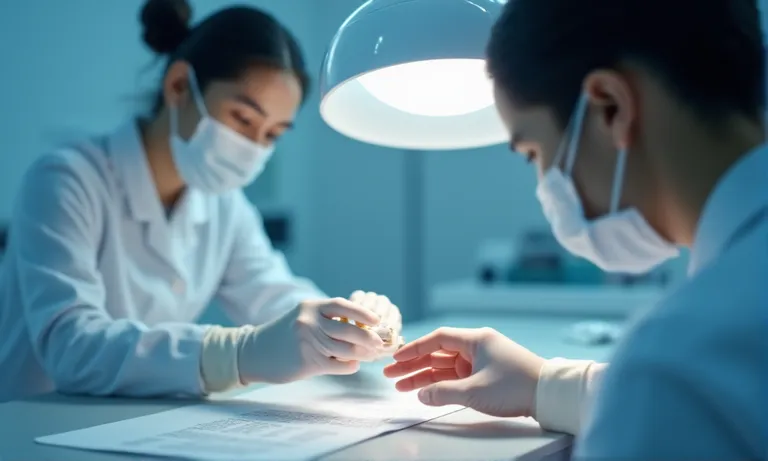
Advanced materials like multilayer zirconia and hybrid ceramics are expanding the possibilities of crown and bridge restorations—offering better shade blending, improved strength-to-thickness ratios, and broader clinical indications. For buyers, knowing what materials a lab offers (and how they’re validated) is key to managing esthetics, function, and longevity.
multilayer-zirconia-hybrid-ceramic-comparison
These new materials are engineered to solve longstanding esthetic and structural trade-offs.
In our workflows, we often propose multilayer zirconia for anterior bridge cases where shade transition and cervical blending are critical—cutting down remakes due to shade mismatch by up to 12%.
New-generation materials are more consistent across indications—but each has trade-offs.
| Property | Multilayer Zirconia | Hybrid Ceramics |
|---|---|---|
| Shade Matching | Good intrinsic gradient | Requires surface staining |
| Translucency | Controlled by disc layer | Naturally high, especially in thin areas |
| Flexural Strength | 700–1200 MPa depending on zone | 150–200 MPa |
| Indicated For | Full crowns, bridges, anterior restorations | Inlays, onlays, thin veneers |
| Milling Adjustability | Good for complex frameworks | Easier edge trimming, faster mill time |
We once assisted a UK-based clinic evaluating hybrid ceramics for posterior bridges. The material passed initial esthetic tests but failed under load due to insufficient thickness tolerance. We recommended switching to multilayer zirconia with optimized sintering—a change that led to sustained performance over 14 months of follow-up.
Yes—labs should be able to provide both material certifications and internal validation data.
When partnering with labs for crown and bridge work, buyers should ask not only what materials are used—but also how those materials are selected, tested, and matched to the clinical context.
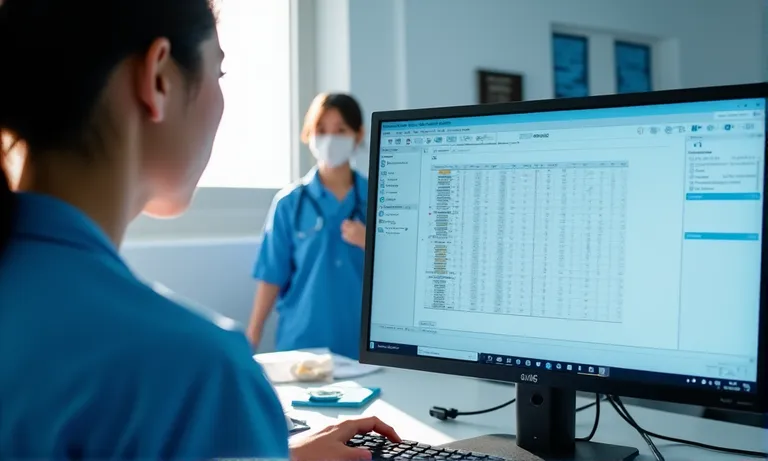
Technology alone doesn’t ensure better outcomes—labs must also demonstrate how well they’ve operationalized it. For procurement teams, evaluating a lab’s tech readiness means looking beyond equipment inventory to assess training depth, workflow integration, and real-world results.
dental-lab-tech-training-dashboard-validation
Labs that are truly tech-enabled should be able to show—not just tell.
At Raytops, we often prepare demo sequences for new clients—especially DSOs transitioning to digital workflows. For one Canadian DSO, we provided before/after remake logs and digital screenshots, which directly led to a six-month pilot agreement.
Advanced equipment needs advanced hands.
| Staff Competency Area | Evaluation Questions Buyers Can Ask | Why It Matters |
|---|---|---|
| CAM/Milling Proficiency | Are CAM designers certified or internally benchmarked? | Impacts toolpath precision, connector strength |
| Material Handling | Is staff trained on sintering ovens by manufacturer protocols? | Ensures consistency in final translucency and fit |
| Automation Workflow Use | Can they show staff usage logs or simulation audits? | Reveals real vs. nominal adoption of automation tools |
We once supported an Australia-based clinic evaluating a “fully digital” lab. The lab listed Exocad and 5-axis equipment—but had zero certified users. With no standardized output checks, anterior remake rate was over 30%. Our joint retraining program cut that to 8% in 3 months.
Labs still handling mixed analog-digital cases must have clear protocols for crossover and integration.
Many labs claim digital readiness—but only some offer repeatable, auditable, and scalable systems for applying it. As a buyer, request evidence of maturity—not just availability.
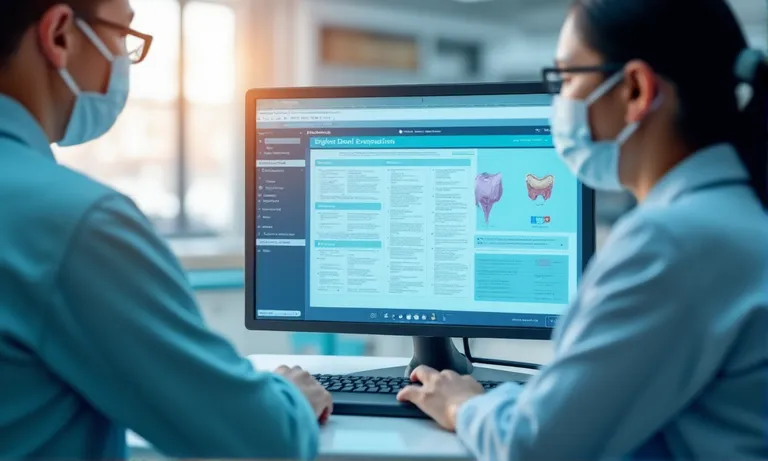
Great questions uncover weak workflows. For procurement teams, vetting a lab’s digital capabilities requires more than ticking off equipment lists—it calls for asking the right questions to verify operational maturity, track record, and impact on business outcomes.
dental-procurement-vetting-checklist-kpi-dashboard
Experience with tech means little unless it’s operationalized. Key questions include:
Labs that answer these with data-backed specifics—not vague anecdotes—are more likely to deliver stable performance. In one case, a US DSO uncovered during vetting that a lab advertising “AI-enhanced design” hadn’t rolled it out beyond demo files. That lab was eliminated before trials, avoiding downstream delays.
Procurement is impact-driven. Structure your vetting around outcome questions:
| Evaluation Angle | Suggested Question | Why It Matters |
|---|---|---|
| Turnaround Impact | Has automation reduced turnaround variance in complex cases? | Affects scheduling and patient coordination |
| Esthetic Consistency | Do you have data on shade remakes pre- and post-new materials? | Critical for anterior work and patient satisfaction |
| Case Transparency | Can we track digital checkpoints across workflow stages? | Impacts QA visibility and remote approvals |
At Raytops, when onboarding group practices, we prepare “impact briefing slides” linking technology use (e.g., new sintering curves) with before/after remake rates. One client reported a 19% drop in remake requests within 90 days of switching labs based on these insights.
Uncertainty kills deals. End your vetting with logistical clarity:
Labs that clearly map cost structures and onboarding expectations build trust early and reduce the risk of surprise escalations post-contract.
Adopting new technologies is no longer optional—it’s a strategic imperative for labs supporting crown and bridge cases at scale. For procurement teams, evaluating a partner’s digital maturity means asking the right questions, assessing real-world implementation, and verifying outcome-based improvements.
Labs that successfully integrate AI, 3D printing, advanced milling, and next-gen materials can offer better consistency, faster turnaround, and more predictable collaboration. But true readiness lies not in tool ownership, but in how these tools are used to support daily workflows.
As an overseas dental lab deeply involved in digital transitions, we’ve seen how the right infrastructure—combined with process discipline—can directly improve client satisfaction and remake rates. The right technology partner isn’t just advanced—they’re aligned.