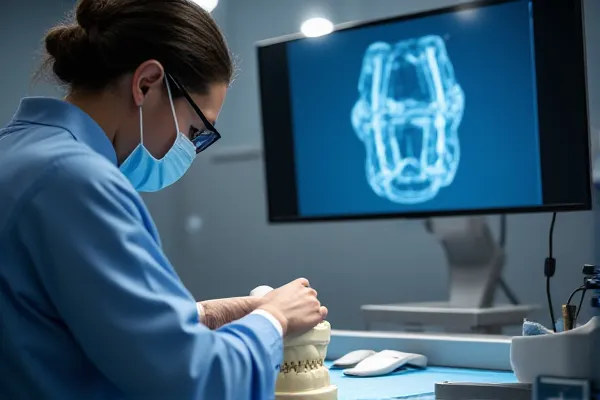
Dental implant success depends not only on osseointegration, but also on how well the restoration mimics natural form and function. Custom abutments—precisely engineered for each case—play a critical role in achieving superior esthetic results, tissue health, and mechanical fit.
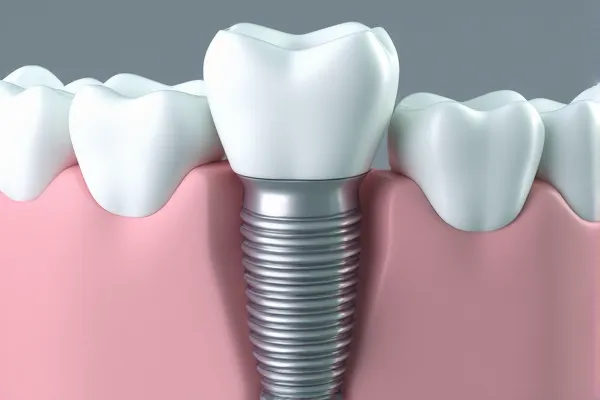
A custom abutment is a patient-specific connector that enhances esthetics, tissue support, and crown fit compared to standard components.
What Is a Custom Abutment and How Does It Differ from Stock?
From our perspective here at the lab, the difference between a custom and stock abutment isn’t just aesthetic; it’s about foundational precision. Custom abutments are individually designed components that connect the implant fixture to the final crown. They provide greater precision and customization than pre-manufactured stock abutments. When we analyze a case, the choice of abutment dictates so much about the final outcome, both clinically and technically.
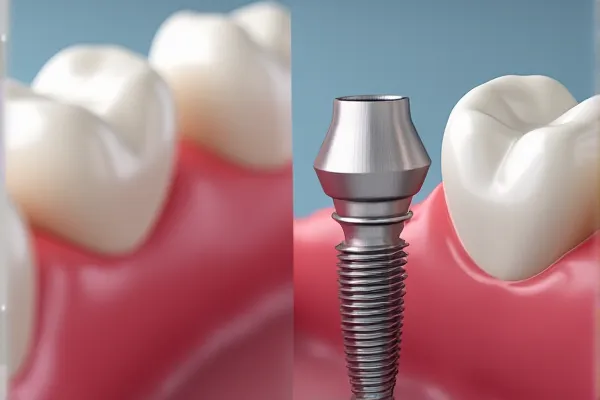
Comparison of custom vs. stock implant abutment
Definition and Fabrication Methods
Custom abutments are digitally or manually designed for each case.
Typically milled from a blank of titanium or zirconia using CAD/CAM.
Offers exact fit to surrounding soft tissue and crown contours.
Indications for Use Over Standard Abutments
Esthetic zones where emergence shape and margin depth are critical.
Cases with angled implants or deep placements.
Restorations requiring gingival contouring or personalized profile.
CAD/CAM Workflow Integration
Scanbody captures 3D implant position.
Abutment designed digitally and sent to milling unit.
Seamless with digital impression systems.
Common Materials: Titanium, Zirconia, Hybrid
Titanium: high strength and biocompatibility.
Zirconia: ideal for esthetic zone.
Hybrid: zirconia body with titanium base for screw-retained restorations.
✅ Custom abutments enable tailored fit and esthetic outcomes – TRUE Explanation: Their design adapts to soft tissue and crown requirements. ❌ Stock abutments can provide the same outcomes in any situation – FALSE Explanation: Stock abutments lack customization for tissue shape and depth.
How Does Custom Design Enhance Esthetic Outcomes?
Esthetics in implant restorations go far beyond crown shape. Custom abutments play a foundational role in gingival appearance and natural emergence.
Custom abutment shaping soft tissue
Optimized Emergence Profile
Supports soft tissue contour without compression.
Encourages natural scalloped architecture.
Minimizes black triangle formation.From our design screen, sculpting that ideal emergence profile isn’t just about avoiding black triangles; it’s about anticipating how the gingiva will drape and mature based on the shape we mill. We spend critical time on this subgingival contour because we’ve seen how a perfectly designed abutment supports the tissue to frame the final crown beautifully.
Soft Tissue Support and Papilla Preservation
Tissue drapes more naturally over contoured abutments.
Reduces risk of papilla loss between implants.
Enables symmetrical gingival margins.
Margin Control in the Esthetic Zone
Enables subgingival margin placement without impinging tissue.
Facilitates easier crown seating and cement cleanup.
Improves transition from abutment to crown.
Shade Matching for Translucent Restorations
Zirconia abutments eliminate metallic shadowing.
Color options allow better match in anterior restorations.
Harmonizes crown, abutment, and gingiva tone.
✅ Custom abutments improve soft tissue appearance and crown blending – TRUE Explanation: They allow esthetic contouring not possible with standard shapes. ❌ Crown shape alone determines the esthetic result – FALSE Explanation: Subgingival abutment shape affects final appearance significantly.
How Does It Improve the Fit and Stability of the Final Restoration?
Beyond esthetics, fit and long-term mechanical performance benefit from a custom approach.
Diagram showing crown seating on custom abutment
Passive Fit Across Implant-Angled Cases
Custom angulation compensates for off-axis placement.
Reduces stress on screw or cement interface.
Improves crown seating precision.Ensuring passive fit is paramount for us at the lab. We utilize stringent internal verification protocols, including [mention specific lab step, e.g., ‘scanning the milled abutment back into the design software for verification’] and [mention another step, e.g., ‘checking fit on a solid model with a verification screw’] because we know that any micro-movement originating at the interface can jeopardize the implant long-term.
✅ Custom design improves mechanical performance and crown fit – TRUE Explanation: Fit precision enhances durability and seating confidence. ❌ Only esthetics benefit from using a custom abutment – FALSE Explanation: Mechanical fit, torque handling, and retrievability also improve.
What Role Does Digital Design Play in Custom Abutments?
Digital workflows make customization both practical and efficient.
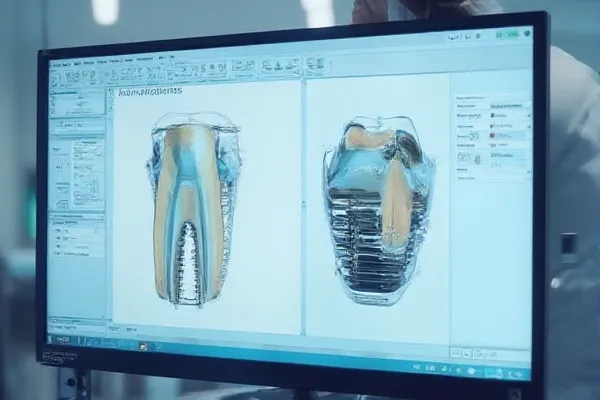
Software showing abutment design from scan
Intraoral Scans and Scanbody Positioning
Scanbodies capture implant depth and angle.
Provide 3D data for abutment base design.
Accurate scan key to custom fit.
Designing for Gingival Architecture
Digital tools let technicians shape subgingival contour.
Emergence profile tailored to soft tissue type.
Improves pink esthetics and healing profile.
Simulation of Final Crown Contours
Software previews how crown sits on abutment.
Adjustments made to ensure passive seating.
Reduces need for chairside adjustment.
Virtual Testing of Path of Insertion
Ensures no interference during crown placement.
Important in multi-unit or tilted implant cases.
Helps avoid undercuts and contact misalignment.
✅ Digital tools ensure custom abutments fit biologically and mechanically – TRUE Explanation: Simulation allows prediction and refinement before production. ❌ Custom abutments require analog impressions for accuracy – FALSE Explanation: Digital scans provide precise geometry without the mess.
When Are Custom Abutments Clinically Recommended?
Custom abutments aren’t for every case—but when they’re needed, they’re irreplaceable.
Clinical indications for custom abutment use
Esthetic Zone Replacements
Smile-critical cases demand precise margin and emergence control.
Prevents visible metal or asymmetrical tissue.
Enables lifelike anterior restorations.
Mismatched Tissue Architecture
Patient-specific gingival height or thickness varies.
Custom profile avoids compression or black triangles.
Supports asymmetrical contours on contralateral teeth.
Each abutment requires unique angulation and height.
Balances occlusal forces evenly.
Simplifies prosthesis design and seating.
✅ Custom abutments are essential in complex or esthetic cases – TRUE Explanation: They resolve clinical challenges that stock parts cannot. ❌ Standard abutments can handle any implant position – FALSE Explanation: Standard options often compromise either esthetics or fit.
How to Evaluate Lab Capability for Custom Abutment Design?
Not all labs can deliver high-quality custom abutments. Evaluation is key.From our perspective as a lab deeply invested in quality, evaluating your lab partner’s capability is critical for predictable results. Here’s what we believe makes a difference. We believe true lab capability is defined by consistency and a proactive approach to problem-solving, not just owning the latest equipment.
Technician checking abutment fit on model
Precision of Milling and CAD Compatibility
Verify lab uses modern 5-axis milling machines.
Ensure CAD software supports open STL workflows.
Look for validated implant library use.
Custom Tissue Models and Analog Accuracy
Lab should fabricate custom gingival models.
Analog placement must match intraoral position.
Physical and digital accuracy must align.
Case Portfolios with Soft Tissue Esthetics
Ask for photos of prior custom abutment cases.
Look at margin transitions and gingival shaping.
Evaluate esthetic integration quality.
QA Processes and Fit Verification Protocols
Lab should perform quality control at multiple steps.
Seating tests and screw torque verification.
Clear documentation of each case’s adjustments.
✅ Lab skill directly influences the success of custom abutments – TRUE Explanation: Quality varies significantly—labs must prove precision. ❌ Any lab with a mill can produce excellent abutments – FALSE Explanation: Experience, QA, and workflow define reliability—not just tools.
Conclusion
Custom abutments transform implant restorations from functional to exceptional. They offer unmatched control over esthetics, fit, and long-term performance—especially in demanding cases. Clinics that embrace custom abutments improve patient satisfaction and reduce adjustment time.
Take the Next Step Looking to offer more esthetic, precise restorations? We can help you integrate digital workflows, select qualified labs, and customize abutment protocols to elevate every case.