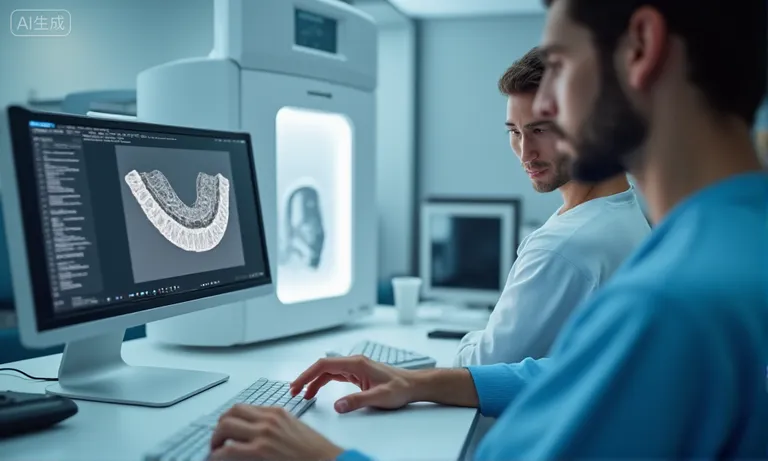
3D printing is reshaping dental implant restorations by solving two of the biggest challenges for dental labs: errors that cause costly remakes and delays that disrupt delivery schedules. By replacing manual processes with a streamlined digital workflow, it delivers greater precision, consistent fit, and fewer turnaround disruptions.
Key considerations for buyers include:
For procurement teams and dental professionals, choosing a lab that combines lower error rates with consistent delivery times leads to fewer disruptions, smoother case management, and greater confidence in scaling implant restoration services.
Errors and delays in implant restorations often stem from analog processes: distorted impressions, manual fabrication inaccuracies, and gaps in communication between clinics and labs. These issues lead to high remake rates and unpredictable delivery times, making it difficult for procurement managers to trust traditional workflows for consistent outcomes.
Conventional implant cases depend heavily on physical impressions and stone models. Even small distortions—such as bubbles in impression material or expansion during model setting—can cause marginal misfits. For patients, this often means additional chair time and repeated impression appointments. From the lab’s side, these inaccuracies frequently trigger remakes, extending delivery by days or even weeks.
Traditional wax-ups and metal casting remain vulnerable to human error. Marginal gaps, occlusal discrepancies, or framework warping during casting may only become visible during the final try-in. When adjustments exceed acceptable limits, the case must be remade, creating costly delays. Many small clinics report remake rates above 10% with fully manual workflows—an outcome that strains both patient trust and clinic schedules.
Delays also arise from miscommunication. In traditional workflows, design sketches or approval notes may be faxed, emailed, or verbally conveyed. Each step increases the chance of misunderstanding between clinic and lab. A case may stall for days while waiting for clarification, and if feedback loops are repeated, the timeline can stretch significantly longer than anticipated.
One independent clinic in Canada experienced this firsthand when a full-arch restoration was delayed nearly three weeks: first due to distorted impressions, then because the lab’s wax-up required remake, and finally from missing approval documents. Stories like this highlight how analog processes can compound errors, leaving procurement managers uncertain about timelines when outsourcing implant cases.
Digital impressions and CAD/CAM workflows reduce errors in implant restorations by capturing precise data at the source, automating design accuracy, and streamlining file transfers. This minimizes the distortions, misfits, and communication gaps common in traditional workflows, leading to fewer remakes and faster, more reliable outcomes.
Digital-Dental-Implant-Workflow-CAD-CAM
Digital impressions taken with intraoral scanners remove the risk of bubbles, tears, or expansion that occur with physical impressions. Data is recorded at micron-level precision, reflecting the true position and angulation of implants. For labs, this means a reliable digital starting point, eliminating the most common cause of remake requests in traditional cases.
CAD software provides structured accuracy that is difficult to replicate manually:
Digital workflows streamline case approvals by automating how files and notes are exchanged:
For global dental labs, these digital systems are not just efficiency tools—they are safeguards that help clinics avoid costly remakes and patients avoid repeated visits. By combining digital impressions with CAD/CAM design, buyers can expect more predictable outcomes and greater confidence in outsourced implant restorations.
3D printing provides the greatest risk reduction in implant restorations by improving surgical accuracy, enhancing marginal fit, and delivering reproducible results in complex multi-unit and full-arch cases. These advantages significantly lower remake rates and improve overall treatment predictability.
Surgical guides created with 3D printing translate digital implant planning into precise intraoral positioning. Even slight deviations in angulation can lead to misfit prosthetics, but printed guides deliver micron-level accuracy. This minimizes chairside corrections and ensures the restorative phase starts with a stable, accurate foundation.
3D printing enables exact reproduction of abutments and crowns based on digital designs:
A dental group in the UK once faced repeated remakes on a full-arch implant case due to misaligned frameworks from conventional casting. After switching to a digital workflow with 3D printing, we produced uniform working models and frameworks directly from their scans. The final prosthesis seated without adjustment, and the turnaround dropped from nearly two months of trial and error to just under three weeks. For procurement managers, this example demonstrates how 3D printing standardizes outcomes in complex cases, reducing both risk and uncertainty when scaling multi-unit or full-arch restorations.
For global dental labs, these improvements are not incremental—they reshape the way implant restorations are delivered. By reducing risks in critical steps, 3D printing ensures more predictable results, giving buyers confidence in both quality and timelines.
Reducing error rates in implant restorations directly improves delivery reliability. Fewer remakes shorten turnaround times, consistent production allows smoother scheduling, and digital archives enable quick reproduction when needed. Together, these factors turn unpredictable workflows into dependable supply chains for clinics and procurement teams.
When restorations seat correctly on the first try, labs avoid re-entering production cycles. A case that might otherwise take three extra weeks due to remakes can be completed in less than half that time. For clinics, this reduces patient rescheduling, while for procurement managers, it translates into dependable delivery timelines.
Consistency is critical when managing multiple implant cases simultaneously:
Digital case files provide built-in backup.
From the perspective of an overseas dental lab, lowering error rates is not only about quality—it is about creating a delivery system that buyers can trust. By combining accuracy with digital reproducibility, labs provide clinics and DSOs with faster, more predictable service that reduces both operational and financial risks.
Assessing a dental lab’s ability to manage errors and risks is crucial for buyers seeking predictable outcomes in implant restorations. Key evaluation points include remake statistics, digital compatibility, and transparency in how errors are tracked and resolved. These factors indicate whether a supplier can deliver not just restorations, but also reliability.

Dental-Lab-QA-Error-Tracking
The first indicator of reliability is how a lab measures and reports its own errors. Buyers should look for remake rates consistently below industry averages—typically under 3–5% for implant restorations. Equally important are documented QA policies that define how inspections are conducted, what tolerances are accepted, and how corrective actions are triggered when errors are detected.
Digital compatibility directly affects how smoothly cases move between clinic and lab:
A distributor in Germany once shared that they struggled with an outsourcing lab that rarely disclosed why cases were delayed. Without visibility into error causes, their procurement team could not reassure clinic clients. When they shifted to a lab that provided transparent error logs and documented corrective actions, communication improved. In one case, a misaligned implant library was flagged early, corrected digitally, and delivered on schedule without a remake. This transparency built long-term trust and allowed the distributor to scale cooperation. For buyers, such openness is a clear signal that the lab views error management as a partnership responsibility rather than a hidden cost.
From the perspective of an overseas dental lab, error and risk management is not only about minimizing mistakes—it is about demonstrating accountability. Buyers who evaluate remake benchmarks, compatibility, and transparency will identify partners capable of supporting stable, long-term implant restoration programs.
Reducing errors is the fastest path to improving delivery reliability in implant restorations. Traditional workflows often introduce distortions, misfits, and communication gaps, but digital impressions, CAD/CAM, and 3D printing address these issues with greater precision and repeatability. For buyers, evaluating a lab’s remake rates, digital integration, and transparency in error management offers clear guidance in selecting trustworthy partners. As an overseas dental lab, Raytops Dental Lab supports clinics, DSOs, and distributors by combining advanced digital workflows with accountable QA systems, ensuring that implant restorations are delivered with accuracy, predictability, and confidence.