Dental restorations face increasing demands from both functional stress and patient expectations.
Insufficient material strength or poor biocompatibility can lead to fractures, remakes, or post-op discomfort.
By selecting semi-precious alloys, dental professionals can strike a balance between structural performance, biological safety, and workflow efficiency—especially in long-span, posterior, or high-load cases.
Semi-precious alloys offer a balanced combination of moderate-to-high strength and reliable biocompatibility, making them suitable for long-term dental restorations. They provide tensile strength between 500–800 MPa, resist corrosion, and contain noble metals like palladium to reduce adverse tissue reactions. This enables structural durability and patient comfort without the cost or rigidity trade-offs of other alloy classes.
The strength of semi-precious alloys in dental restorations depends on key mechanical traits like tensile strength, yield strength, and fatigue resistance. These factors directly affect how restorations endure daily bite forces, temperature changes, and long-term wear. Choosing the right alloy requires balancing these strength properties with workability and cost-efficiency.
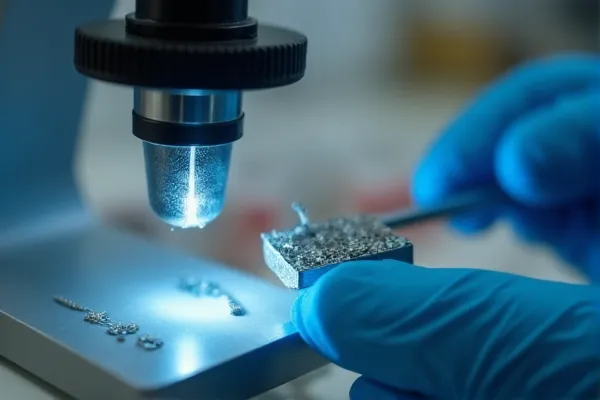
Semi-Precious-Alloy-Tensile-Test-Dental-Lab
Tensile strength is critical because it determines how much stress the alloy can withstand before breaking, especially in posterior crowns or long-span bridges.
Strength varies across alloy types, and each has trade-offs in performance, workability, and cost.
| Alloy Type | Tensile Strength (MPa) | Elastic Modulus | Workability | Cost Level |
|---|---|---|---|---|
| Full-precious | 400–600 | Low | Excellent | $$$$ |
| Semi-precious | 500–800 | Medium | Good | $$–$$$ |
| Non-precious | 800–1000+ | High | Fair | $–$$ |
Stronger alloys contribute to restoration longevity by resisting wear, stress fractures, and marginal breakdown.
Crowns made from optimized semi-precious alloys are less likely to fail from deformation or fracture, even after years of functional load.
✅ Stronger alloys ensure longer-lasting restorations – TRUE
Alloys with high tensile and fatigue strength reduce fracture risk, helping crowns and bridges maintain structure over time.
❌ Gold-based alloys always provide the best durability – FALSE
While gold is biocompatible and workable, it lacks the tensile strength of semi-precious or cobalt-chrome alloys under stress.
Semi-precious alloys offer a strong balance of mechanical performance and biological safety. Their biocompatibility generally exceeds that of non-precious alloys and approaches full-precious standards, making them a dependable choice for restorations that must remain stable in the oral environment over time.
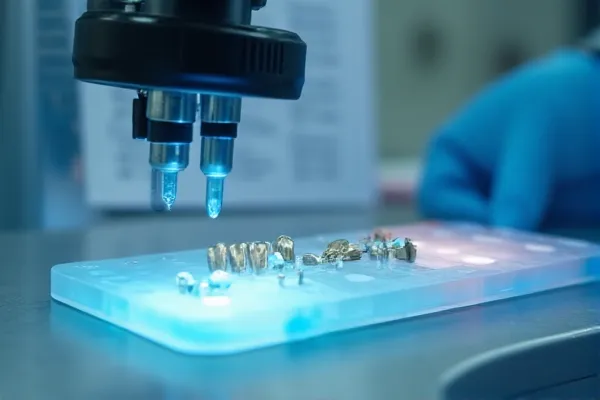
Semi-Precious-Alloy-Biocompatibility-Test
Biocompatibility depends on how well the material coexists with oral tissues without causing adverse reactions.
These features minimize risks of inflammation, tissue discoloration, or cytotoxicity.
Allergic responses are typically linked to specific metals like nickel or beryllium, which are less common in quality semi-precious systems.
When proper formulations are used, allergic events are rare and manageable.
Material tolerance directly impacts patient satisfaction, especially in long-term prosthetic cases.
Biocompatible materials like semi-precious alloys contribute to smoother post-op recovery and long-term prosthetic acceptance.
Restorative success isn’t just about strength—it’s also about how the material interacts with living tissue over time.
Semi-precious alloys provide a reliable balance of strength, flexibility, and wear resistance under daily dental loads. While not as hard as some non-precious alloys, their controlled elasticity and fracture resistance make them well-suited for restorations that must withstand complex occlusal forces over time.

Semi-Precious-Alloy-Fracture-Toughness-Test
Fracture toughness and wear resistance determine how restorations hold up under biting, grinding, and dynamic loading conditions.
| Property | Semi-Precious Alloys | Full-Precious Alloys | Non-Precious Alloys |
|---|---|---|---|
| Fracture Toughness | Medium–High | Medium | Low–Medium |
| Wear Resistance | Moderate | Low | High |
| Elastic Modulus | Balanced | Low | High |
| Ideal Use | Posterior crowns, long-span bridges | Short-span, aesthetic | Frameworks, low-cost |
Each alloy type behaves differently under repeated occlusal loading.
The moderate flexibility of semi-precious alloys is advantageous in distributing load without compromising structure.
In real-world dental function, performance is defined by how the material manages repetitive forces over years.
Their ability to resist fatigue while maintaining marginal integrity contributes significantly to long-term restoration success.
✅ Semi-precious alloys offer a balance between hardness and flexibility – TRUE
They perform well under functional load without over-stressing surrounding structures or restorative layers.
❌ Harder alloys are always better for resisting chewing force – FALSE
Excessive hardness may lead to opposing tooth wear, veneer fractures, or stress fractures at the cement interface.
Semi-precious alloys strike a reliable balance between mechanical performance, cost-efficiency, and patient tolerance. For dental labs and clinics aiming to optimize both technical and financial outcomes, these materials offer a strategic middle ground—without compromising longevity or safety.
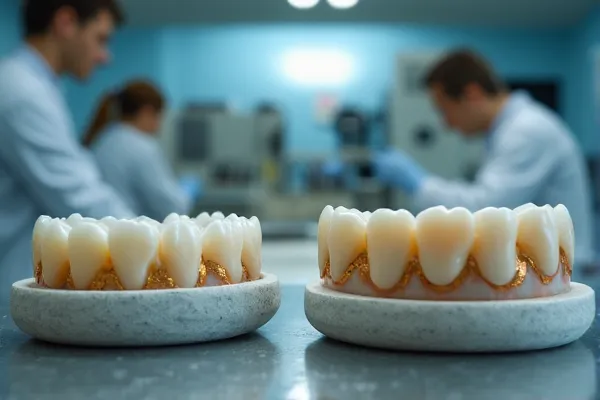
Semi-Precious-Alloy-Dental-Restoration-Benefits
Semi-precious alloys support durable, esthetically pleasing outcomes in various restoration types.
Their moderate hardness also improves polish retention and margin stability over time.
Cost-effectiveness is a major advantage in multi-unit and high-volume workflows.
| Property | Semi-Precious | Full-Precious | Non-Precious |
|---|---|---|---|
| Alloy Cost | $$–$$$ | $$$$ | $–$$ |
| Processing Ease | High | Very High | Moderate |
| Remake Risk | Low–Moderate | Low | High |
| Return on Investment | Strong | Low (High input cost) | Variable |
Material selection affects both initial acceptance and long-term success.
When patients feel comfortable with their prosthetics, overall satisfaction and compliance improve.
Semi-precious alloys are not just cost-friendly—they support excellent clinical outcomes and a positive patient experience.
For labs and clinics evaluating new materials, it’s worth requesting a trial case to assess both workflow fit and result consistency.
Semi-precious alloys continue to gain traction in restorative dentistry due to their balanced mechanical and biological profiles. Their ability to deliver both structural integrity and patient-friendly performance makes them a practical solution for diverse clinical indications, from single-unit crowns to multi-unit bridges.
To explore how Raytops Dental Lab can support your next case with high-performance semi-precious solutions, connect with our team here.