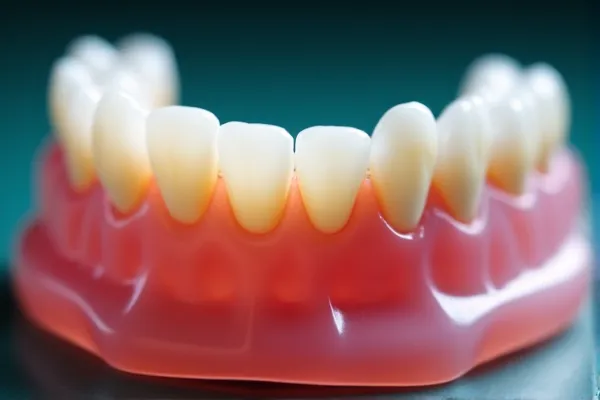
PFM crowns are only as strong and stable as the alloys beneath them. When inferior metals are used, the result is often chipping, discoloration, or premature failure. Hi-Noble alloys offer a clinically proven foundation—combining strength, esthetics, and biocompatibility to ensure reliable, long-lasting restorations.
Hi-Noble alloys enhance the strength and longevity of PFM crowns by offering a corrosion-resistant, high-ductility substructure with excellent porcelain bonding compatibility. Their balanced noble metal content supports structural integrity, esthetic layering, and long-term performance in both anterior and posterior dental restorations.
How Are Hi-Noble Alloys Applied in the Fabrication of PFM Crowns?
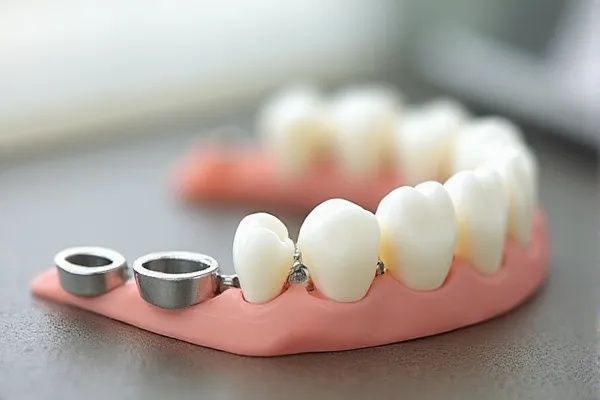
Hi-Noble alloys are used as the substructure in PFM crowns, offering a strong yet workable base for porcelain layering. Their biocompatibility, bonding compatibility, and thermal stability make them ideal for precise and long-lasting restorations.
Hi-Noble-Alloy-Application-in-PFM
What Is the Typical Composition of Hi-Noble Alloys in Dental Applications?
Hi-Noble alloys are defined by their high content of noble metals and are carefully formulated to balance strength, workability, and esthetics:
Noble metal content ≥60%: At least 40% must be gold, per ADA and ISO 22674 standards.
Typical elements: Gold (Au), Platinum (Pt), Palladium (Pd), and small amounts of Indium (In) or Iridium (Ir).
Corrosion resistance: Noble metals resist tarnishing and degradation in the oral environment.
Thermal compatibility: Expansion coefficients match porcelain systems to prevent cracking.
Castability: These alloys flow cleanly in casting, producing precise marginal fits.
How Do Hi-Noble Alloys Contribute to the Functional and Aesthetic Performance of PFM Crowns?
These alloys impact both strength and appearance in key ways:
Strong ceramic-metal bond: Excellent bond strength supports layered ceramics without delamination.
Stable under firing: Repeated porcelain firings don’t degrade the alloy or cause oxidation artifacts.
Warm underlying tone: Supports more natural color blending and depth, especially in anterior restorations.
Smooth polishability: Allows refined margin finishes and controlled emergence profiles.
Adaptable design: Suitable for both anterior esthetic work and posterior high-load restorations.
In What Ways Do Hi-Noble Alloys Differ from Base Metal Alternatives in Crown Fabrication?
Feature
Hi-Noble Alloys
Base Metal Alloys
Noble Metal Content
≥60% (Au, Pt, Pd)
<25% or none
Corrosion Resistance
Very high (long-term oral stability)
Moderate to low (risk of ion release)
Oxide Formation
Minimal and controlled
Can be excessive, affecting bonding
Castability & Fit
Excellent marginal accuracy
Harder to machine, higher shrinkage risk
Porcelain Compatibility
Consistent bond with minimal stress
Bonding more technique-sensitive
Esthetic Support
Warm tone enhances layering esthetics
Grayish tone may require masking
Hi-Noble alloys play a foundational role in producing restorations that last longer, look better, and integrate more predictably with porcelain systems.
How Do Hi-Noble Alloys Reinforce the Mechanical Strength of PFM Crowns?
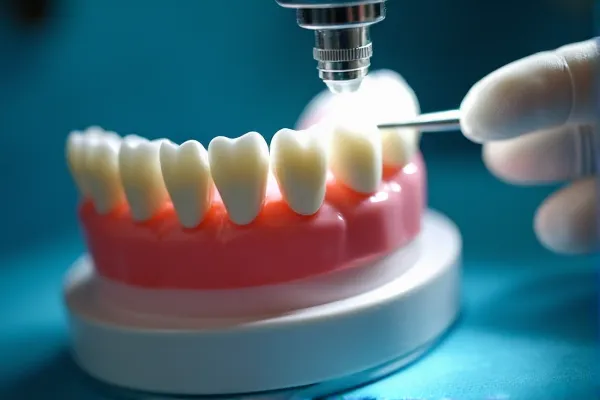
Hi-Noble alloys enhance the mechanical strength of PFM crowns by offering a stable, elastic, and oxidation-resistant foundation. Their unique metallurgical properties protect the porcelain layer and support long-term structural integrity under functional loads.
Hi-Noble-Alloy-Strength-Dental-Crown
How Does High Noble Metal Content Influence the Structural Integrity of Crowns?
The high noble content is more than a classification—it directly affects clinical performance:
Reduced brittleness: Gold and palladium provide ductility, which absorbs stress without cracking.
Elastic deformation: The metal substructure can flex under occlusal pressure without compromising porcelain integrity.
Even stress distribution: The alloy helps transfer forces evenly across the restoration.
Safe handling during fabrication: Lower risk of coping distortion reduces technician-induced stress points.
Reliable in connector zones: Maintains integrity in bridge connectors where tension peaks occur.
✅ Hi-Noble alloys provide structural resilience through flexibility and bonding compatibility – TRUE Their metallurgical profile reduces stress concentration and supports porcelain stability across long-term use.
❌ Crown strength depends only on ceramic thickness – FALSE Porcelain durability relies heavily on the support and behavior of the underlying metal coping, especially under occlusal load.
What Mechanisms Allow Hi-Noble Alloys to Extend the Longevity of PFM Crowns?
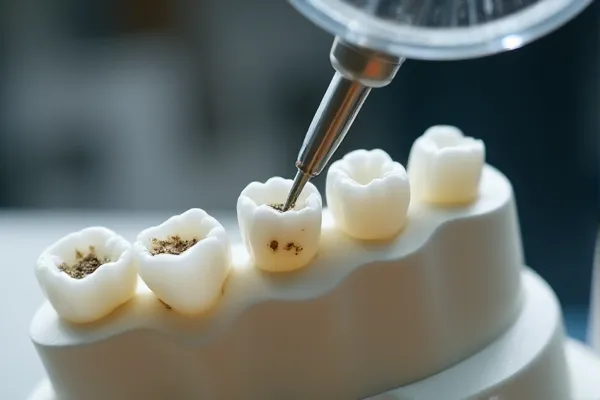
Hi-Noble alloys contribute to the long-term success of PFM crowns by resisting wear, corrosion, and material fatigue. Their stable performance under oral conditions helps reduce failures and maintain function and esthetics over time.
Image ALT: Hi-Noble-Alloy-Longevity-Dental-Crown Prompt: Realistic image showing aged PFM crowns on a dental model, technician inspecting wear surfaces with magnification, crown margins intact, natural lighting, clinical background showing durability over time
How Resistant Are Hi-Noble Alloys to Occlusal Wear and Surface Degradation?
The wear resistance of Hi-Noble alloys helps maintain form and function over years of occlusal stress:
Minimal material loss: High noble content slows wear in occlusal contact zones.
Preserves occlusion: Accurate contours are maintained with minimal functional change over time.
Resists micro-pitting: Unlike base metals, noble surfaces maintain integrity without surface breakdown.
How Do Hi-Noble Alloys Resist Corrosion in the Oral Environment?
Corrosion is a major factor in long-term failure—Hi-Noble alloys mitigate this through intrinsic stability:
High noble metal ratio: Gold, platinum, and palladium do not oxidize or corrode easily.
Passive surface behavior: No significant ion release, ensuring long-term tissue compatibility.
No galvanic reaction: In multi-metal mouths, noble alloys resist interacting with other restorations.
Stain resistance: Crowns retain their internal color without external discoloration.
Preserves bond interface: Corrosion-free metal maintains consistent ceramic adhesion over time.
What Impact Do Hi-Noble Alloys Have on Long-Term Crown Performance?
Durability is not just mechanical—it’s holistic. Hi-Noble alloys affect overall longevity through:
Consistent esthetic appearance: No graying or metal migration that compromises the smile.
Stable margin integrity: Edge stability minimizes leakage or secondary decay.
Lower remake frequency: Fewer clinical failures lead to better long-term outcomes.
Patient satisfaction: Reduced complications and visual consistency improve trust in treatment.
Versatility in complex cases: Suitable for high-stress, multi-unit, or previously restored arches.
The longevity of a PFM crown is not only about the porcelain—it’s the invisible strength and stability of the Hi-Noble substructure that makes long-term performance possible.
How Do Hi-Noble Alloys Compare with Base and Non-Noble Metals in Crown Performance?
While base and non-noble alloys may offer cost savings, Hi-Noble alloys deliver superior long-term clinical performance. Their advantages in strength, esthetics, and biocompatibility make them a reliable choice for durable and predictable PFM restorations.
Image ALT: Hi-Noble-vs-Base-Metal-Crown-Performance Prompt: Realistic side-by-side comparison of two PFM crowns—one built on Hi-Noble alloy, the other on base metal, technician holding both under daylight lamp, focus on color, marginal detail, and structural clarity
How Do PFM Crowns Made with Hi-Noble Alloys Perform Against Base Metal Alloy Variants?
Feature
Hi-Noble Alloys
Base/Non-Noble Alloys
Strength & Flexibility
Balanced ductility prevents fracture
High hardness may increase porcelain chipping
Bonding to Porcelain
Stable oxide layer ensures consistent bond
Oxidation may be excessive or inconsistent
Esthetic Support
Warm tone enhances layering effect
Grayish hue often requires heavy masking
Biocompatibility
Low ion release, high tissue compatibility
Risk of allergic reactions, ion leaching
Corrosion Resistance
Excellent, long-term integrity
Varies; prone to corrosion over time
Clinical Track Record
Long-established use in anterior/posterior zones
Less predictable in esthetic-critical areas
What Are the Longevity Differences Between Hi-Noble and Non-Noble Alloys in Clinical Use?
In real-world cases, the material difference shows over time:
Fewer remakes: Hi-Noble crowns have lower fracture and debonding rates.
Superior margin retention: Better edge sealing reduces long-term microleakage.
Color stability: Hi-Noble substructures do not discolor porcelain or gingiva over time.
Fewer biological complications: Lower incidence of gingival inflammation or allergic response.
Patient trust: Patients are more accepting of treatment involving “gold-standard” materials.
How Do Hi-Noble Alloys Perform Under Varying Clinical Stress Conditions?
They remain stable across a range of intraoral challenges:
High occlusal load: Retain shape and integrity in bruxism or posterior molars.
Thermal variation: Expand and contract in sync with porcelain, reducing fatigue stress.
Multi-unit frameworks: Resist warping in long-span bridges.
Repetitive force cycles: Withstand chewing, grinding, and parafunctional habits.
Complex preps: Adapt well to reduced clearance or uneven underlying structure.
✅ Hi-Noble alloys outperform base metals in long-term strength, bonding, and esthetics – TRUE Their proven behavior under clinical stress makes them a premium but cost-justifiable choice in restorative cases.
❌ Base metals provide the same performance as Hi-Noble alloys at lower cost – FALSE Initial savings may be offset by higher remake rates, esthetic compromises, and patient dissatisfaction.
How Do Hi-Noble Alloys Enhance the Esthetic Appearance of PFM Crowns?
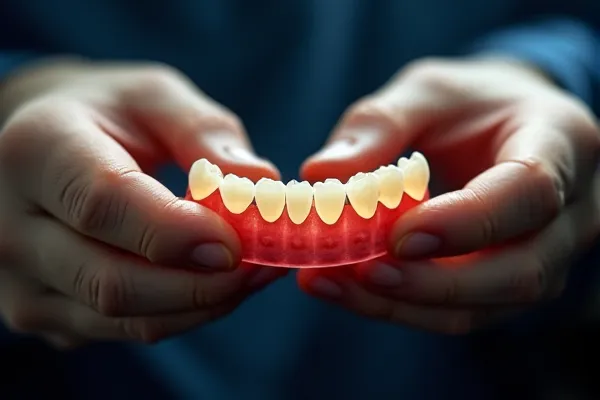
Hi-Noble alloys support superior esthetic outcomes by providing a warm-toned, oxidation-stable base for ceramic layering. Their optical neutrality and stability allow dental technicians to achieve lifelike translucency, color depth, and margin integration.
Hi-Noble-Alloy-Aesthetic-PFM-Crown
What Role Do Hi-Noble Alloys Play in Achieving Natural-Looking PFM Restorations?
The alloy beneath the porcelain plays a surprisingly visible role in the final outcome:
Warm metal tone: Gold and palladium provide a base that enhances natural enamel hues.
Consistent color support: Avoids graying or shade distortion through the porcelain layers.
Predictable behavior: Technicians can layer porcelain with more confidence in final appearance.
In Which Esthetic Aspects Do Hi-Noble Alloys Outperform Other Metal Systems?
Compared with base and non-noble alloys, Hi-Noble systems consistently deliver superior visual performance:
Gingival harmony: Less risk of marginal discoloration or tissue graying over time.
Shade matching consistency: Porcelain responds predictably across multiple units.
Age-specific esthetics: Custom layering for youthful translucency or mature opacity is more controlled.
Translucent ceramic support: Allows use of less opaque ceramics for a more natural look.
Ceramic surface finish: Stable bond ensures polished, stain-resistant porcelain over the long term.
Hi-Noble alloys form a reliable visual foundation for PFM esthetics, enabling lifelike outcomes even in esthetically demanding anterior cases.
What Are the Clinical Advantages of Using Hi-Noble Alloys in PFM Crowns?
Hi-Noble alloys offer measurable clinical benefits beyond esthetics or strength. Their stability, biocompatibility, and comfort contribute to long-term treatment success and higher patient satisfaction in both anterior and posterior restorations.
Clinical-Advantages-Hi-Noble-Alloy-PFM
How Do Hi-Noble Alloys Contribute to Long-Term Patient Satisfaction with Crowns?
Patients respond not just to appearance, but also to performance and longevity:
Fewer complications: Lower risk of debonding, chipping, or occlusal issues means fewer returns.
Stable esthetics: Color consistency over time builds trust and comfort in appearance.
Reliable fit: Accurate casting contributes to crown margins that feel and function like natural teeth.
Less sensitivity: Thermal stability reduces postoperative discomfort.
Perceived value: Patients associate gold-based alloys with quality and long-term success.
How Do Hi-Noble Alloys Support Periodontal Health and Oral Tissue Compatibility?
Soft tissue response is critical to long-term success, especially at the crown margin:
Low reactivity: Hi-Noble metals do not trigger allergic responses or adverse reactions.
Stable surface chemistry: Limits plaque accumulation and inflammation at the gumline.
No corrosion leaching: Avoids ion release that could irritate surrounding tissue.
Tissue tone preservation: Maintains natural pink gingival appearance without graying.
Margin integrity: Smooth margins support better hygiene and soft tissue adherence.
How Do Hi-Noble Alloys Enhance the Functional Comfort of Dental Restorations?
Comfort is tied to how restorations interact with the rest of the mouth:
Polished feel: Patients report a smoother surface when biting or exploring with the tongue.
Predictable bite response: No unexpected flexing or distortion under function.
Compatible with mixed restorations: Hi-Noble crowns coexist well with implants, ceramics, and composite.
Minimal long-term adjustments: Once seated, crowns maintain their comfort without further modification.
✅ Hi-Noble alloys support long-term clinical success through patient comfort and tissue compatibility – TRUE Their chemical and mechanical stability contributes to fewer complications and more satisfied patients over time.
❌ Patients can’t tell the difference between Hi-Noble and base metal crowns – FALSE Differences in comfort, esthetics, and long-term behavior are noticeable and often drive patient preference.
How to Select a Reliable Supplier for Hi-Noble Alloys?
Choosing the right Hi-Noble alloy supplier impacts not only material quality but also workflow stability and clinical success. A trustworthy partner provides certified products, transparent documentation, and dependable logistics to support your lab’s performance.
Hi-Noble-Alloy-Supplier-Evaluation
Which Indicators Help Assess the Reliability of a Hi-Noble Alloy Supplier?
Quality assurance begins before the first shipment arrives. Key evaluation factors include:
Regulatory compliance: Supplier must provide FDA registration and ISO 13485 certification.
Material traceability: Every batch should come with certificates indicating metal content and origin.
Consistent alloy formulation: Look for documented conformity to ISO 22674 and dental alloy classifications.
Technical support availability: Responsive teams help troubleshoot bonding, casting, or esthetic issues.
Reputation in the lab community: Positive case outcomes and peer referrals signal real-world reliability.
How Can Consistency and On-Time Delivery Be Ensured When Sourcing Hi-Noble Alloys?
Supply chain reliability is critical to prevent delays and rework in lab production:
Defined delivery schedule: Suppliers should commit to lead times and communicate proactively.
Inventory planning support: Partners who help forecast usage reduce emergency ordering.
Batch-level QC documentation: Each delivery must include CoA and test reports.
Packaging integrity: Properly sealed and labeled shipments prevent contamination and mix-ups.
Clear replacement policy: Transparent terms for addressing defects or delays build operational trust.
To evaluate whether a supplier can meet your lab’s esthetic, functional, and timeline standards, request alloy specifications, regulatory documents, and sample material batches. This helps you validate both the product and the process before making a long-term commitment.
Conclusion
Hi-Noble alloys play a foundational role in delivering durable, esthetic, and clinically successful PFM crowns. Their metallurgical properties reinforce ceramic strength, resist corrosion, and support long-term tissue compatibility—making them a strategic material choice for precision-driven dental professionals.
Longevity mechanisms include wear resistance, low oxidation, and reliable bonding under repeated occlusal stress.
Compared to base metals, Hi-Noble alloys outperform in esthetics, safety, and long-term structural behavior.
Esthetic benefits include warm undertones, reduced opacity needs, and more natural light transmission through ceramic.
Clinical advantages range from gingival compatibility to enhanced comfort, margin seal, and long-term patient satisfaction.
Choosing a reliable Hi-Noble alloy supplier ensures certified sourcing, batch traceability, and consistent performance support for labs and clinics.
Raytops Dental Lab integrates only FDA-registered and ISO 13485-compliant Hi-Noble alloys in our PFM restorations. Contact our technical team to review material certificates or request a customized compliance pack.