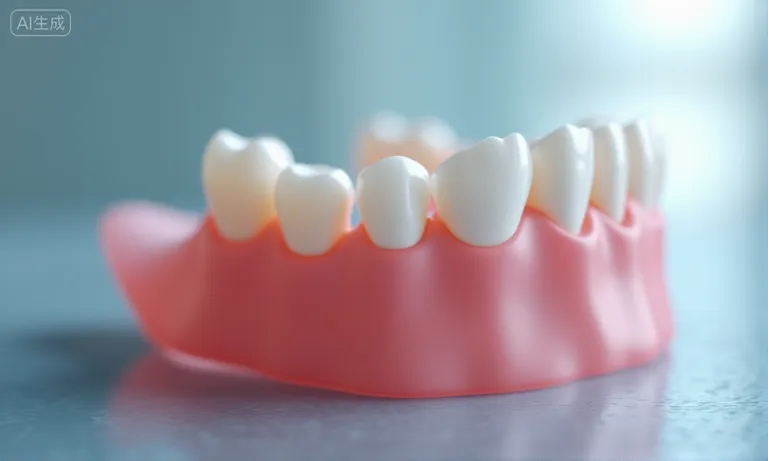
Material choice directly shapes quality and long-term reliability in implant restorations. Zirconia—as a monolithic, metal-free ceramic—offers high bulk strength, strong chip resistance, and natural esthetics. PFM combines a metal substructure with layered porcelain, delivering proven durability but facing porcelain fractures, gingival margin discoloration, and occasional metal sensitivities.
In outsourced workflows, overall value depends on a few controllable levers: Durability—zirconia performs well in full-arch and high-force cases; PFM is strong but veneer chipping is common. Esthetics—zirconia provides translucency with no dark margins; PFMs can show a gray line as tissue recedes. Biocompatibility—zirconia avoids metal-related risks; PFM may trigger allergies in sensitive patients. Cost—PFM often wins upfront price; zirconia lowers remake rates and improves TCO/ROI over time. Reliability—robust QA, skilled technicians, and digital CAD/CAM compatibility at the outsourcing lab reduce variance for either material.
Ultimately, the question isn’t which material is “best” in theory—it’s fit: align material strengths with case requirements, budget priorities, and the lab’s ability to deliver consistently. With the right outsourcing partner, material choice becomes a predictable operating variable, lowering remakes and strengthening long-term value.
Material decisions in outsourced implant restorations shape lifetime value long before a purchase order is placed. They set the ceiling for biocompatibility, durability, and esthetics, and they determine how predictable your turnaround and maintenance will be across sites. In outsourcing, these variables are amplified by distance, batch size, and handoffs—so the “right material” is the one that keeps service events low while staying compatible with your lab’s digital pipeline.
Biocompatibility affects tissue health and patient tolerance; durability controls the frequency and cost of service (polish, repair, or remake); esthetics influences satisfaction and acceptance, which reduces unplanned chairtime. Programs that align all three see fewer callbacks, tighter schedules, and better retention. Authoritative guidance on indirect materials and biocompatibility standards helps teams define acceptable risk upfront—see the ADA guidance on materials for indirect restorations and biocompatibility.
Outsourcing increases variance exposure: multiple clinicians, different scanners, and shipping windows. Materials that template well in CAD/CAM (connector rules, emergence, finish grade) keep outcomes repeatable and make capacity forecastable. Conversely, materials that rely on hand-layered steps add technician-to-technician variance, which raises the risk of esthetic mismatch or veneer repair. The material you choose is, in practice, a choice about how controllable your cross-site process will be.
In outsourcing, material choice is a cost-control lever as much as a clinical one. Selecting options that fit your lab’s digital compatibility and your program’s maintenance tolerance will cut remakes, stabilize schedules, and improve total cost of ownership.
In outsourced full-arch cases, zirconia usually carries a higher unit price but fewer veneer-related service calls, while PFM often starts cheaper yet trends higher in maintenance if porcelain events accumulate. For ROI, the real gap appears in total cost of ownership (TCO): shipping, chairtime, and remakes across many arches—not sticker price alone. Clinical syntheses report high survival for both, with different complication profiles that explain these cost curves. See the 2024 JPD meta-analysis on monolithic zirconia vs metal-ceramic outcomes.
Outsourced-full-arch-zirconia-vs-pfm
| Driver | Zirconia (Monolithic) | PFM (Metal-Ceramic) | Cost Impact |
|---|---|---|---|
| Typical technical event | Polish/adjust after occlusal checks | Veneer chip/delamination under load | PFM adds repair visits |
| Framework risk | Low if connectors meet rules | Very low (metal substructure) | Similar baseline |
| Remake triggers | Rare unless under-dimensioned | Higher when veneer loss is extensive | Freight + remake fee + chairtime |
Multi-unit evidence shows fewer veneer complications for monolithic zirconia than for layered systems, while metal-ceramics maintain strong survival but more porcelain service over time.
Esthetics set the “acceptance threshold.” Metal-free margins and color stability cut shade do-overs and unplanned chairtime. Even when PFM enables beautiful stratification, each repair or reglaze adds hidden costs in shipping, schedule rework, and staff hours. The winning choice is the one that reduces service events at your expected volume, not only the one with the lowest invoice today.
In outsourced implant programs, titanium bars, acrylic/PMMA, and hybrids shift cost in different ways. Titanium concentrates spend upfront but lowers maintenance; acrylic minimizes initial fees but raises service risk; hybrids can balance repairability, esthetics, and price when configured to your bite forces and workflow. Authoritative overviews list these compositions as standard full-arch options and outline their maintenance profiles—see the ACP position statement on full-arch materials and maintenance. prosthodontics.org
Titanium-acrylic-hybrid-cost-profile
Hybrids (e.g., titanium bar + acrylic teeth/gingiva, or Ti bar + zirconia segments in load zones) can cut unit price versus fully monolithic alternatives while keeping rigidity and repairability. They work well when you need lip support or expect periodic esthetic refresh without full remakes. The key is to model bite force, connector spans, and service intervals: use titanium to lock the framework, then select veneering that fits budget and maintenance tolerance.
Outsourcing labs turn material choice into measurable savings by using bulk procurement, digital workflows, and specialized technicians at scale. These levers lower unit cost, compress turnaround, and cut remake exposure—especially in full-arch programs where small variances compound across many arches.
Image
ALT: Lab-bulk-purchasing-digital-workflow
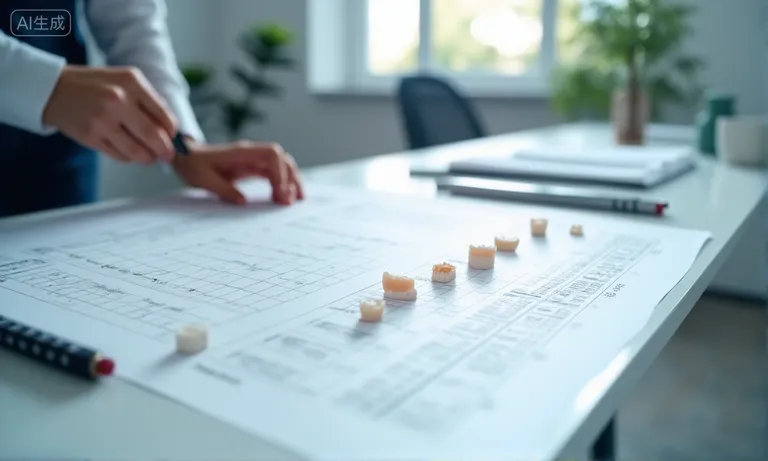
Prompt: A highly realistic, ultra-detailed, professional-quality photo captured in a clean, well-lit environment. Materials must be photorealistic, and rendered with DSLR-level clarity. Lighting should be soft daylight or studio white light, avoiding cold or bluish clinical tones. A production planning desk shows nested zirconia blocks, a titanium bar blank, and a 3D printer queue next to a milling unit; distant view with parts slightly defocused; a technician reviews a batch list and inventory sheet.
| Compatibility Lever | What It Means in Practice | Efficiency Gain |
|---|---|---|
| CAD templates | Saved connector rules, emergence, screw-channel paths | Fewer redesigns and remakes |
| CAM nesting | Batch by thickness/material with verified shrink factors | Higher machine uptime |
| 3D printing | Printed try-ins and surgical guides align teams early | Fewer late surprises |
| Open files | STL/PLY with library references on the job ticket | Faster intake and fewer mismatches |
Peer-reviewed overviews describe how CAD/CAM and 3D printing streamline production and consistency across sites.
Digital tools do not remove craft; they focus it. Experienced technicians choose the right finish grade for zirconia to protect opposing teeth, manage layering zones when PFMs are requested, and tune support strategies for titanium or printed components. Their judgment prevents small errors—library mismatches, under-dimensioned connectors, rough surfaces—from snowballing into shipping delays, extra chairtime, and full remakes.
When outsourcing, the most cost-effective material is the one your partner can scale predictably. As an overseas dental lab, Raytops Dental Lab aligns bulk purchasing, CAD/CAM templates, and technician checkpoints during trial runs so programs gain lower unit costs and steadier schedules without trading off esthetics.
In outsourcing, “low-cost” materials can become high-cost programs if they raise variance, slow schedules, or trigger remakes. The most common risk clusters are: material-specific failure modes, process gaps that amplify small errors across batches, and compliance misses that stall shipments or void warranties. Treat material choice as a risk policy, not just a price.
QA-gates-remake-policy-compliance
| Control | Specify Upfront | Cost You Avoid |
|---|---|---|
| Incoming scan QC | Bite stability, soft-tissue markers, noise thresholds | Fit disputes and grind-in time |
| Library/version lock | Implant/MUA library on the job ticket | Misaligned channels, reseating |
| Connector audit | Min height/width by site; cross-arch rigidity | Framework risk and early chipping |
| Finish grade | High-polish protocols for zirconia | Opposing enamel wear callbacks |
| Remake policy | Eligibility, timelines, logistics ownership | Back-and-forth on repairs vs remakes |
A clear, written remake policy plus documented QA gates converts uncertain cost into predictable service profiles. As a global dental lab partner, Raytops Dental Lab bakes these controls into trial runs to stabilize budgets and lead times.
Anchor your supplier selection to recognized device QMS. In the U.S., the FDA’s updated rule harmonizes its device quality requirements with ISO 13485, reinforcing risk-based quality management—see FDA’s 2024 Quality Management System Regulation aligning with ISO 13485. U.S. Food and Drug Administration In the EU, MDR (Regulation 2017/745) governs medical devices and sets documentation and vigilance expectations relevant to outsourced work.
Material decisions are safer—and cheaper over time—when they ride on verified QA gates, explicit remake terms, and proven regulatory conformity.
For outsourced implant programs, the “right” material is the one that delivers predictable cost and service at your scale. Treat selection as a structured decision, not a price check. Evidence-based guidance on edentulous rehabilitation supports a lifecycle view rather than a single invoice.

Procurement-framework-outsourcing-ROI
| Lever | Partner Action | Effect on Cost & Risk |
|---|---|---|
| Templates | Store connector/emergence rules; version control | Fewer redesigns; lower remake exposure |
| Inventory | Bulk discs/bars/PMMA; SKU simplification | Lower unit cost; fewer changeovers |
| Digital fit | Open files + library lock on ticket | Faster intake; no channel mismatch |
| Scheduling | Batch by thickness/material; night sintering | Higher throughput; stable lead times |
| Transparency | Line-item pricing + service metrics | Cleaner TCO; quicker approvals |
ROI slips when assumptions are vague. Use a shared order form that records library version, connector sizes, finish grade, torque notes, and accept/reject thresholds for shade and occlusion. Track on-time-in-full (OTIF), remake eligibility, and service types by material. When teams see the same numbers, they can tune the mix—zirconia where service must be minimal, titanium where rigidity rules, hybrids where repairability helps cash flow.
When an outsourcing partner can scale templates, inventory, and QA, material choice becomes a lever for cost control—not a gamble. As an overseas dental lab, Raytops Dental Lab embeds this framework in trial runs so multi-site programs get predictable quality, turnaround, and lifetime value.
Material choice drives cost-effectiveness in outsourced implant restorations by shaping durability, service needs, and how well cases flow through digital production. Zirconia often reduces veneer-related service; PFM can be economical upfront but adds porcelain repairs; titanium anchors rigidity; acrylic and hybrids balance price with planned maintenance. The most efficient programs treat materials as part of an operating system: clear templates, library control, batch scheduling, and a written remake policy. With a capable partner, TCO becomes predictable instead of variable. As an overseas dental lab, Raytops Dental Lab collaborates on trial runs, template governance, and transparent pricing so multi-site teams scale quality and ROI with confidence.