
Ensuring consistent quality in digital crown and bridge workflows requires more than digital tools—it demands disciplined systems across every production stage. Leading dental labs implement structured QA practices, including:
Labs that embed these controls into their workflow deliver more reliable results, fewer remakes, and stronger long-term trust with clinical partners.
Digital tools have revolutionized crown and bridge workflows—but consistency, not just digitization, is what determines long-term success. Labs that deliver predictable results across cases and timeframes help clinics build patient trust, reduce remakes, and maintain operational efficiency.
dental-lab-consistent-digital-crown-output
Inconsistent output—even in digital workflows—can create cascading problems. A crown that looks perfect on screen might arrive 150 microns too high, triggering occlusal adjustments or discomfort. A margin that deviates by half a millimeter could compromise long-term restoration success.
We’ve worked with DSOs that reported 5–7% remake rates solely due to minor misfits. Each remake isn’t just a lab cost—it disrupts the clinic schedule, frustrates patients, and eats into chair time. Over time, inconsistency becomes a reputation risk for both the lab and the buyer.
Digital doesn’t mean flawless. It just means the error source shifts—from analog impressions to digital assumptions.
That’s why labs must pair digital tools with internal calibration standards and trained QA checkpoints, not just rely on software automation.
Buyers—especially those managing multi-site clinics or DSOs—aren’t just looking for “digital labs.” They’re looking for labs that consistently deliver the same result, under the same input conditions.
This means:
When consistency becomes the default, clinics stop micromanaging labs. They stop checking every margin. They begin to trust.
And trust is the currency of long-term lab relationships.
Labs that treat consistency as a deliverable—not just a byproduct—are the ones that become strategic partners.
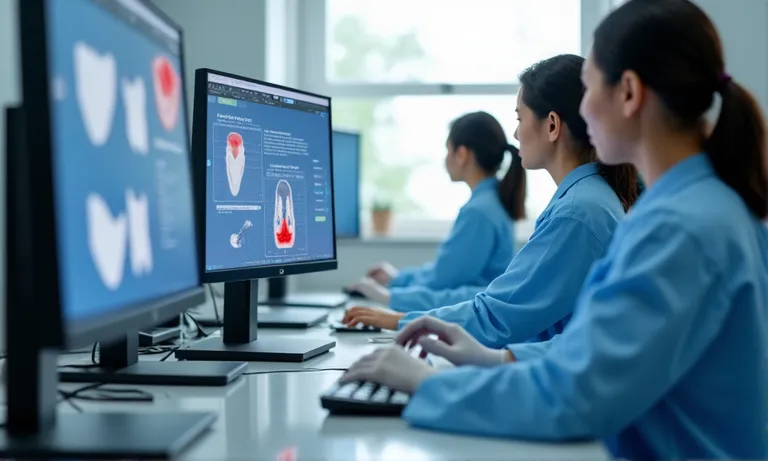
A truly digital dental lab isn’t just scanning and designing—it’s building in quality control at every stage of the workflow. From STL validation to AI-driven design checks, modern labs must ensure accuracy before problems reach the chairside. Without embedded QA steps, digital tools only speed up the error, not prevent it.
digital-dental-lab-quality-control-checkpoints
Labs typically start digital QA by inspecting the incoming scan files:
Labs that skip this step risk building on flawed inputs. Even high-end scanners can produce distorted files if the operator moves too quickly or skips calibration.
Before design approval, our CAD designers follow a mandatory checklist:
Any deviation outside preset thresholds triggers internal review. This ensures that when the file goes to CAM, it’s not “just okay”—it’s precise.
Even the best CAD file can fail in production if CAM isn’t tuned.
Each milling or sintering unit runs:
Without CAM QA, good designs become bad restorations.
One of our clients in Florida submitted a batch of 10 posterior crowns scanned with Medit. The crowns kept returning with tight mesial contacts—even though the digital contacts looked ideal.
Using our internal AI QA system, we ran the design files through historical contact pattern comparison. The algorithm flagged a consistent discrepancy between this scanner + export mode and our contact offset model.
We adjusted the software parameter for this specific scanner preset by 40μ—and all subsequent crowns seated perfectly.
The client told us:
“It’s like you knew our scanner better than we did.”
AI doesn’t replace judgment—but it does help catch invisible patterns before they repeat.
Labs that use AI to supplement QA—not automate blindly—build resilience into their workflows.
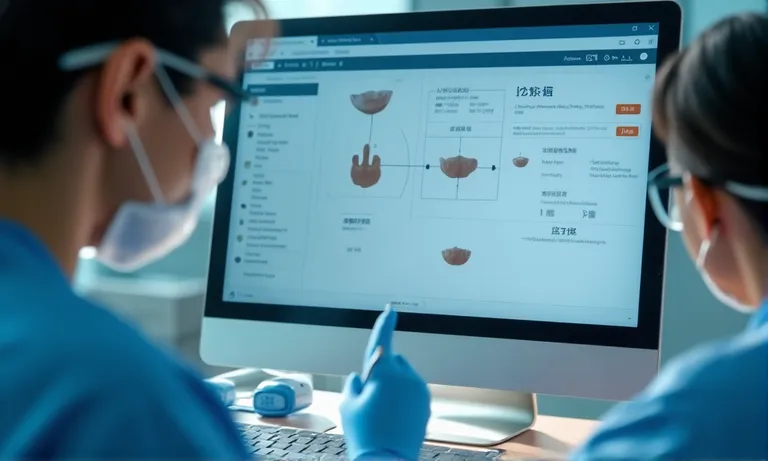
Standardized design parameters are the backbone of consistency in digital crown and bridge production. Without fixed presets for margin depth, contact clearance, and occlusal schemes, even the most experienced technician may produce variable results. Labs that lock and align these parameters across teams reduce variance—and ensure that every case meets the same quality benchmark.
dental-lab-parameter-preset-selection-crown-design
Labs typically rely on curated design libraries to guide consistent crown outcomes. These include:
These presets provide a starting point that reduces guesswork—and ensure that Technician A and Technician B using the same template will output near-identical contours.
A growing group practice in Germany had a recurring issue: the same case type—zirconia posterior crown on molar #36—looked different depending on who at the lab designed it. Despite submitting identical scans and preferences, they experienced inconsistent emergence profiles and contact areas.
We reviewed their file history and found that three designers were using slightly different margin depths and occlusion presets. Some were even customizing per-case contact thickness.
To fix this, we implemented lab-wide locking of core parameters via our CAD templates:
Once enforced, the group saw remake requests drop by 35% over 6 weeks—and the clinic reported they stopped needing to “double check” each case.
One of their leads commented:
“You made our lab feel like an extension of our practice, not just a file receiver.”
Standardization doesn’t remove flexibility—it removes unnecessary variation.
| Preset Type | Typical Use | Application Example |
|---|---|---|
| Clinic-specific morphology | Long-term partners | DSO A prefers flatter cusps to avoid hyperocclusion in older patients |
| Material-based occlusion | Per restoration type | Zirconia anterior uses softer centric stops vs PMMA provisionals |
| Scanner-adjusted contact | Based on export quirks | Medit scans calibrated at +30μ for proximal fit alignment |
| Margin strategy by prep type | Uniform emergence | Knife-edge vs chamfer margins affect default profile depth |
Well-managed labs don’t force every case into one template. Instead, they map each clinic’s preferences into scalable presets, applied by name or case tag.
This allows design teams to work fast, without losing consistency.
Consistent output in digital crown and bridge production isn’t just about machines—it’s about the clarity of communication behind every case. Well-documented case details reduce interpretation gaps, while poor documentation leads to misfits, remakes, and delays. Labs that treat documentation as a part of the workflow—not an afterthought—deliver more predictable results.

Image
ALT: dental-case-documentation-digital-workflow
Prompt: A highly realistic, ultra-detailed image of a dental technician reviewing a digital case intake form on a monitor. The screen shows clearly labeled fields for restoration type, margin line, material choice, scan type, and technician notes. Nearby is a STL viewer displaying version comparison. Scene is clean, professional, with soft daylight.
A complete prescription should include:
Missing details here lead to guesswork. Even if the scan is perfect, an unclear Rx makes consistency impossible.
One of the simplest—but most overlooked—steps in digital consistency is proper file labeling.
When files are named clearly (e.g., “Smith_UR6_Cr_Zirc_v1.stl”) and organized in lab-specific intake folders, technicians know what they’re working with at a glance.
More advanced labs add:
This reduces the need for redundant back-and-forth and avoids the trap of “assumed” preferences.
Reproducibility requires traceability. Labs often deal with multiple versions of the same case due to:
A proper version control flow includes:
When files are mixed, overwritten, or lack version trails, labs lose control—and clients lose trust.
Remake cases aren’t just cost centers—they’re signals. Every remake offers data that, if properly categorized and analyzed, can improve long-term workflow reliability. Labs that consistently track remake patterns, run root cause analysis, and implement systemic improvements often experience fewer disruptions and higher client trust over time.

dental-lab-remake-analysis-dashboard
Top-performing labs monitor remake frequency using key indicators such as:
Such dashboards help teams avoid subjective blame—and prioritize the right interventions.
A Canadian DSO sent feedback that six of their recent posterior zirconia crowns required chairside adjustments—primarily for tight interproximal contacts. Initially flagged as scanner-related, the lab’s QA audit revealed a more specific pattern.
Upon comparing the STL files and CAM toolpaths, we found:
Instead of blaming tools or doctors, we updated our CAD template controls to auto-reset parameters per case type and reminded all technicians via internal check-in.
Since the change, remake reports from that DSO dropped by 42% in eight weeks.
Sometimes, the “fix” is less about better software and more about better memory.
To reduce remake rates, labs deploy structured improvement actions:
Continuous improvement isn’t about never failing—it’s about never repeating.
Before partnering with a dental lab, buyers often ask: “How do I know they’ll deliver consistently?” The answer isn’t just in what the lab claims—it’s in how their systems work. Consistency stems from documented protocols, visible QA processes, and the lab’s ability to explain their methods transparently. If a lab struggles to provide clarity here, it may signal gaps in execution.

dental-lab-quality-review-call-checklist
When screening a lab, focus your questions on verifiable metrics:
A quality-focused lab will answer these without hesitation—and often with data.
Beyond questions, ask for tangible artifacts. Labs that consistently deliver quality usually have a structured digital environment:
One DSO client of ours asked for a “QA package” before onboarding. We provided annotated screenshots of our intake-to-design flow, case-specific remake log, and parameter template. Their comment: “This shows you’ve actually thought it through.” That deal went live in two weeks.
| Evaluation Criteria | What to Look For |
|---|---|
| File submission SOP | Clear intake folder structure, naming conventions |
| CAD design parameter control | Locked libraries, technician-level audit trail |
| Remake tracking visibility | Historical remake log per client or product type |
| QA escalation process | Defined internal reviewer role, documented actions |
| Feedback integration | Feedback loops with timestamped resolution status |
A lab that shows you this upfront is more likely to deliver predictability later.
Consistent quality in digital crown and bridge workflows isn’t a matter of luck—it’s the result of structured processes, aligned tools, and continuous feedback. Labs that standardize design parameters, track remakes transparently, and document every step offer buyers more than just restorations—they offer predictability.
As an overseas dental lab serving global partners, we’ve learned that consistency builds trust, and trust sustains long-term collaboration. Whether you’re a DSO, clinic, or distributor, evaluating a lab’s operational depth is the first step to ensuring stable, repeatable outcomes.