
Collaboration and workflow serve different but complementary purposes in dental implant lab partnerships. Collaboration defines how clinics and labs communicate, build trust, and adapt to case complexity. Workflow provides the structured steps, digital tools, and quality checks that ensure consistent production. Understanding this distinction allows buyers to evaluate suppliers more accurately and reduce risks in implant outsourcing.
Key considerations for procurement teams:
By distinguishing and aligning collaboration with workflow, international buyers gain a practical framework for supplier evaluation. This perspective highlights the conditions under which overseas dental labs deliver not just efficient processes but also lasting value in complex implant cases.
Collaboration in implant lab partnerships means more than simply sending orders and waiting for crowns or abutments to arrive. It refers to a structured relationship where clinics and labs share information early, align expectations, and continuously refine outcomes together. When collaboration is strong, it reduces misunderstandings, shortens adjustment cycles, and builds the trust needed for complex implant restorations.
implant-lab-collaboration-meeting
Collaboration often takes practical forms such as shared case planning platforms, regular update calls, and photo documentation of implant sites. Some clinics invite labs into early diagnostic discussions, while others set up recurring checkpoints to adjust restoration designs. These practices make sure both sides see the same picture before milling or 3D printing begins, avoiding unnecessary remakes.
Strong partnerships establish clear communication protocols: who responds within what time frame, how digital scans are named, and which platforms are used for file exchange. For example, many overseas labs now rely on structured case sheets that specify torque values, implant brands, and shade details, minimizing ambiguity. Without this shared language, even advanced CAD/CAM workflows can stall.
When labs are included during treatment planning, they can flag implant angulation issues, margin designs, or prosthetic space limitations before surgery. This proactive input often prevents costly adjustments later. A clinic in Europe, for instance, invited its partner lab to review CBCT scans ahead of placement, which resulted in smoother seating of multi-unit bridges.
Collaboration does not stop once a crown is delivered. Structured feedback loops—such as annotated return cases or post-insertion reports—help labs refine future work. One DSO reported that after sharing monthly remake data with its overseas partner, remake rates dropped by 18% over six months. Feedback creates a cycle of continuous improvement, not blame.
In practice, collaboration defines the “human link” of implant outsourcing, ensuring that digital workflows translate into real chairside results. As an overseas dental lab, Raytops Dental Lab has seen clinics that actively involve their labs cut remake rates significantly, simply because both sides agreed on details upfront. Collaboration is not just about being responsive; it is about building systems that make outcomes predictable.
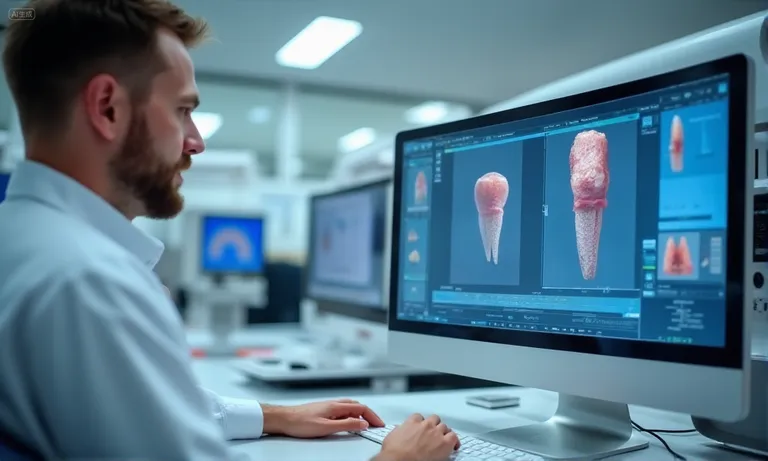
Workflow in dental implant outsourcing refers to the structured sequence of steps a lab follows to transform clinical data into a final restoration. It covers the digital tools, production process, quality checkpoints, and integration with clinic systems that ensure consistent outcomes. A clear workflow allows procurement teams to predict turnaround time, control costs, and minimize remakes.
dental-lab-digital-workflow
Modern workflows begin with digital impressions captured by intraoral scanners. These files are processed in CAD software, where technicians design custom abutments and prosthetics. CAM software then drives milling machines or 3D printers to fabricate the restorations. The use of integrated tools reduces manual errors and speeds up case handling. CAD/CAM dentistry has become the backbone of efficient outsourcing.
A typical outsourced workflow involves:
Labs that serve international clients emphasize standardization. This includes fixed turnaround times for single crowns versus full arches, uniform case submission forms, and reference guides for shade selection. Predictability reduces friction for clinics and makes scheduling easier for DSOs. Without standardization, variability in delivery can create chairside delays and reduce trust.
Workflow efficiency improves when lab systems integrate with clinic platforms. Some labs connect directly with electronic health record (EHR) systems or cloud-based design portals. For example, a clinic using 3Shape Communicate can seamlessly share files with a partner lab that uses the same platform, eliminating conversion errors. In procurement, these integrations are viewed as a strong indicator of a lab’s readiness for long-term collaboration.
A well-defined workflow not only accelerates production but also signals operational maturity. Overseas dental labs like Raytops Dental Lab often share detailed workflow charts with clients during onboarding, allowing clinics to benchmark turnaround and assess whether the lab’s process aligns with their scheduling needs. Workflow clarity becomes the foundation on which collaboration can build.
Cross-border implant outsourcing introduces challenges beyond technical production. Differences in time zones, languages, digital formats, and logistics all shape how smoothly collaboration and workflow unfold. Clinics and procurement teams must anticipate these frictions because they directly influence remake rates, turnaround time, and overall trust in the partnership.
cross-border-dental-lab-logistics
Time-zone differences can delay responses, particularly if clinics expect overnight confirmations. Language gaps add another layer: a minor misinterpretation of implant system names or torque specifications can cause rework. Successful overseas dental labs address this by assigning bilingual coordinators and aligning service hours with client regions, so communication delays do not accumulate into missed chairside deadlines.
Digital implant workflows rely on system-to-system compatibility. Common issues include:
Shipping is the most visible cross-border challenge. Customs inspections can add unpredictable delays, especially for high-value implant components. For example, one Australian clinic working with an overseas dental lab experienced a two-day clearance hold that disrupted its surgical schedule. Labs mitigate this by pre-declaring materials, using specialized couriers familiar with medical goods, and maintaining buffer stock where regulations allow.
These cross-border frictions underscore why procurement teams cannot evaluate workflow in isolation. Collaboration practices—such as assigning dedicated case managers and transparent tracking—are what make international workflows reliable. At Raytops Dental Lab, clients often highlight that predictable customs handling and clear bilingual reporting made it possible to keep implant cases on schedule despite distance.
For procurement teams, the distinction between collaboration and workflow is not academic—it determines whether a supplier can deliver predictable outcomes. A lab may have a polished workflow chart, but without collaborative practices, the system breaks down at the first unexpected variable. Recognizing this difference helps buyers reduce risk and make supplier evaluations more accurate.

dental-lab-procurement-checklist
Relying solely on workflow promises creates blind spots:
A North American DSO once outsourced full-arch implant cases to an overseas partner. The workflow involved CAD/CAM and multi-unit bars, but early shipments showed a 14% remake rate. Instead of switching labs, the DSO set up structured biweekly video reviews with case designers. Within three months, remakes dropped below 5%. This case shows that collaboration, not workflow complexity, was the deciding factor in long-term success. Experiences like this align with what Raytops Dental Lab has seen—labs that invest in two-way communication often outperform those that rely solely on process charts.
Procurement professionals translate the collaboration-versus-workflow difference into evaluation criteria. For example:
| Evaluation Area | Workflow Indicators | Collaboration Indicators |
|---|---|---|
| Consistency | Documented SOPs, turnaround times | Feedback channels, issue-tracking logs |
| Adaptability | CAD/CAM compatibility charts | Flexibility in handling unique cases |
| Risk Control | QC checkpoints | Proactive communication of issues |
By separating workflow maturity from collaboration depth, buyers can identify which labs provide predictable results and which offer real partnership potential.
Procurement decisions hinge on more than efficiency. A supplier may be fast but inflexible, or standardized but unresponsive. Understanding this distinction helps clinics and DSOs select partners who not only deliver on time but also adapt to the unpredictable nature of implant dentistry.
Alignment means that communication habits and technical processes reinforce each other rather than run in parallel. When collaboration is integrated into workflow, labs anticipate clinical needs earlier, and clinics gain confidence in turnaround predictability. This balance reduces remakes, strengthens trust, and gives procurement managers a clearer picture of supplier reliability.

clinic-lab-alignment-digital-case
Clinics and labs can align collaboration with workflow through simple but structured methods:
A mid-sized European clinic once struggled with a 12% remake rate on custom abutments from overseas suppliers. By integrating its 3Shape Communicate portal with the lab’s CAD station and holding short video check-ins twice a week, misinterpretations on margin placement were caught before milling. Within four months, remake rates fell below 4%. Raytops Dental Lab has observed similar patterns—when clinics let labs see early design intent, the workflow shifts from reactive corrections to proactive prevention.
Procurement managers often measure alignment through clear KPIs:
| KPI Category | Indicator | Why It Matters |
|---|---|---|
| Quality | Remake percentage, fit adjustment rate | Direct signal of alignment effectiveness |
| Efficiency | Average turnaround days, on-time delivery % | Reflects workflow predictability |
| Collaboration | Response time, case revision cycle counts | Shows how well communication integrates |
Tracking these metrics gives decision-makers hard evidence that collaboration is not just “goodwill” but a measurable driver of workflow success.
When collaboration and workflow truly align, clinics experience smoother chairside insertions, and labs avoid the hidden costs of repeated adjustments. For overseas dental labs, alignment is the clearest marker of a sustainable partnership—where processes and people reinforce each other to create lasting value.
When procurement teams compare potential implant lab partners, the most effective evaluations go beyond price and delivery speed. Buyers should test both collaboration practices and workflow maturity, because only when the two align can outsourcing relationships remain stable under real-world conditions.
dental-lab-supplier-evaluation
Procurement managers can use direct questions to test supplier readiness:
Common warning signs include:
Reliable labs usually provide documentation that verifies both collaboration and workflow standards:
| Document Type | What It Demonstrates | Why It Matters |
|---|---|---|
| ISO or FDA certificates | Quality system compliance | Confirms process maturity |
| Case submission guides | Structured workflow | Ensures predictable outcomes |
| Service-level agreements | Defined response times | Makes collaboration measurable |
Procurement teams who insist on seeing such evidence reduce risk and establish clear accountability. As an overseas dental lab, Raytops Dental Lab often shares its workflow guides and certification documents during onboarding, which gives buyers confidence that both collaboration habits and production processes are already standardized.
Choosing the right implant lab partner requires more than checking workflow charts or comparing turnaround times. True reliability comes when collaboration habits—clear communication, early involvement, and structured feedback—are fully aligned with standardized workflows. This alignment reduces remakes, improves scheduling predictability, and builds long-term trust across borders. For buyers, the key is to evaluate both dimensions side by side, asking for evidence of systems and proof of communication practices. From our experience as an overseas dental lab, partnerships that integrate people and processes deliver outcomes that remain consistent even in complex implant cases.