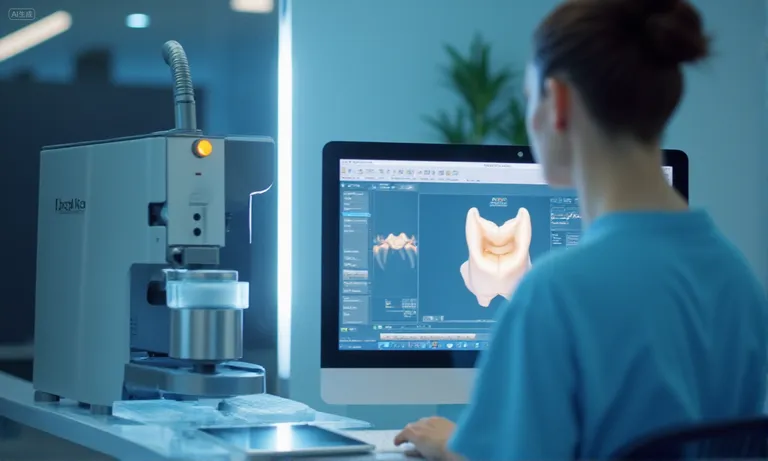
3D printing is redefining dental implant lab workflows by combining speed, precision, and digital integration. From rapid prototyping to patient-specific restorations, additive manufacturing streamlines production, shortens turnaround times, and reduces costs by minimizing waste and manual labor. This transformation positions dental labs to meet growing demands with greater consistency and scalability.
Key dimensions of this transformation include:
For procurement and lab decision-makers, the shift to 3D printing is not only about adopting new technology—it is about reshaping workflows to achieve faster, more accurate, and more cost-effective implant solutions. Embracing this transformation enables labs to deliver consistent value, build stronger partnerships, and stay ahead in an evolving dental industry.
3D printing is considered a game-changer because it combines speed, precision, and cost savings in ways that traditional methods cannot. For dental implant labs, this technology means faster case delivery, more customized restorations, and reduced production costs—all of which directly improve client satisfaction and lab competitiveness.
3D printing bypasses mold creation and multiple manual steps, building restorations layer by layer directly from digital scans.
This digital-first approach allows labs to deliver more predictable outcomes in less time.
Customization is a critical differentiator. With 3D printing, labs can produce patient-specific guides, temporaries, and full-arch solutions that match clinical requirements. This enables dentists to offer a broader set of treatment plans, from complex implant cases to immediate loading protocols. For example, a global dental lab supporting DSOs can deliver both single-unit restorations and complex multi-unit guides in one production cycle, offering flexibility that traditional processes cannot.
Unlike milling, which carves away material, additive manufacturing deposits only what is needed. This reduces waste of costly resins or metals. At the same time, digital workflows eliminate repetitive manual labor like wax-ups and mold adjustments, which not only saves time but also lowers staffing costs. Published data from the Journal of Prosthetic Dentistry highlights that labs adopting 3D printing see both reduced expenses and more efficient use of technician time.
By combining speed, customization, and cost control, 3D printing redefines what labs can achieve. As an overseas dental lab, Raytops has found that clients view this technology not just as an innovation but as a baseline expectation for modern collaboration.
3D printing reshapes the production process by enabling rapid prototyping, error reduction, and in-house fabrication. These changes give labs greater control over timelines, quality, and cost, transforming the way implant restorations are manufactured and delivered.
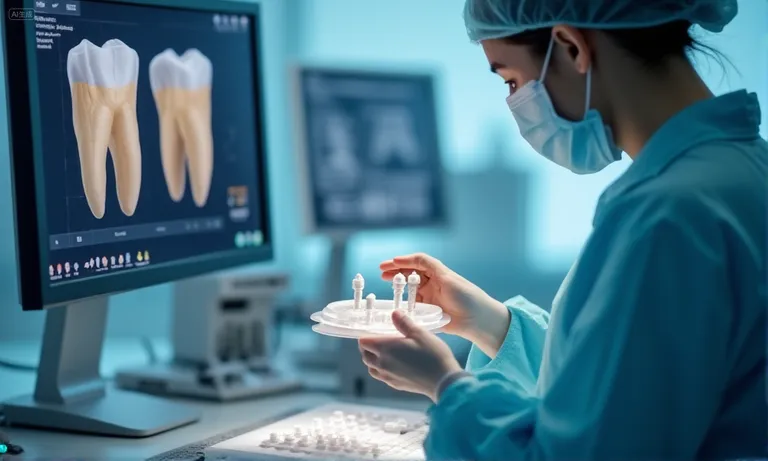
Dental-lab-3D-printing-production-process
With 3D printing, labs can move from scan to physical model in a single day.
This cycle compresses what once took weeks into 24–48 hours, allowing clinics to treat patients faster and labs to manage more cases simultaneously.
Unlike milling or casting, additive manufacturing builds only what is needed, ensuring precision and efficiency.
| Factor | Traditional Milling/Casting | Additive 3D Printing |
|---|---|---|
| Material use | Subtractive (high waste) | Additive (minimal waste) |
| Error risk | Manual steps increase risk | Digital precision reduces errors |
| Production consistency | Varies by technician | Consistent across batches |
This reduces both financial waste and clinical risk, making workflows more predictable.
In-house 3D printing allows labs to fabricate parts without outsourcing to third-party suppliers or relying on multiple mold systems. This not only eliminates shipping delays and external markups but also gives labs more flexibility in scheduling urgent cases. For DSOs managing many clinics, in-house production means reliable case delivery without bottlenecks. As a global dental lab, Raytops has seen how controlling production internally reduces uncertainty and strengthens client confidence.
By shifting production from manual, external, and waste-heavy processes to digital, in-house, and highly efficient workflows, 3D printing redefines how dental implant labs operate.
3D printing delivers efficiency gains by streamlining workflows, reducing manual intervention, and enabling seamless clinic–lab integration. These improvements help labs manage higher volumes while maintaining consistency, speed, and quality.
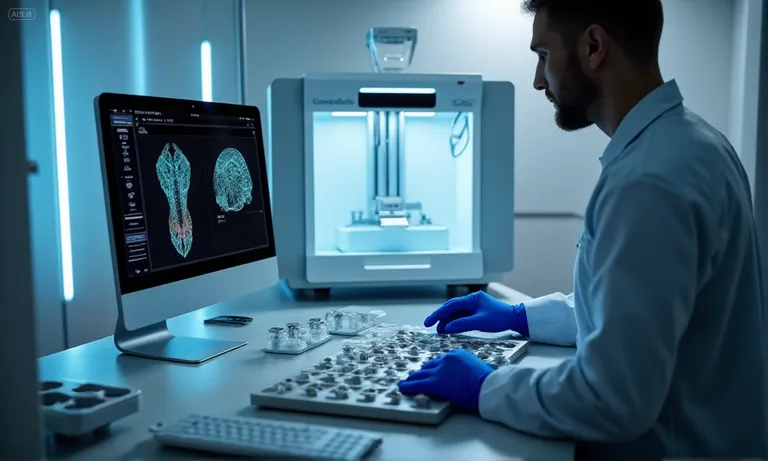
Dental-lab-3D-printing-efficiency-gains
3D printing simplifies the journey from intraoral scan to final restoration.
By removing mold-making and analog transfers, labs can complete cases faster and with fewer errors, giving clinics quicker turnaround.
Automation shifts many labor-intensive steps into software-driven processes.
| Workflow Step | Traditional Method | With 3D Printing |
|---|---|---|
| Wax-ups | Manual sculpting | CAD design automated |
| Mold preparation | Casting/investment | Digital slicing |
| Adjustments | Frequent chairside fixes | Reduced due to precision printing |
This minimizes human error while ensuring every case follows the same predictable process.
Digital integration creates a direct channel between clinics and labs. Scans, designs, and approvals are exchanged electronically, cutting delays in communication. For DSOs, this allows multiple clinics to collaborate with a single lab in real time. As an overseas dental lab, Raytops has seen clinics value this transparency—knowing their designs are visible at each stage reduces anxiety about turnaround and fit outcomes.
These workflow efficiencies not only cut costs but also increase trust, as clinics receive restorations faster, with higher precision and fewer disruptions.
3D printing improves quality and accuracy by enabling patient-specific fit, precise surgical guidance, and reduced remake rates. These improvements not only support better clinical outcomes but also save labs time and resources by minimizing errors and adjustments.
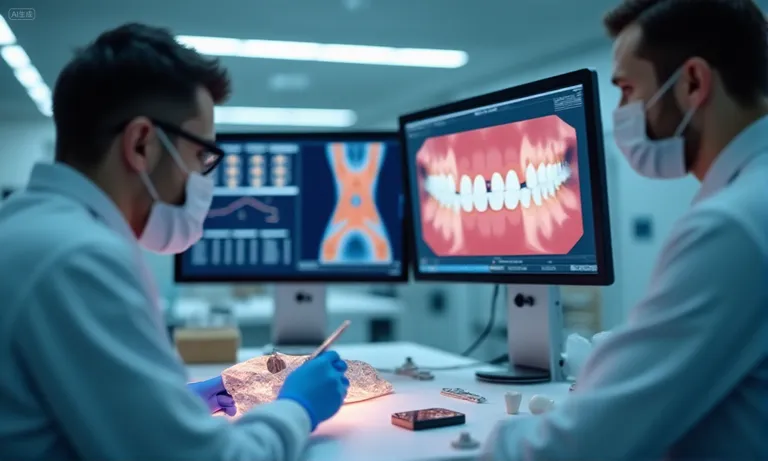
Dental-lab-3D-printing-accuracy-quality
3D printing enables restorations and guides that are tailored to each patient’s anatomy. Unlike standardized molds, digital workflows capture unique intraoral details, producing prosthetics that fit more naturally. This precision translates into:
For procurement teams, patient-specific accuracy means fewer complaints and greater trust in the lab’s capabilities.
Surgical guides are one of the clearest examples of 3D printing’s impact.
These benefits shorten chair time and increase clinician confidence, making labs with 3D printing more attractive partners.
High accuracy reduces errors that lead to remakes, which are costly for both labs and clinics.
An overseas dental lab like Raytops has seen that lowering remake rates directly improves client satisfaction. For DSOs managing multiple practices, this consistency is essential to scaling operations without added complexity.
By improving fit, precision, and reliability, 3D printing ensures higher-quality outcomes that strengthen both clinic–lab trust and long-term procurement strategies.
3D printing offers strategic advantages that go beyond cost or efficiency. By expanding service capabilities, improving scalability, and strengthening client partnerships, labs can position themselves as long-term collaborators rather than transactional vendors.

Dental-lab-3D-printing-strategic-benefits
3D printing allows labs to provide services that traditional workflows cannot match—such as immediate surgical guides, same-day provisional crowns, and full-arch solutions with patient-specific fit. This range of options helps labs stand out in competitive markets. Clinics and DSOs increasingly see these services as must-haves, meaning labs without 3D printing risk being overlooked in tenders and partnerships.
Adopting 3D printing creates a foundation for sustainable growth.
This scalability ensures that labs can grow alongside their clients without sacrificing turnaround or quality.
Technology adoption is also a relationship strategy.
| Strategic Factor | Without 3D Printing | With 3D Printing |
|---|---|---|
| Service offering | Limited restorations | Expanded portfolio (guides, provisionals, full-arch) |
| Client confidence | Variable outcomes | Consistent, predictable delivery |
| Partnership potential | Transactional | Strategic, long-term collaboration |
Labs that integrate 3D printing are seen not just as suppliers but as partners in solving client challenges. Raytops, as an overseas dental lab, has observed that offering scalable, advanced services fosters stronger ties with DSOs and distributors, leading to repeat contracts and mutual growth.
By enhancing differentiation, scalability, and client trust, 3D printing positions labs for long-term strategic success in a rapidly evolving industry.
While 3D printing provides significant benefits, adoption also requires labs to navigate financial, operational, and regulatory challenges. Understanding these considerations helps procurement teams and labs plan for sustainable integration rather than short-term gains.

Dental-lab-3D-printing-adoption-challenges
3D printing requires an upfront investment in hardware and materials, often higher than traditional equipment. Ongoing costs include resin or metal powders, replacement parts, and machine servicing. While these expenses are offset by reduced labor and waste, labs must carefully evaluate ROI timelines. For buyers, a lab that openly shares cost structures and capacity planning demonstrates transparency and reliability.
Adopting 3D printing demands new skill sets for technicians and managers.
Investing in training prevents bottlenecks and builds confidence in consistent case delivery.
Compliance is essential for gaining trust and market access. Labs should follow a structured process:
An overseas dental lab like Raytops has seen how meeting regulatory requirements not only satisfies legal obligations but also reassures clients about the safety and durability of printed restorations.
By addressing costs, training, and compliance, labs can adopt 3D printing responsibly—ensuring innovation is paired with reliability and trustworthiness.
3D printing has moved from novelty to necessity in dental implant lab workflows. By reducing waste, accelerating turnaround, and improving accuracy, it delivers measurable value for clinics and procurement teams. Beyond operational gains, labs that embrace additive manufacturing position themselves as strategic partners capable of scaling with client demand. For buyers, partnering with an overseas dental lab that combines advanced 3D printing expertise with proven quality systems ensures both immediate savings and long-term reliability. In today’s competitive market, technology-driven collaboration is not just an advantage—it is the foundation for sustainable growth in implant restorations.