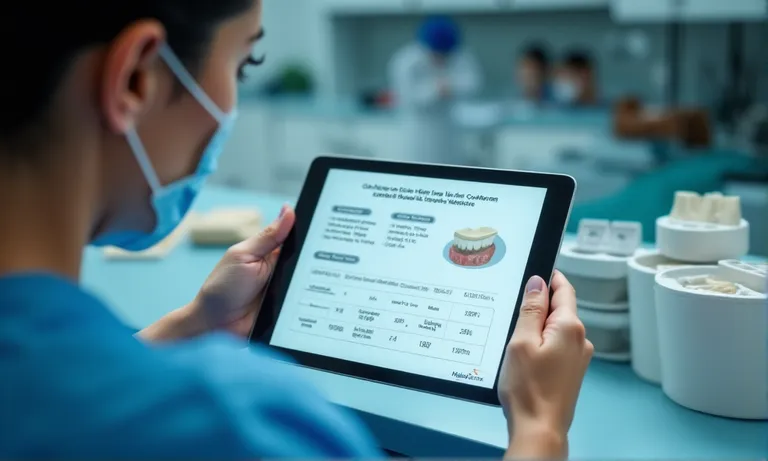
Outsourcing crown and bridge work to an overseas dental lab can generate measurable ROI—but only when evaluated beyond unit price. The true return depends on a range of visible and hidden factors: logistics and customs costs, production quality, communication rhythm, and whether internal workflows are ready to scale.
Procurement leaders, DSO operators, and in-house dental labs often face practical questions:
This guide dissects the ROI of dental outsourcing into four actionable dimensions:
By aligning financial modeling with workflow realities, teams can approach outsourcing as a structured investment—not a shortcut. When done right, overseas partnerships shift from cost-saving to value-building.
ROI in outsourcing crown and bridge cases is shaped by the dynamic balance between cost savings, turnaround consistency, and restoration quality. Factoring in practice size, case mix, and internal readiness is essential to calculating a meaningful return.
While outsourcing can significantly lower unit costs, especially at scale, practices must evaluate ROI through a broader lens—one that accounts for delivery reliability, remake frequency, and the actual effort needed to coordinate with an overseas dental lab. These variables differ across practice sizes and workflows, meaning ROI is rarely a fixed value.
roi-calculation-dental-lab-case-cost
The three most impactful ROI drivers are straightforward in theory—but require careful benchmarking in practice:
Each of these metrics should be evaluated over time, not on a per-case basis. We’ve seen practices misjudge ROI due to early positive impressions but hidden remake rates surfacing after the first 50 cases.
For single-chair clinics, shipping and coordination overhead may eat into cost savings. In contrast, multi-chair or DSO networks gain significantly through volume leverage. For instance, one group practice we supported ramped from 5 to 20 cases per week over six months. This allowed them to:
The key is that ROI improves with systematization, not just volume.
Let’s apply the formula to a simplified scenario:
| Item | Local Lab | Overseas Lab |
|---|---|---|
| Avg. unit cost | $150 | $80 |
| Remake rate (per 100 units) | 6 units | 2 units |
| Avg. shipping cost (per unit) | N/A | $10 |
| Coordination/time cost | $0 | $5 |
| Total effective cost | $159 | $95 |
Using the ROI formula:
ROI = ($159 – $95) / $95 = 67.3%
This example assumes minimal integration cost. For digital practices with file compatibility (e.g., using 3Shape or Medit), initial setup is lighter, boosting ROI even more.
| Practice Type | Key ROI Considerations | Suggested ROI Benchmark |
|---|---|---|
| Solo Practitioner | Coordination time often outweighs savings | ≥25% |
| Small Group | Gains begin as volume standardizes | ≥40% |
| DSO/Multi-site | Operational scale amplifies ROI | ≥60% |
At Raytops Dental Lab, we typically observe that ROI stabilizes after 3–5 repeat cycles if expectations are well-aligned early on. That’s why our onboarding emphasizes not just pricing—but also delivery scope, file compatibility, and remake accountability.
ROI isn’t a static number—it’s the result of compounding operational precision.
In sum, calculating ROI is not just a matter of cost comparison—it’s a system-wide reflection of how well your practice aligns with your lab partner. As an overseas dental lab experienced in digital delivery and SLA-based partnerships, we’ve seen the strongest ROI emerge where expectations are mutual and workflows are disciplined.
Outsourcing crown and bridge work isn’t just a matter of comparing per-unit prices. Many practices overlook the operational and integration costs that emerge once production begins—costs that don’t appear on quotes, but directly impact chairside efficiency, lab communication, and clinical outcomes. These hidden costs can be the difference between a smooth outsourcing relationship and a frustrating experiment that erodes ROI over time.

hidden-costs-dental-outsourcing-shipping-coordination
Outsourcing to an overseas dental lab introduces a new layer of logistical variables:
These issues don’t occur daily, but when they do, they often happen at the worst possible time—like right before a high-value patient appointment.
One of the most underestimated costs in outsourcing is the time investment required to align workflows. A mid-size practice we supported in New Zealand reported that it took approximately 4 weeks to fully calibrate scanner settings, case submission templates, and prescription documentation. During this ramp-up period, they experienced:
However, once alignment was reached, remake rates dropped and submission time per case reduced by nearly 35%. This underscores why onboarding must be seen as an upfront investment rather than a sunk cost.
Even if English is the working language, communication friction can arise in distributed lab partnerships:
For practices that process 10+ cases per week, this overhead compounds quickly if not proactively structured.
| Integration Factor | Without Alignment | With Compatibility (e.g., 3Shape, Medit) |
|---|---|---|
| File import/export | Manual zip uploads | Direct cloud sync |
| Design feedback loop | Screenshots via email | In-platform margin annotation |
| STL file compatibility | Risk of missing metadata | Preset configurations and verification |
| Tech support time | Case-by-case troubleshooting | Fewer issues with shared ecosystem |
We’ve worked with several practices who initially underestimated how much time would be spent troubleshooting scanner output. Those with existing 3Shape workflows typically integrated faster and smoother. Choosing a lab already fluent in your system reduces both tech cost and downtime.
In short, the true cost of outsourcing includes not just the unit price, but the friction involved in making the partnership work. As an overseas dental lab, we actively support early-stage onboarding by assigning a dedicated digital technician for initial case cycles. This upfront alignment, though time-consuming, significantly lowers hidden costs downstream.
Practices considering outsourcing should ask not just “What does each crown cost?” but rather, “What does it cost to make this partnership reliable?”
Outsourcing is often evaluated through cost lenses—but strategic ROI goes beyond saving per unit. For clinics and dental groups seeking scalable, resilient, and expertise-enhanced operations, the right overseas dental lab can become an extension of their delivery capacity. From unlocking scheduling flexibility to accessing new materials and workflows, these are long-term gains that influence competitiveness more than immediate cost savings.

strategic-benefits-overseas-dental-lab-capacity-expertise
One of the biggest advantages for clinics and regional labs is the ability to grow case volume without purchasing new milling equipment or hiring additional in-house technicians. This strategic capacity extension provides:
We’ve worked with a U.S.-based group that kept their internal lab lean by routing all zirconia posterior crowns to us during seasonal peaks. They maintained clinical consistency while freeing up internal resources for chairside adjustments and urgent esthetic work.
Overseas dental labs that operate at scale often work with a broader range of materials than small local labs. These include:
More importantly, these labs see thousands of cases weekly—meaning they often spot pattern failures earlier, refine designs based on feedback loops, and carry in-house digital teams to manage complex scans. A practice in the UK told us, “Your designer caught an occlusal interference we missed—and that’s why we trust the workflow.”
Contrary to assumptions, working across time zones can accelerate—not delay—case flow:
When synchronized well, this temporal offset acts like a second shift, expanding production time without expanding internal labor hours.
| Strategy | Single Local Lab Dependency | Overseas + Local Hybrid Model |
|---|---|---|
| Capacity risk | Vulnerable to technician sick days or overload | Backup lab capacity improves load balancing |
| Material flexibility | Limited to in-stock materials | Wider access to specialty ceramics |
| Geopolitical resilience | N/A | Orders can be rerouted if disruptions occur |
| Competitive pricing tension | Difficult to negotiate terms | Market-aligned pricing through multi-source |
A DSO in California we supported diversified their restorative sourcing after experiencing three weeks of disruption due to a local flood. Our lab stepped in with pre-validated CAD protocols and matched their SLA within 48 hours. Since then, they’ve continued to operate a dual-lab model to hedge regional risk.
Ultimately, strategic gains from outsourcing crown and bridge work are about more than cost—they’re about resilience, expertise leverage, and system scalability. As an overseas dental lab working with clients in over 20 countries, we’ve seen these benefits unfold most clearly in teams that plan for agility—not just affordability.(long‑term outsourcing potential)
No outsourcing strategy is risk-free. While overseas dental labs can provide strategic value, practices must prepare for a different set of challenges—ones not found in local partnerships. From shipping uncertainty to design file misalignment, unaddressed risks can chip away at ROI and clinical confidence. But with proper expectation setting and workflow alignment, these risks become manageable—not deal-breakers.
outsourcing-dental-lab-risks-customs-file-error-communication
Overseas logistics introduces unpredictability—some within control, others not:
A Canadian client once experienced a 6-day delay because their local brokerage firm hadn’t updated new HS codes after a customs policy change. Since then, we’ve provided them pre-filled customs templates to reduce friction.
| Workflow Element | Incompatible Scenario | Aligned Scenario |
|---|---|---|
| STL file import | Margins missing or unreadable | Preserved prep lines with annotation layers |
| Scanner output metadata | Manual input needed | Auto-imported with embedded settings |
| Articulator simulation | Not recognized by lab software | Matches lab’s design software configuration |
| Turnaround speed | Delays from clarification emails | Direct acceptance, design starts same day |
Scanner mismatch is a common oversight. If your intraoral scans aren’t exported with embedded detail (like occlusion schemes or prep design notes), the lab may revert to emailing for clarification—delaying delivery and increasing remake risk. Labs working with systems like Medit, 3Shape, or iTero often perform smoother integrations when scanner presets are aligned.
Even with English as a shared medium, miscommunication happens. One European clinic submitted a rush anterior case labeled “deliver ASAP” with a handwritten note. But the message wasn’t flagged in our system, as the note was scanned but not input digitally.
Lessons we’ve learned:
Ultimately, clarity isn’t about language fluency—it’s about system design.
When QA protocols differ between labs and clinics, small issues become systemic:
One DSO group in Texas halted outsourcing after three remake-heavy months—until we rebuilt their submission SOP together. We added margin confirmation screenshots, auto-tracked remake flags in reports, and reduced remake frequency from 9% to under 2.5% in one quarter.
Effective outsourcing partnerships don’t assume alignment—they verify and reinforce it through QA integration.
To mitigate these risks, clinics should adopt shared checklists, structured feedback loops, and upfront SOP documentation.For additional guidance, see dental lab quality assurance frameworks.
Outsourcing ROI isn’t automatic—it’s the result of systematic execution. The best outcomes come from treating outsourcing not as a transactional decision, but as an operational partnership. By aligning case types, piloting first orders, defining measurable service levels, and maintaining shared reporting, practices can minimize variability and maximize long-term gains.

roi-optimization-dental-outsourcing-sla-tracking
Not every case should be sent out from day one. Strategic ROI comes from knowing which cases are best suited for external production:
On the other hand, highly esthetic anterior veneers with patient-specific requests often require chairside adjustments that benefit from local lab proximity.
A DSO in Australia we supported began with a 10-case pilot, recording metrics weekly. By the 4th week, remake rates dropped from 12% (with previous partner) to 2.8%. This data gave them internal confidence to expand.
| SLA Dimension | Recommended Minimum Benchmark | Notes |
|---|---|---|
| Remake window | ≤ 5 working days from claim | Faster if chairside deadline approaches |
| Turnaround time | 7–10 working days, door to door | Varies by region; track actual vs SLA |
| Support response time | ≤ 24 hours for file-related queries | Ideally via dedicated technician |
| Case traceability | Barcode ID linked to designer/team | Enables root cause for any remake request |
We offer SLA alignment calls for all new clients, ensuring that KPIs and tracking reports match each clinic’s internal protocols. When expectations are clearly documented, accountability flows both ways.
Performance improves when both sides work from the same data:
One independent clinic in Toronto used to track remakes informally—until we co-developed a remake tagging system in Google Sheets with timestamps, scan IDs, and resolution notes. Within 2 months, they cut back-and-forth emails by 40% and achieved a 94% “first-pass fit” rate.
Maximizing ROI isn’t a one-time setup. It’s a recurring process of alignment, measurement, and trust-building. With the right infrastructure, outsourcing evolves from a cost-saving tactic to a performance multiplier.
Outsourcing isn’t for everyone—and recognizing when it won’t deliver value is just as important as knowing when it will. While offshore dental labs offer compelling advantages, there are specific scenarios where external production may introduce more friction than benefit. Understanding these limitations helps set realistic expectations, avoid premature disappointments, and establish healthier collaboration rhythms when the time is right. The details can find here: When Is Crown and Bridge Outsourcing Not the Right Fit?

dental-outsourcing-mismatch-case-esthetics-digital-gap
For anterior restorations where shade, translucency, and contour require direct try-ins or in-person shading, outsourcing may fall short. Even high-resolution photos or digital shade guides can’t fully replicate the nuance of live chairside adjustments. We’ve had clients in New York share feedback like:
“We sent an 8-unit veneer case overseas with clear shade mapping, but the patient still felt they looked ‘flat’ in natural light.”
While such cases can still be outsourced with enough iterations and digital tools, the cost of perfection (remakes, shipping delay) often negates ROI. In these scenarios, working with a local partner or doing chairside mockups may be more efficient.
Unless there’s a path to recurring collaboration, these clinics may be better served by local labs with minimal coordination effort.
| Operational Factor | Not Ready for Outsourcing | Ready for Outsourcing |
|---|---|---|
| Digital scan quality | Inconsistent; rescans common | Consistent full-arch, high-res scans |
| Submission format | Manual paper + email mix | Structured case form or lab portal |
| Internal SOP or QA tracking | None or ad hoc | SLA-based expectation docs shared |
| Team coordination | Relies on one staff only | Shared team with task clarity |
We’ve seen clinics initially eager to outsource struggle during their first 10 cases due to scan cropping errors or missing prescription data. Once they updated their SOP and centralized uploads via cloud folders, remake rates dropped significantly. But until that’s in place, even the best lab can’t make up for upstream inconsistency.
When expectations are not explicitly defined, friction multiplies. A solo clinic in California once sent 12 cases without noting their required occlusal scheme—leading to 3 remakes and 2 late deliveries. After reviewing, we discovered:
Outsourcing thrives on clarity. Without it, even routine crown cases become bottlenecks. That’s why as an overseas dental lab, we recommend all new clients align on remake policy, turnaround benchmarks, and case prioritization tags before volume ramps up.
Outsourcing crown and bridge work to an overseas dental lab can deliver strong, scalable ROI—but only when approached with operational clarity, the right case mix, and shared expectations. While unit cost savings are attractive, true value emerges from strategic alignment, robust communication, and continuous QA feedback loops.
As an overseas dental lab supporting clients across diverse practice types, we’ve seen the highest returns come from clinics that treat outsourcing as a structured collaboration—not a cost-cutting shortcut. When digital workflows, SLAs, and mutual reporting are in place, outsourcing becomes not just viable, but transformative.
For practices seeking long-term efficiency without sacrificing quality, the key isn’t outsourcing alone—it’s outsourcing well.