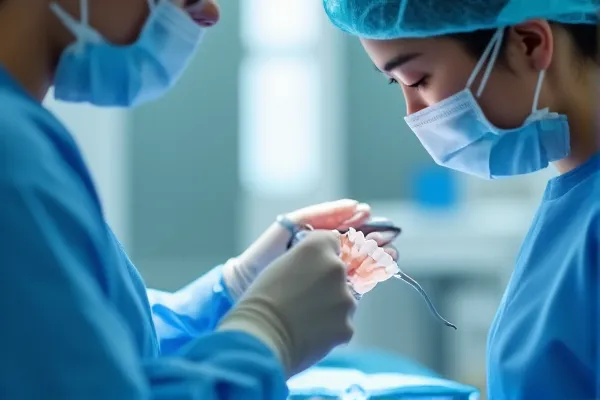
Clinics often struggle to evaluate whether higher-priced Hi-Noble PFM crowns truly deliver better economic value.
Focusing only on upfront cost ignores long-term savings from reduced remakes, fewer adjustments, and greater clinical consistency.
By understanding performance, manufacturing factors, and operational integration, clinics can make confident decisions about cost-effective crown selection.
Evaluating the long-term cost-effectiveness of Hi-Noble PFM crowns requires analyzing clinical durability, maintenance frequency, patient outcomes, and total cost over time. Though initially more expensive, Hi-Noble crowns often lower overall treatment costs through fewer remakes, reduced chair time, and enhanced patient retention.
Hi-Noble PFM crowns offer a unique balance of upfront cost and long-term clinical value. To assess their true cost-effectiveness, clinics must consider not just unit price, but also durability, maintenance demands, and remakes over time—all of which impact the total cost of care per patient.
Hi-Noble-PFM-Cost-Effectiveness-Assessment
Hi-Noble alloys typically contain ≥40% noble metals, offering a strong combination of stability, biocompatibility, and bond strength.
This balance allows clinics to offer durable restorations without the premium price of full-gold systems.
Maintenance costs often go uncalculated, yet they significantly impact clinical efficiency.
Fewer follow-up appointments and reduced chair time translate to cost savings per case.
The value of Hi-Noble PFMs compounds over time through reduced failure and adjustment rates.
Clinics with high patient turnover or limited chair availability especially benefit from reliable, low-maintenance restorations.
✅ Hi-Noble PFM crowns provide long-term value beyond their upfront price – TRUE
Their durability, biocompatibility, and lower maintenance needs reduce overall treatment costs over time.
❌ Hi-Noble PFM crowns are too expensive to be cost-effective – FALSE
While the unit price may be higher than non-precious options, the reduced remakes, adjustments, and follow-ups often yield a lower total cost of ownership.
Hi-Noble PFM crowns occupy a strategic middle ground in both material and clinical economics. They cost more than non-precious crowns but less than all-ceramic or full-gold solutions. When analyzing cost comparisons, it’s essential to look beyond the invoice price and consider technical performance and lifespan.
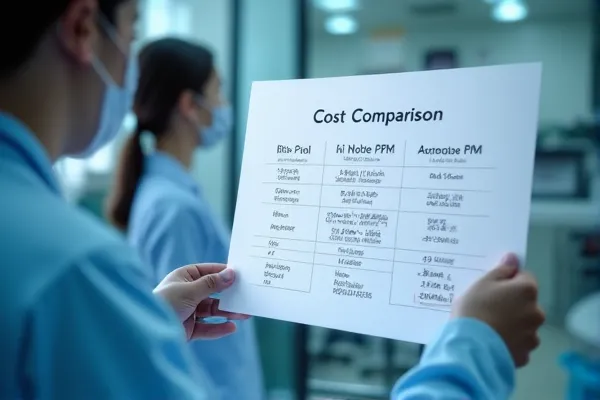
Crown-Cost-Comparison-Hi-Noble-vs-Ceramic
Hi-Noble PFMs often outperform ceramics in functional zones while costing less to replace or adjust.
| Feature | Hi-Noble PFM | Full Ceramic |
|---|---|---|
| Unit Cost (avg) | Moderate–High ($250–400) | High ($400–600) |
| Aesthetic Outcome | Natural, layered ceramic | Superior translucency |
| Fracture Resistance | High (metal substructure) | Moderate (core dependent) |
| Long-Term Maintenance | Low | Variable (risk of chipping) |
| Best Use Zones | Posterior, universal | Anterior, high-aesthetic |
While ceramics may excel esthetically, Hi-Noble PFMs provide a more forgiving, versatile solution across zones.
Material and processing methods drive cost variability across crown types.
Hi-Noble offers a balance: predictable handling with reduced remake risk.
Upfront costs are only part of the equation—predictable performance matters more over time.
For volume-based or efficiency-driven practices, these downstream savings are significant.
✅ Hi-Noble PFM crowns offer cost advantages over time despite moderate upfront pricing – TRUE
Their balance of durability, predictability, and lifespan often results in better long-term value than full ceramic or base-metal alternatives.
❌ Hi-Noble crowns are not competitive because they’re more expensive than non-precious options – FALSE
While initial costs are higher, reduced remakes, better patient outcomes, and higher retention make them more cost-effective in practice.
The long-term value of Hi-Noble PFM crowns extends far beyond their unit price. Their structural reliability, low failure rate, and patient-friendly performance reduce hidden clinical costs over time. This makes them especially valuable in practices focused on treatment efficiency and patient satisfaction.

Hi-Noble-PFM-Long-Term-Performance-Chart
Crown failure isn’t just frustrating—it adds time, cost, and patient dissatisfaction.
These factors collectively lower the lab remake rate and chairside adjustment time.
Durability directly impacts the frequency and cost of retreatment.
Patients value not having to “fix” their crown every few years—and so does your schedule.
Hi-Noble PFMs often last over a decade with proper preparation and maintenance.
A longer-lasting crown spreads cost over more years, reducing the real annual treatment expense.
Hi-Noble PFM crowns aren’t just durable—they’re dependable.
If you want to see how they perform over time, request our 5-year clinical outcome summary with real-case performance data.
Hi-Noble PFM crowns deliver esthetic outcomes comparable to full-ceramic systems—without the same level of fragility or price volatility. For clinics aiming to balance patient satisfaction with predictable margins, they offer a reliable solution in both anterior and posterior esthetic zones.
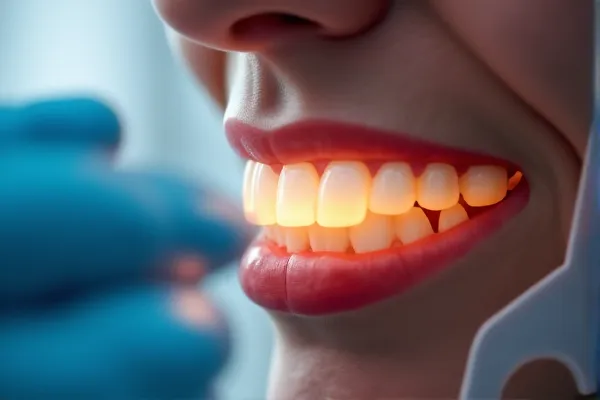
Hi-Noble-PFM-Aesthetics-Cost-Balance
Modern Hi-Noble PFMs are capable of excellent visual integration at a lower material risk than all-ceramics.
Using experienced technicians and proper framework design, clinics can achieve beautiful outcomes without relying on ultra-premium ceramic systems.
Durability doesn’t have to come at the expense of visual harmony.
This makes Hi-Noble PFMs ideal for patients needing both reliability and pleasing esthetics.
Premium practices value consistent results, long-term satisfaction, and fewer returns.
They are often chosen not just for what they cost—but for what they prevent.
✅ Hi-Noble PFM crowns deliver esthetic and functional value without overshooting budget – TRUE
Their strength, porcelain fidelity, and long-term appearance make them ideal for cases where both function and beauty matter.
❌ Only all-ceramic crowns can provide high esthetics – FALSE
Layered Hi-Noble PFMs can achieve excellent visual results when handled by skilled labs, often at lower overall cost and risk.
The cost of Hi-Noble PFM crowns is shaped not only by materials but also by how efficiently they are manufactured. From CAD/CAM design to batch-level workflow optimization, manufacturing processes play a significant role in minimizing overhead and reducing per-unit production costs—especially in multi-unit or repeatable cases.

Hi-Noble-PFM-Manufacturing-Process-Efficiency
Digital design significantly reduces manual labor and material waste.
Digital systems also improve communication with clinics, reducing rework due to unclear instructions.
Efficient production chains allow labs to maintain pricing consistency despite material fluctuations.
The more predictable the process, the easier it is to price crowns competitively without sacrificing quality.
Volume and logistics optimization directly influence cost structures in crown fabrication.
Clinics working with labs that manage materials and logistics well often see more stable pricing and fewer case delays.
Efficient manufacturing reduces waste, improves fit, and lowers remake rates—key levers in controlling the cost of Hi-Noble PFM crowns over time.
Not every material fits every patient or practice. The suitability of Hi-Noble PFM crowns depends on balancing case requirements with budget realities. Understanding which clinical situations and patient profiles benefit most from this material helps practices make informed, cost-conscious choices.

Hi-Noble-Crown-Clinical-Assessment-Checklist
Clinical performance depends on more than just the lab’s output.
Material choice should always consider stress level, esthetic expectation, and patient compliance.
It’s not just about price—it’s about value per year.
Practices should calculate average case cost across lifespan, not just invoice line items.
A restoration that lasts longer reduces hidden overhead.
Clinics aiming for efficiency and high case yield benefit most from long-lasting, low-disruption materials.
✅ Hi-Noble PFM crowns are suitable for practices balancing clinical performance with long-term cost control – TRUE
They are well-suited for cases requiring durability, esthetics, and predictable longevity, even in general practice settings.
❌ Hi-Noble crowns are only cost-effective in luxury or cosmetic-focused clinics – FALSE
While favored in premium settings, their low failure rates and repair efficiency make them viable in high-throughput or insurance-driven models as well.
Even high-performing materials like Hi-Noble PFMs require proper workflows to reach their full economic potential. By optimizing ordering processes, clinical efficiency, and lab communication, clinics can consistently reduce hidden costs and maintain predictable profitability across crown cases.

Hi-Noble-Crown-Clinic-Cost-Control
Poor order planning leads to unnecessary costs and delays.
A well-structured ordering system supports both clinical flow and cost control.
The hidden cost of a crown is often in the time it consumes.
Reducing crown-related disruptions preserves chair availability for billable work.
Trusted lab relationships provide value beyond unit pricing.
Reliable labs that understand your workflow are often worth more than the cheapest offer.
Optimizing cost-effectiveness isn’t just about what you pay per crown—
It’s how well your entire practice integrates materials, workflow, and partnerships.
Download our clinic cost-control checklist to assess your crown sourcing strategy and start saving time and money.
Hi-Noble PFM crowns offer more than aesthetic durability—they provide measurable long-term cost benefits. By aligning clinical performance with manufacturing efficiency and practice operations, dental teams can ensure they’re investing in a crown solution that protects margins and patient satisfaction over time.
To test how Raytops Dental Lab’s Hi-Noble solutions can support your long-term goals, submit a pilot case or request a cost projection today.