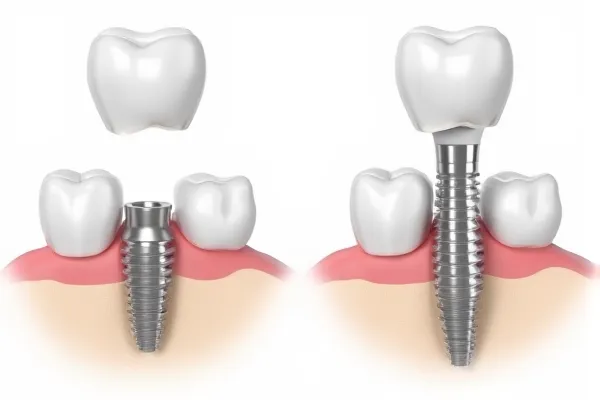
When replacing missing teeth, patients often ask: “Should I choose a bridge or an implant?” The right answer depends on clinical needs, patient goals, and long-term outcomes. This guide breaks down key differences in structure, durability, cost, and indications to help both clinicians and patients make informed decisions.
Dental implants replace missing teeth without affecting adjacent teeth, while bridges rely on surrounding teeth for support—impacting both structure and longevity.
Understanding foundational distinctions helps patients grasp how treatment affects long-term outcomes.
Implant vs bridge structural diagram
Implants are independent. Bridges are tooth-supported.
Approach varies in invasiveness.
| Option | Surgical? | Typical Timeline |
|---|---|---|
| Implant | Yes | 3–6 months (including healing) |
| Bridge | No | 2–3 weeks (prep to seat) |
Implants last longer—but need proper hygiene.
Implants preserve bone and offer superior esthetics.
✅ Implants offer independent, bone-preserving replacement – TRUE
Explanation: They don’t rely on or damage neighboring teeth.
❌ Bridges are structurally identical to implants – FALSE
Explanation: Bridges affect adjacent teeth and do not integrate with bone.
Clinical studies reveal clear differences in complication rates, durability, and patient satisfaction over time.
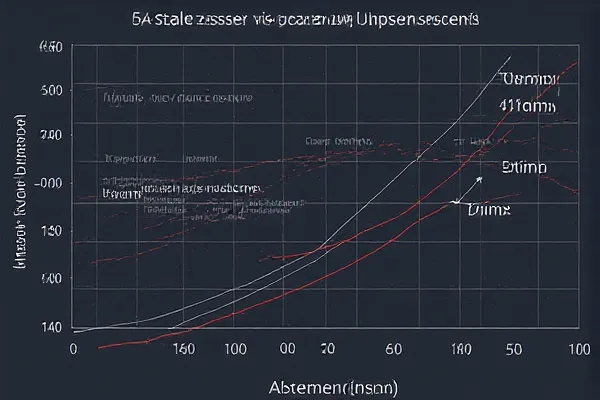
IMAGE
ALT: Implant vs bridge longevity comparison chart
Prompt: 10-year survival curve showing higher implant retention compared to bridge, with bone loss and repair rates annotated
Implants outperform in most controlled studies.
Implants support bone. Bridges don’t.
Bridges often need more attention.
Nature of complications differs.
| Complication | More Common In |
|---|---|
| Abutment loosening | Implants |
| Secondary caries | Bridges |
| Tissue inflammation | Both |
✅ Implants show higher long-term survival and fewer complications – TRUE
Explanation: Independent support and osseointegration reduce failure risk.
❌ Bridges are equal to implants in bone support – FALSE
Explanation: Only implants stimulate and preserve jawbone.
Upfront costs often shape patient decisions—but long-term value tells a fuller story.
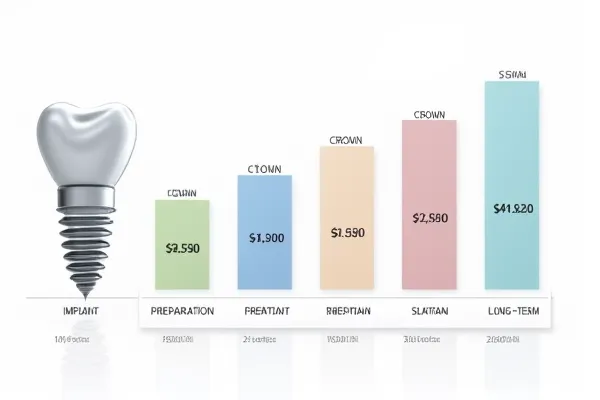
Implant and bridge cost comparison infographic
Implants typically have a higher upfront cost.
Bridges cost more in the long run.
Implants gaining wider support.
Implants usually win on cost-per-year basis.
| Option | Lifespan Estimate | Avg. Annual Cost (10 years) |
|---|---|---|
| Implant | 20+ years | $200–$300/year |
| Bridge | 8–10 years | $300–$500/year |
✅ Implants offer better long-term financial value – TRUE
Explanation: Higher upfront investment pays off with longer service life.
❌ Bridges are always cheaper over time – FALSE
Explanation: Maintenance, replacement, and decay increase cost later.
While implants are ideal in many cases, bridges remain useful in select clinical scenarios.
Bridge indications chart
Medical risk or healing limitations.
Lack of implant support without grafting.
Faster, lower-cost solution.
Already compromised abutments reduce added risk.
✅ Bridges are appropriate when implants are contraindicated or impractical – TRUE
Explanation: They provide a valid alternative under proper indications.
❌ Bridges are outdated and no longer clinically useful – FALSE
Explanation: They remain important tools in comprehensive care.
In many modern cases, implants are the gold standard due to preservation, esthetics, and function.

Ideal implant indications diagram
No need to cut healthy enamel.
Gingival contour and papilla preservation.
Better force dispersion.
Best-case scenario for implants.
✅ Implants are ideal when surrounding teeth are healthy and bone volume is sufficient – TRUE
Explanation: No harm to adjacent structures and better longevity.
❌ Implants require compromising nearby teeth for placement – FALSE
Explanation: They preserve adjacent anatomy, unlike bridges.
Clarity drives confidence. Visual tools and value framing help patients choose what’s right for them.

Consultation visuals for implants vs bridges
Seeing builds understanding.
Shift focus from expense to investment.
Anticipate future decisions.
| Factor | Implant | Bridge |
|---|---|---|
| Bone loss risk | Low | High |
| Retreatment ease | Easier | May involve 3 teeth |
| Longevity | 20+ years | 7–12 years |
Flexibility makes decisions easier.
✅ Clear, visual, and value-based presentation increases acceptance – TRUE
Explanation: Patients are more likely to commit when they see the full picture.
❌ Patients make decisions based on price alone – FALSE
Explanation: Esthetics, convenience, and long-term value matter more.
Choosing between an implant and a bridge is about more than cost—it’s about long-term success, patient health, and functional goals. When clinicians present clear comparisons, patients are empowered to make informed, confident choices.
Take the Next Step
Need help creating case comparison visuals or financing guides for your clinic? We’ll help you simplify choices, increase case acceptance, and educate patients more effectively.