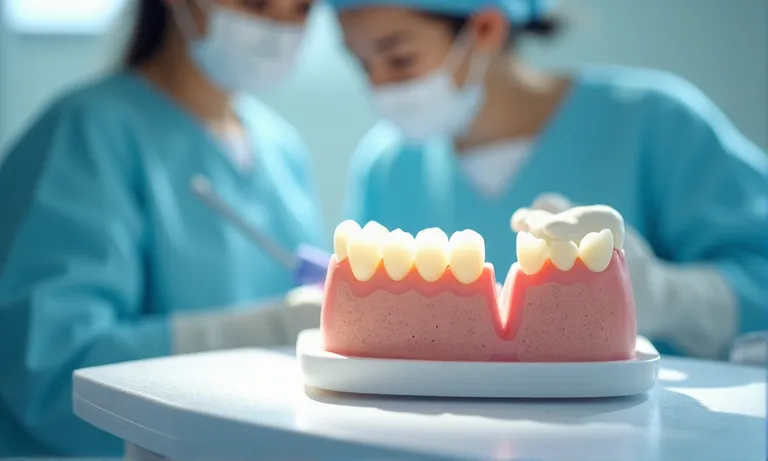
Restoring posterior teeth often means choosing between strength and conservation.
Defaulting to full crowns can lead to over-preparation, while direct fillings may lack long-term resilience.
Inlays, onlays, and overlays offer a smarter alternative—each tailored to a specific level of tooth loss. This guide compares their indications, design, and performance to help clinicians and labs align case selection with clinical success.
Inlays, onlays, and overlays are conservative indirect restorations used to treat posterior teeth. Inlays fit within cusps, onlays cover one or more cusps, and overlays extend across all occlusal surfaces. Each type balances tooth preservation and structural reinforcement based on the extent of damage.
Inlay, onlay, and overlay restorations represent a spectrum of conservative indirect techniques used to restore posterior teeth. For clinicians and treatment planners, understanding their definitions, distinctions, and appropriate coverage scope is essential for case selection. From the lab’s perspective, these choices influence margin design, material selection, and fabrication accuracy.
Inlay-onlay-overlay-restoration-diagram
Each type preserves more tooth structure than a traditional crown but serves different levels of structural reinforcement.
| Restoration | Fabrication | Coverage | Clinical Category |
|---|---|---|---|
| Filling | Direct | Intracoronal | Single-visit, low cost |
| Inlay/Onlay/Overlay | Indirect | Variable (from internal to full occlusal) | Multi-step, lab-assisted |
| Crown | Indirect | Full coverage | Maximum structural support |
Indirect restorations are chosen when enhanced strength, fit, or occlusal design is required beyond what direct materials can achieve.
From a lab standpoint, accurate tooth coverage indication and prep detail are critical to avoid under- or over-restoration.
| Material Type | Best Suited For | Notes |
|---|---|---|
| e.max | Inlay, Onlay, Overlay | Esthetic, strong, suitable for bonding |
| Zirconia | Onlay, Overlay | High strength, lower translucency |
| Hybrid Ceramic | Inlay, short-term use | Easier to adjust, useful in fast-turn workflows |
Each material has its own prep and bonding considerations that affect lab design parameters.
Onlays, inlays, and overlays offer a spectrum of conservative yet durable options for posterior restoration. The key to successful outcomes lies in choosing the right coverage based on tooth loss pattern, occlusion, and restorative goal.
Each type of indirect restoration—inlay, onlay, and overlay—is designed to address specific patterns of tooth structure loss. Choosing the right option ensures optimal conservation, longevity, and fit. From a lab’s perspective, clearly defined prep and restoration type help us deliver restorations that minimize adjustment and maximize functional integrity.
Clinical-scenarios-inlay-onlay-overlay
Best suited for:
Ideal when enamel ring and occlusal load are moderate and cusps remain structurally sound.
Indicated when:
Often chosen as a “middle path” between an inlay and a crown—conservative yet reinforcing.
Overlay restorations are preferred when:
Overlays can mimic the structural support of a crown while preserving non-functional surfaces.
| Restoration Type | Margin Visibility | Depth Control | Bonding Surface |
|---|---|---|---|
| Inlay | High | Shallow | Mostly internal walls |
| Onlay | Moderate | Deeper over cusp | Cusp ridges + walls |
| Overlay | Wide-field needed | Deepest | Full occlusal + cusp coverage |
From the lab side, clear prep reduction, visible margins, and digital or analog scans with clean segmentation are key to precision restoration delivery.
In clinical selection, the extent of tooth loss—not just decay—should guide whether an inlay, onlay, or overlay is most appropriate. Each option has unique prep demands and coverage strength to match real-world case needs.
The mechanical performance of inlays, onlays, and overlays varies based on their design, material, and clinical application. For posterior restorations under high occlusal load, selecting the correct coverage type directly impacts fracture resistance and long-term reliability. From the lab’s perspective, the strength of the final outcome is often determined as much by prep clarity and material selection as by design choice.

Strength-durability-comparison-inlay-onlay-overlay
As the surface area increases, so does the load-bearing capability—if bonded and designed properly.
| Restoration Type | Material (e.max) | Material (Zirconia) | Comments |
|---|---|---|---|
| Inlay | Moderate | Less ideal (too rigid) | Best when enamel is strong |
| Onlay | High | Very high | Optimal balance of strength and bonding |
| Overlay | Very high | Maximal | Performs best in post-endo molars |
We often guide material selection based on cavity width, prep taper, and functional stress map.
Studies show:
Longevity is a balance of design and case selection—not just material.
✅ Onlays and overlays offer superior strength and longevity in high-load cases – TRUE
Their design distributes force more evenly and supports weakened cusps more effectively than inlays.
❌ Inlays are always the most conservative and reliable option – FALSE
In structurally compromised teeth, inlays may underperform or fracture if cusp protection is needed.
In addition to mechanical performance, indirect restorations must meet rising patient expectations for esthetics—especially when placed in visible posterior zones or when replacing anterior fillings. The visual outcome of inlays, onlays, and overlays depends on material selection, lab technique, and integration with natural enamel. For dental labs, these cases require a balance of precision, translucency control, and shade consistency.

Aesthetic-comparison-indirect-restorations
Overlays, when well-fabricated, can replicate the contours and light behavior of a natural occlusal table.
| Workflow Type | Visual Precision | Finish Quality | Patient Perception |
|---|---|---|---|
| Chairside milling | Moderate | Variable | Faster, but less detailed |
| Lab-made (pressed or CAD/CAM) | High | Polished/glazed | More anatomic, refined |
Lab-processed restorations generally provide better surface anatomy, edge detail, and customized shade matching—especially in molars with visible occlusion.
For patients with dietary staining habits, long-term esthetic performance may favor ceramic over resin-based restorations.
Material visibility, lip line, and light transmission should guide placement zone decisions.
Aesthetic success in indirect restorations is a function of both material behavior and lab execution. Matching natural form, color, and light response ensures onlays, inlays, and overlays perform well not only functionally—but also in meeting patient expectations.
Choosing between an inlay, onlay, or overlay involves more than matching a defect to a coverage type—it requires integrating clinical conditions, material behavior, cost dynamics, and lab capability. From the lab perspective, restorations succeed most when the prep design, occlusal forces, and material request are clearly aligned with what the tooth—and patient—can support long-term.
Indirect-restoration-selection-clinical-factors
Prep depth, wall integrity, and enamel volume directly influence adhesive strength and case longevity.
Labs often request occlusal photos or notes for cases where wear patterns or contact zones are unclear.
It’s important to align patient goals and financial constraints before selecting high-lab-cost restorations.
Case clarity equals case predictability.
Each restoration type has a clear place—but the right choice depends on structure, load, cost, and collaboration.
Want help selecting the most appropriate restoration type or material based on your prep or scan? We’re happy to review files and offer feedback from the lab side.
Choosing between an inlay, onlay, or overlay isn’t just about the amount of decay—it’s about finding the best match for each patient’s structure, habits, and goals. When chosen appropriately, each option balances strength, conservation, and esthetics in its own way.
Here’s a concise recap:
Want prep feedback or help choosing the best design for your next case? Contact Raytops Dental to send your scans—we’re happy to provide lab-side insight for better restorative planning.