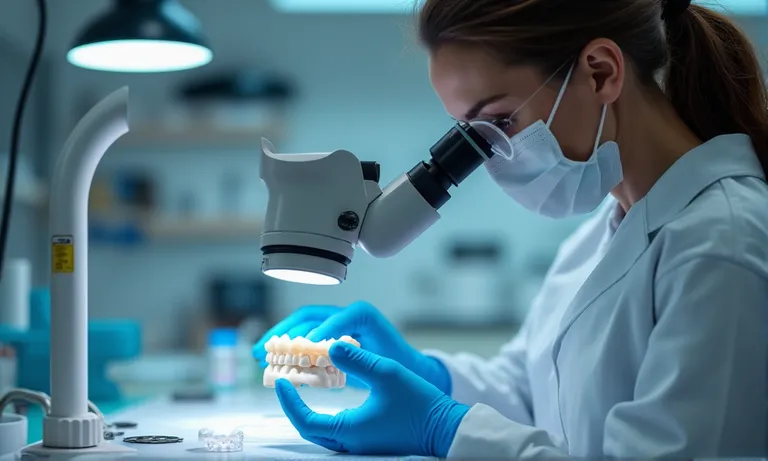
Selecting a crown and bridge dental lab involves more than just comparing costs or turnaround times. For procurement professionals and lab sourcing teams, the right partner must offer consistency, material transparency, and streamlined communication — especially when quality and deadlines directly affect patient satisfaction and business operations.
When evaluating potential vendors, consider the following procurement-critical dimensions:
Quality Assurance: How does the lab ensure fit accuracy, aesthetic consistency, and control remakes across batches? Are they transparent about material sourcing and quality certifications?
Pricing Transparency: Beyond unit cost, understand how pricing is influenced by materials, turnaround speed, and customization complexity. Watch for hidden costs tied to remakes, rush orders, or logistics.
Delivery and Responsiveness: What turnaround times can the lab reliably meet? Are their file formats, communication channels, and customer service aligned with your workflow needs?
Technology and Capacity: Does the lab offer CAD/CAM workflows, 3D printing, or digital Rx integration that support scale, traceability, and version control?
Cross-Border Collaboration: For overseas labs like those in China, how is timezone coordination, shipping logistics, and service transparency handled across distance?
Whether you’re testing a new vendor or benchmarking existing ones, this guide helps define clear evaluation criteria and procurement-aligned judgment standards — enabling more confident, scalable lab partnerships across markets.
High‑quality crown and bridge restorations are defined by precise marginal fit, biocompatible and traceable materials, aesthetic harmony, and standardized technician workflows. These elements directly impact clinical performance, patient comfort, and long‑term outcomes. For procurement teams evaluating overseas dental labs, understanding these indicators helps distinguish short‑term savings from long‑term reliability.
Crown-Bridge-Dental-Lab-Quality-Standards
Material quality forms the baseline of clinical trust. A dependable overseas dental lab uses certified materials with full traceability and proven safety records.
Poor fit can lead to clinical failures, chairside adjustments, and patient dissatisfaction. Precision is the foundation of functional longevity.
| Fit Element | Quality Indicator |
|---|---|
| Marginal gap | ≤50μm deviation under microscopic verification |
| Internal adaptation | Even wall clearance confirmed through digital QC |
| Contact point accuracy | Digitally adjusted for tight but comfortable fit |
| Calibration protocols | Regular mill and scanner tuning for reliability |
Visual harmony requires more than shade tabs. Aesthetics depend on how light interacts with the restoration in daily settings.
Even the best materials require skilled execution. Workflow consistency ensures repeatable outcomes across all case volumes.
Digital infrastructure elevates both efficiency and accuracy. A strong lab integrates CAD/CAM and 3D printing into every production step.
Reliable crown and bridge restorations depend on five pillars: material trustworthiness, precision fit, natural aesthetics, technical skill, and digital consistency. Labs that deliver on all five earn confidence not through claims, but through every completed case.
Dental lab pricing structures vary significantly across providers and can impact long-term collaboration outcomes. While per-unit pricing may seem straightforward, understanding the full scope of cost drivers—materials, complexity, and turnaround time—ensures procurement teams avoid misleading comparisons and make sustainable sourcing decisions.

Dental-Lab-Pricing-Model-Comparison
Understanding the core pricing approach is critical for meaningful comparison. Most overseas dental labs use one of the following models:
The headline price is only part of the equation. Several underlying factors influence the actual cost of delivering a case.
✅ Slightly higher pricing signals long-term reliability – TRUE
Labs that invest in quality materials, digital infrastructure, and experienced technicians often reduce remake rates and improve delivery consistency, saving cost over time.
❌ Lower price always means better value – FALSE
Some labs quote minimal unit prices but apply hidden charges for shipping, remakes, materials, or support—leading to unpredictable total cost.
Turnaround time varies depending on restoration type, lab infrastructure, and logistics. For clinics and DSOs working with overseas dental labs, understanding the baseline lead times and what factors affect consistency is key to managing scheduling and patient expectations.
Dental-Lab-Turnaround-Time-Planning
Each restoration type has a baseline production time, excluding shipping. Labs with optimized workflows provide predictable delivery windows for most standard cases.
Even with defined timelines, actual delivery depends on the lab’s internal capacity and process integration. These variables directly impact consistency.
Outsourced labs should offer verifiable systems and track records. Buyers can evaluate delivery reliability with structured case monitoring.
Reliable turnaround depends not only on quoted lead time but also on process maturity, file handling, and operational discipline. Labs with strong digital intake and proactive communication can better integrate with clinical calendars and reduce patient chair-time variability.
Choosing between a local lab and an overseas dental lab is not about location alone—it’s about total value, reliability, and fit with your workflow. When evaluated across delivery, cost, quality, and communication, many overseas labs prove to be competitive long‑term partners, especially for crown & bridge cases.

Dental-Lab-Local-vs-Outsourcing-Decision
Delivery is often perceived as an advantage of local labs, but it ultimately depends on process structure. Overseas dental labs with clear production timelines and fixed shipping schedules can meet or exceed expectations.
| Factor | Local Lab | Overseas Dental Lab |
|---|---|---|
| Lab days (standard crown) | 2–3 days | 3–4 days |
| Shipping time | Same-day/local courier | 3–5 days (international express) |
| Production visibility | Often manual updates | Trackable milestones (CAD/CAM) |
| Delay notification | Reactive | Proactive via digital platform |
Outsourcing provides cost efficiency without sacrificing quality—if workflows are aligned and the lab supports scalability.
A common concern is whether overseas labs can maintain quality. Top-tier overseas partners offer structured QA processes and clear remake definitions.
Timezone difference does not mean communication breakdown. Structured workflow and dedicated support teams make alignment practical and reliable.
When communication, QA, and logistics are embedded into workflow—not improvised—the distance becomes operationally invisible. Overseas dental labs can match or even exceed local labs in dependability.
A clear comparison of lab options reveals four decisive factors for clinic and DSO decision-makers:
When evaluated on structure, not assumptions, a qualified overseas dental lab becomes a strategic partner—not just a vendor.
A dependable remake and quality control policy ensures not only patient satisfaction but also predictable cooperation for clinics and DSOs. Top-performing overseas dental labs differentiate themselves by standardizing remake definitions, setting clear thresholds, and embedding quality control into every production stage.

Dental-Lab-QA-Remake-Checkpoints
Many case issues can be avoided by aligning the definitions of “remake” and “adjustment” upfront. Reliable labs make this distinction operational and transparent:
While some remake is inevitable, top overseas dental labs aim for below-industry-average performance.
| Lab Performance Tier | Average Remake Rate | Acceptable Benchmark |
|---|---|---|
| Industry Average | 4–6% | ≤ 5% |
| Raytops (verified average) | 1.8% – 2.5% | ≤ 2.5% |
| Exceptional Performance | < 1.5% | ✔️ Elite standard |
Labs that consistently achieve <3% remake rate usually implement double-check CAD review, bite verification logs, and final-stage QC signoffs.
QA is not a one-time inspection. At Raytops and similar factories, multiple checkpoints are embedded from intake to final packaging.
Fast remake turnaround starts with structured documentation and clear eligibility scope.
A professional remake process should not feel like a negotiation—it should feel like protocol.
✅ Defined remake criteria reduce disputes – TRUE
A reliable lab distinguishes between remake and adjustment based on pre-agreed criteria, minimizing miscommunication and friction.
❌ Every error qualifies for a remake – FALSE
Not all issues stem from lab-side error. Responsibility must be assessed based on Rx clarity and supporting records.
Seamless outsourcing depends on more than technical skill—it requires synchronized digital workflows across tools, people, and time zones. A well-structured model ensures reduced back‑and‑forth, faster turnaround, and predictable consistency for clinics, DSOs, and distributors, backed by effective collaboration between dental teams.
Dental-Lab-Client-Collaboration-Workflow
Digital file compatibility forms the technical backbone of outsourcing efficiency. At Raytops, our team handles a wide range of input file types with cross-platform alignment:
Clear file interpretation avoids errors before production starts.
Fast resolution of case details often comes down to communication—how, when, and through whom.
When both sides speak the same “logistical language,” collaboration accelerates.
Instead of generic support, top-performing overseas dental labs assign case managers who understand regional workflows and retain case history.
| Feature | Dedicated Case Manager | Generic Support |
|---|---|---|
| Contact Consistency | ✔️ Same person handles repeat cases | ❌ Varies per shift |
| Timezone Awareness | ✔️ Adjusted reply windows | ❌ Often mismatched |
| Case Context Memory | ✔️ Maintains notes and preferences | ❌ Starts from scratch |
| Escalation Handling | ✔️ Can involve technical team quickly | ❌ Slower resolution path |
At Raytops, over 85% of recurring clients are assigned long-term case managers.
Repeat cases are where lab systems reveal true strength. Here’s how we minimize redundancy and speed up delivery:
These measures save 1–2 days per case for frequent clients.
Clear collaboration models reduce both friction and cost in the long term.
Key takeaways from top-performing lab collaboration models:
Choosing the right dental lab partner starts with asking the right questions—ones that go beyond pricing to assess reliability, workflow standards, and long-term compatibility. Smart evaluations lead to fewer remakes, faster onboarding, and scalable partnerships.

Dental-Lab-Evaluation-Checklist
Before entering a contract, request practical proof—not just promises.
Raytops encourages trial collaboration as a trust-building phase, not just a sales step.
Standardized workflows signal a lab’s ability to scale and maintain consistency. Use this checklist:
| Evaluation Point | A Reliable Overseas Dental Lab | An Unstructured Lab |
|---|---|---|
| Digital Rx & file handling | ✔️ Templates & file naming SOP | ❌ No clear intake method |
| QC checkpoints documentation | ✔️ Multi-stage visual + metric logs | ❌ Verbal-only confirmation |
| Remake protocol transparency | ✔️ Documented criteria & form | ❌ Case-by-case ambiguity |
| Revision tracking system | ✔️ Annotated photos & version logs | ❌ Missing previous notes |
| Record retention policy | ✔️ >1 year STL + report archive | ❌ No long-term record |
Raytops provides full documentation for repeatability and audit transparency.
Too-good-to-be-true offers often hide high remake rates or capacity bottlenecks. Ask clearly:
Labs like Raytops treat remake rate as a KPI tied to technician incentives and internal training.
Beyond the first case, what happens when volume grows or needs shift? Explore these dimensions:
At Raytops, over 70% of active clients maintain ongoing structures with renewal milestones.
✅ Asking strategic questions builds better partnerships – TRUE
By focusing on trial validation, workflow transparency, and long-term fit, buyers reduce costly misalignments and foster more consistent results.
❌ Choosing a dental lab based on price alone is sufficient – FALSE
Price without proof often leads to quality risks, unstable delivery, and communication breakdowns that cost far more in the long run.
Selecting a crown & bridge dental lab is a strategic decision that impacts clinical outcomes, scheduling, and long-term operational efficiency. Labs that combine material precision, transparent pricing, digital coordination, and structured remake protocols provide lasting value—not just low upfront cost.
To explore how Raytops supports clinics and procurement teams across these dimensions, contact us for a customized trial case or onboarding discussion.