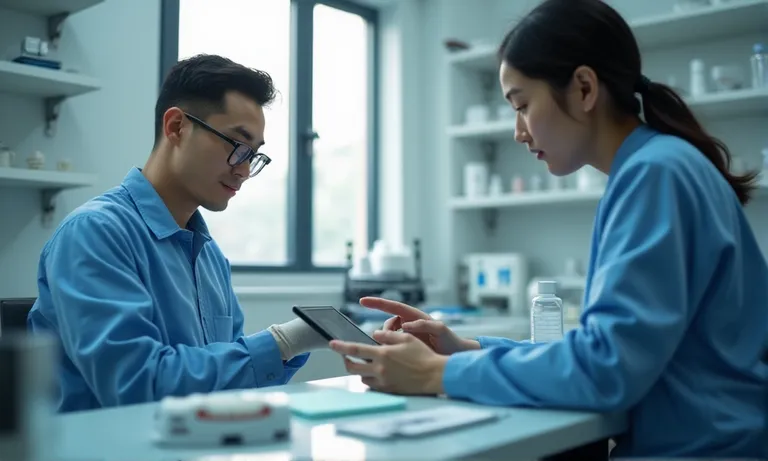
Outsourcing crown and bridge cases offers dental practices clear advantages—cost efficiency, faster turnaround, and access to advanced fabrication technologies. But without the right systems in place, these benefits can be undermined by quality inconsistency, communication breakdowns, regulatory gaps, and hidden operational costs.
This guide outlines the most critical risks in outsourcing crown and bridge work—and how to avoid them. Whether you’re working with an overseas partner or a domestic lab, you’ll learn how to:
If you’re responsible for case quality, lab procurement, or digital workflow integration—this post gives you the clarity and tools to manage outsourcing with confidence.
Dental practices outsource crown and bridge work primarily to reduce overhead, improve efficiency, and expand their restorative capacity—especially as case volume grows or in-house resources reach their limit. Strategic outsourcing provides access to specialized fabrication, faster turnaround, and cost stability across varying case types and materials. Yet the underlying motivation often stems from operational constraints: chairside time is limited, and outsourcing enables clinicians to focus more on patient care, less on logistics. Understanding the drivers behind this decision helps clarify what buyers should prioritize when evaluating lab partners.
dental-lab-outsourcing-reasons
Outsourcing is not just about cost—it’s a strategic choice rooted in resource optimization. The most common drivers include:
“For our clients in mid-sized group practices,” notes one project manager from an overseas dental lab we collaborate with, “outsourcing is the only way to handle a fluctuating monthly volume—sometimes 20 cases a week, sometimes 70—without quality slipping.”
The impact of outsourcing on key performance metrics can be summarized in the table below:
| Metric | In-House Fabrication | Outsourced Lab Workflow |
|---|---|---|
| Fixed Costs | High (equipment, maintenance, training) | Lower (only pay per case) |
| Scalability | Limited by staff and equipment availability | Flexible (can scale volume up/down rapidly) |
| Turnaround Time | Faster for single cases | Comparable or faster for bulk workflow w/ logistics |
| Material Options | Limited to inventory and tools on hand | Broad selection across systems and brands |
| Case Complexity | Depends on technician skill level | Access to specialist teams and digital support |
In most cases, outsourcing helps stabilize unit costs and improves the lab-to-chair workflow as long as the communication and case planning are strong.
Full-contour zirconia crowns, layered zirconia bridges, and PFM (porcelain-fused-to-metal) crowns top the list of most frequently outsourced crown and bridge restorations. These cases require precision milling and aesthetic layering—tasks that are labor-intensive and sensitive to fabrication error if done in-house without calibrated systems.
Implant-supported crowns are also often outsourced due to the digital planning and abutment customization involved. Practices with high esthetic standards or multi-unit anterior restorations often prefer outsourcing to labs that specialize in esthetics.
In our direct collaborations with DSO groups and independent practices, we often see full-arch zirconia cases routed externally for consistency in shade layering and occlusal morphology.
While temporary crowns and simple posterior units may still be fabricated chairside or with small desktop mills, most permanent restorations with esthetic or functional demand are routed to external labs.
Outsourcing crown and bridge work offers significant benefits—but only when risks are properly understood and managed. The most common problems relate to quality inconsistency, communication gaps, and hidden operational costs. These issues are especially likely when the lab relationship lacks clarity, quality systems, or accountability. Recognizing these risk factors early is critical for buyers who want stable outcomes, minimal remakes, and long-term trust in their lab partner.
dental-lab-outsourcing-risks
Quality risks tend to show up in predictable ways. Based on direct experience supporting DSO teams and independent practices, we often see the following issues:
In one recent case from a U.S. DSO partner, five posterior zirconia crowns were returned due to occlusion issues. The remake analysis traced the problem to a lack of confirmed articulation data and a switched STL file version mid-design.
Miscommunication is one of the most frequent—and avoidable—sources of failure in outsourced crown and bridge work. It often begins with unclear prescriptions, missing scan references, or last-minute design changes that aren’t confirmed.
Once a scan leaves the clinic, both lab and dentist rely on accurate, timely, and context-rich communication. Without it, the lab may proceed with assumptions that don’t match the clinical reality.
For instance, if a clinician requests “slightly lighter than A2” but doesn’t attach a photo under daylight conditions or fails to note stump shade, the lab cannot reproduce that intent. Or in layered zirconia cases, esthetic parameters such as translucency zones or buccal contour may be left to guesswork.
We’ve seen several practices solve this by implementing structured case intake protocols, where files are checked for critical data points before submission.
Below is a comparison of what may seem like “cost savings” on paper versus their downstream consequences:
| Apparent Advantage | Hidden Risk or Trade-off |
|---|---|
| Lower unit price | Higher remake rate increases chair time and lab handling costs |
| Faster advertised turnaround | May reflect rushed QA or batch shipping without case-level review |
| Minimal onboarding needed | Lack of alignment leads to misfits, inconsistent shading |
| Simplified communication | Reduced documentation results in unclear responsibility for errors |
| No case minimum | Less incentive for labs to optimize specific client workflows |
Choosing an outsourcing partner solely on price often leads to unpredictable results. Practices focused on long-term patient satisfaction should evaluate value over cost.
One lab manager from a regional distributor shared: “A client switched to a cheaper provider and soon had to remake 1 in every 5 anterior crowns. Eventually, they returned to us—not because of marketing, but because of consistency.”
While outsourcing to overseas dental labs offers cost and scalability advantages, it also introduces a different risk profile compared to domestic partners. These risks often stem not from geography itself, but from lack of alignment in regulation, time zone coordination, and documentation protocols. Comparing offshore and domestic labs through these lenses helps buyers set realistic expectations—and choose partners based on process quality, not just location.
overseas-vs-domestic-dental-labs-risk
When working with an overseas dental lab, buyers face a few recurring challenges:
At Raytops, for instance, we developed “mirror-shift” account reps to align communication windows with U.S. Eastern Time during design revisions—a system that has helped DSO clients reduce revision delays by 28% in multi-unit cases.
Not necessarily. While domestic labs often enjoy tighter real-time communication and simplified logistics, consistency still depends on process, not location.
We’ve supported clients who experienced high remake rates from local labs due to limited material choices or outdated scanning equipment. Conversely, some overseas labs—especially those investing in full digital workflows and rigorous QA—can outperform smaller domestic providers on both cost and reliability.
The key is not to assume safety by geography, but to verify based on system transparency, digital traceability, and quality metrics.
As one client told us after switching from a U.S. lab to an overseas team: “The biggest difference wasn’t price—it was that the offshore lab actually logged each STL version and gave us case audit trails.”
| Document Type | Why It Matters |
|---|---|
| Material Disclosure Sheet | Verifies alloy type, brand of zirconia, biocompatibility certs |
| Workflow Overview / SOP | Helps the buyer understand design tools, review checkpoints |
| Case Audit Log | Tracks STL versioning, margin edits, shade changes over time |
| Remake & SLA Policy | Defines responsibility, turnaround time, remake conditions |
| Certification Proof (e.g., ISO, CE) | Indicates adherence to recognized international quality systems |
Labs unwilling to share this level of transparency are usually not ready for high-volume, high-accountability partnerships.
Quality assurance in outsourcing doesn’t happen by default—it must be designed into the relationship. Clinics and procurement managers must take an active role in verifying a lab’s systems, materials, and transparency before and during collaboration. From certifications to audit protocols, there are multiple levers buyers can use to protect case outcomes, especially in crown and bridge workflows where accuracy and repeatability are critical.

dental-lab-quality-assurance-checklist
Labs that operate at scale—and with accountability—typically maintain the following:
At Raytops Dental Lab, for example, every full-arch zirconia case includes a two-step review: first for CAD margin integrity, then post-sintering shade accuracy. This has helped reduce remake rates on these complex cases by 32% for multi-location clients.
Before committing to volume orders, buyers should review both technical documentation and previous case performance. Request samples that represent the actual workflow—including prep margin transitions, substructure detail, and occlusal finishing—not just cosmetic demo units.
Ask the lab to explain:
Reviewing remake logs, turnaround variance, and communication trails can tell more about a lab’s reliability than any single sample case. Experienced overseas dental labs often share anonymized case dashboards with remake reasons categorized—a practice many domestic labs still lack.
For buyers with standardized workflows or sensitive restorations, we recommend the following steps:
We’ve supported clients who ran dual-track trials with two labs. The one that offered real-time design previews and shared CAD logs won the contract—not because of price, but because of trust and transparency.
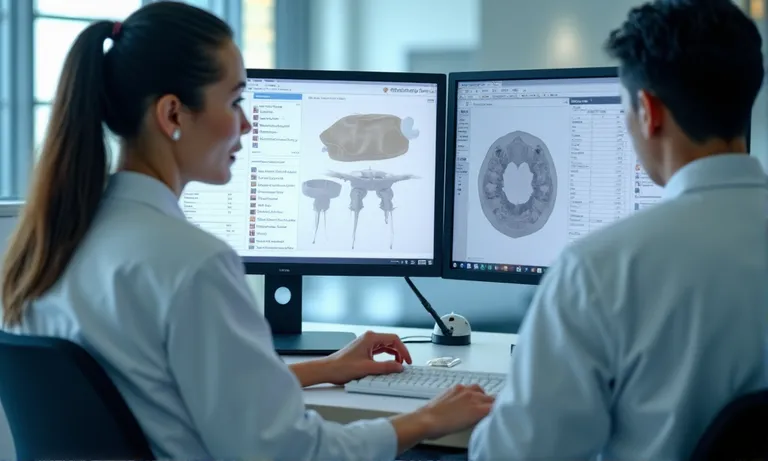
The most preventable issues in outsourced crown and bridge work aren’t due to poor craftsmanship—they’re due to communication gaps. A single missed shade instruction or an unclear margin annotation can cause days of delay or costly remakes. Ensuring seamless coordination between clinics and labs requires structured communication protocols, well-defined checkpoints, and tools that reduce ambiguity.
dental-lab-communication-protocol
Breakdowns often begin with vague or incomplete instructions. Every file sent to the lab should explicitly include:
In our collaboration with multi-location dental groups, standardizing these data points reduced remake incidence by 37% in anterior zirconia cases over a 3-month span.
Effective remote collaboration requires a repeatable, transparent workflow. A 4-step structure is often effective:
This model is particularly effective when paired with visual tools like PDF overlays or intraoral scan annotations.
Coordination across time zones and roles requires more than email. Practices that succeed at outsourcing use:
We’ve worked with several clients who created shared folders named by patient ID, case type, and date. This simple structure eliminated 90% of “which file was final?” confusion.
Even with the best outsourcing systems in place, issues will occasionally arise—remakes, delays, inconsistent shading, or unexpected patient feedback. What separates high-performing clinics and labs isn’t whether problems happen—it’s how they respond and evolve together. A structured SLA, clear escalation process, and periodic evaluation are essential tools to manage and learn from these moments.

dental-lab-case-remake-issue-escalation
To avoid disputes when cases need to be redone, your Service Level Agreement (SLA) should clearly define:
Well-written SLAs protect both clinic and lab. At Raytops, we define remake categories into “avoidable vs shared risk,” which helps reduce ambiguity and increase resolution speed.
A structured issue-handling process enables trust and course correction. We recommend this escalation flow:
We’ve seen DSO clients adopt this model and reduce shade-related remakes by 40% in 6 months.
Not every issue warrants abandoning a vendor. But the following signs may indicate a deeper misalignment:
In such cases, consider a pilot run with a second lab while continuing limited volume with your existing partner. This approach helps compare process control, transparency, and responsiveness in real time without disrupting your entire workflow.
One U.S.-based distributor shared: “After escalating the same issue three times with no corrective action, we started parallel trials. The alternative lab won—not by offering lower cost, but by showing they could listen, adapt, and report.”
Choosing an outsourced dental lab partner is a strategic decision that goes far beyond pricing or marketing claims. The best partners are not just fabricators—they’re collaborative stakeholders who align with your workflow, quality expectations, and communication style. Asking the right questions helps uncover operational depth, responsiveness, and long-term reliability.

dental-lab-evaluation-questions-checklist
Before committing, ask for:
Labs that hesitate to share this information may not have the infrastructure for scalable cooperation.
One client we worked with compared three labs. The lab that provided weekly dashboards—even during trial—won the contract, because it showed transparency and readiness to scale.
Standard posterior units are easy to handle. But labs prove their value when cases go off-script.
Can the lab:
From our experience, successful partnerships often start when a lab proves it can manage chaos—like a layered zirconia bridge needed in five days due to an unplanned surgery date shift.
It’s not about promising perfection; it’s about demonstrating controlled flexibility and proactive coordination under pressure.
| Metric | What to Ask | Why It Matters |
|---|---|---|
| Remake Rate | “What is your average remake rate over the past 6 months?” | High remake rates = hidden cost, patient delays |
| Delivery Consistency | “What percentage of your cases are delivered on time?” | Reflects operational maturity and batching control |
| Client Retention | “What’s your average client relationship duration?” | Indicates trust, adaptability, and service culture |
| Trial-to-contract conversion | “How many trial clients become ongoing accounts?” | Measures client satisfaction and onboarding clarity |
We’ve seen clients use these metrics to score labs during selection. One DSO procurement lead shared that retention rate was the most reliable predictor of lab fit.
Outsourcing crown and bridge work is not just a cost decision—it’s a strategic partnership choice. The right lab brings consistency, transparency, and collaborative problem-solving to every case, especially when volume, esthetics, or timelines increase complexity. For dental practices and procurement teams seeking long-term reliability, it’s not about choosing “domestic vs overseas,” but about choosing process maturity, communication alignment, and measurable accountability.
As an overseas dental lab, we’ve seen how structured coordination, transparent systems, and shared quality standards can turn outsourcing from a risk into a competitive advantage.