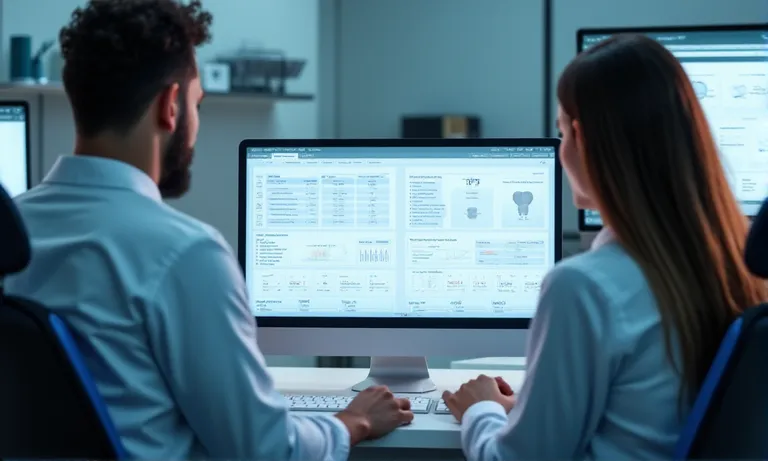
Choosing between a local dental lab and an overseas partner involves more than comparing invoices—it’s a decision about control, consistency, and long-term operational alignment. Procurement teams must weigh the strategic trade-offs in cost, turnaround, quality assurance, and digital compatibility before outsourcing dental restorations at scale.
Here are the six critical dimensions to evaluate:
A structured, case-type–driven approach to these factors enables dental practices and DSOs to reduce operational risk, optimize cost-performance balance, and establish resilient, scalable lab partnerships.
For procurement teams comparing local and overseas dental labs, three factors consistently determine the viability of a partnership: cost structure, turnaround time, and communication responsiveness. These dimensions directly impact operational efficiency, profitability, and patient satisfaction—making them essential evaluation priorities for any dental procurement decision-maker.
dental-lab-cost-turnaround-communication-comparison
Overseas dental labs often provide lower per-unit prices, but total cost depends on volume, shipping, and adjustment policies. Local labs may offer flexibility but typically at a higher base rate.
| Factor | Local Dental Lab | Overseas Dental Lab |
|---|---|---|
| Base Unit Price | Higher (often 1.5–2x) | Lower (significantly more competitive) |
| Volume Discount | Limited, customized per relationship | Tiered structure, available from low volume |
| Shipping & Handling | Minimal or included | Added cost per shipment |
| Price Stability | More variable, market-driven | More stable under annual contracts |
| Adjustment / Remake Fee | Often negotiable, may be absorbed | Transparent and predefined in SOP |
For a deeper breakdown of cost implications, this Dentistry Today comparison of outsourcing economics outlines key pricing considerations for dental labs.
Turnaround time is more than shipping speed—it’s the sum of production, review, and communication. Overseas dental labs can match or even outperform local labs when processes are standardized and digital workflows are used.
Consistent, predictable communication is more critical than immediate replies. Overseas labs like Raytops adopt structured communication protocols to minimize time zone friction.
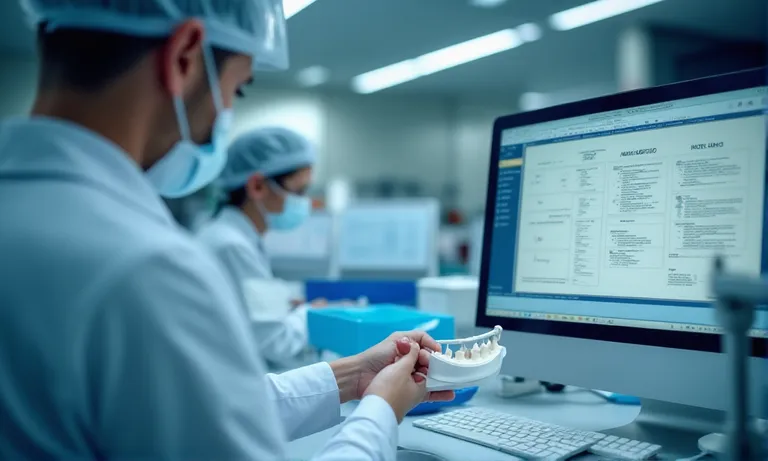
When comparing local and overseas dental labs, quality assurance is not determined by geography but by system design. The most reliable labs—regardless of location—adhere to structured protocols, transparent remake policies, and internationally recognized compliance standards.
dental-lab-quality-assurance-process-check
Quality assurance begins with standardization. Overseas dental labs working with international clients usually establish documented protocols that track every case from entry to shipment.
Step 1: Case intake with digital labeling, technician assignment, and baseline verification.
Step 2: Mid-process checkpoints for fit and contour using model-based inspections or 3D overlay validation.
Step 3: Final QA using checklists (margin integrity, occlusion clearance, shade match) signed off by a trained inspector.
Step 4: Documentation upload, including photos, batch data, and QA approval stamp before release.
These steps are often governed by ISO 13485 protocols for medical device manufacturing, enabling repeatability and accountability across batches.
The transparency and structure of remake policies significantly impact cost and confidence. While local labs may offer more informal flexibility, many overseas dental labs provide standardized remake terms that reduce ambiguity.
| Policy Category | Local Dental Lab | Overseas Dental Lab |
|---|---|---|
| Remake Eligibility | Often informal, varies by case | Defined criteria in SOP or contract |
| Time Window | Typically 5–7 business days post-delivery | 7–14 business days, depending on region |
| Fee Waiver | Case-by-case, may be waived verbally | Waived if lab responsibility confirmed |
| Required Evidence | Sometimes verbal or photo-based | Photo + model return + adjustment notes |
| Tracking & Feedback | May be ad-hoc | Logged in CRM or LIMS with resolution ID |
A growing number of overseas labs adopt structured QA review systems, similar to those used in medical manufacturing. Refer to this NADL guideline on quality tracking in dental labs for industry benchmarks.
Reputable overseas dental labs typically hold certifications that align with Western regulatory systems. These standards act as operational guardrails to ensure consistency, safety, and traceability.
✅ International quality certifications and documented QA systems can match or exceed local standards – TRUE
Overseas dental labs often undergo third-party audits and follow device-level quality systems, ensuring repeatable and transparent case outcomes.
❌ Local labs always deliver more reliable quality due to proximity – FALSE
Geographic location doesn’t guarantee consistency. In fact, overseas labs with ISO and FDA alignment may offer more systematic QA than smaller local providers.
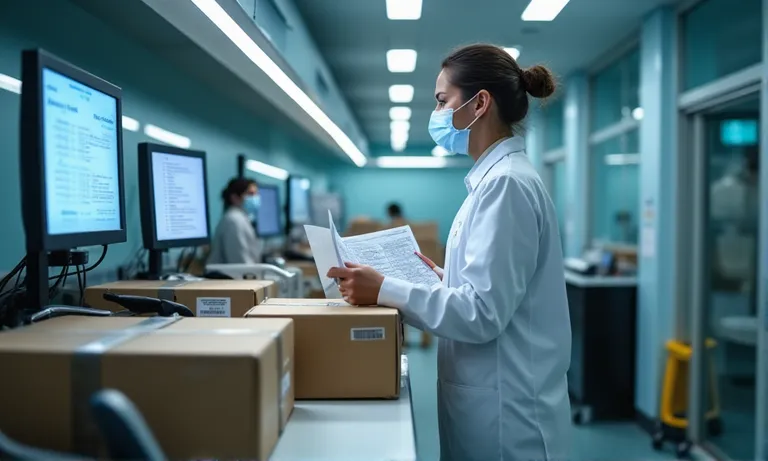
Overseas outsourcing offers cost benefits but also introduces specific operational risks that are often overlooked. Understanding how customs, logistics disruptions, and liability boundaries are managed is essential for building a stable and predictable supply chain.
dental-lab-logistics-risk-management
While international shipping has improved dramatically, it still introduces variables that can impact time-sensitive cases.
Many overseas labs mitigate these risks by working with dental-specific logistics providers and maintaining buffer stock or expedited handling for priority accounts.
The difference between a minor delay and a major disruption often comes down to how the lab handles it. Reliable overseas dental labs have structured recovery mechanisms.
| Incident Type | Typical Lab Response |
|---|---|
| Minor Delay | Preemptive notice via system alerts; new ETA provided |
| Major Delay | Free express upgrade for follow-up or remake case |
| Parcel Damage | Inspection photos + full-case remake without charge |
| Lost Shipment | Courier claim + case redo with zero-cost priority |
| Client-side Delay | Auto-extension of warranty/remake window |
Effective labs also maintain case log history, including handling timestamps, scan confirmation, and resolution actions logged in CRM or LIMS systems.
One of the least understood risks is liability distribution across the logistics process. Misalignment here can lead to confusion and finger-pointing when things go wrong.
✅ Structured overseas labs have defined SOPs and recovery protocols for logistics disruptions – TRUE
The best labs document case handling, escalation workflows, and liability boundaries, enabling fast, low-friction resolution.
❌ Once a shipment leaves the lab, it’s no longer their responsibility – FALSE
Well-managed overseas partners offer tracked handling, case replacement guarantees, and shared accountability through pre-agreed terms.
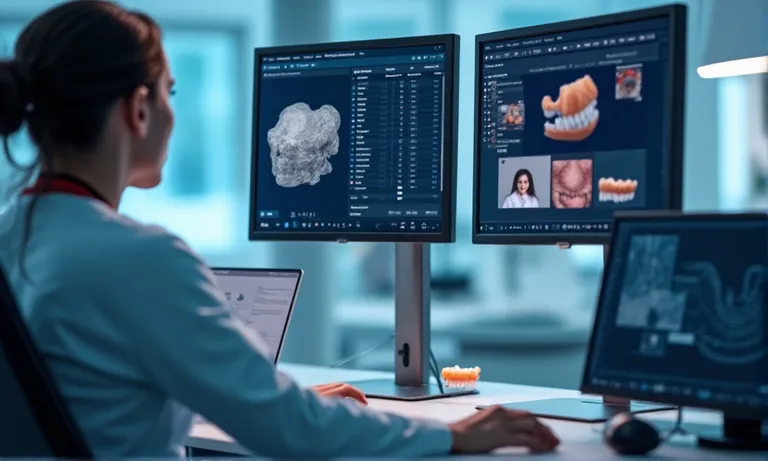
Successful digital collaboration with overseas dental labs depends on file compatibility, feedback efficiency, and proper onboarding. These three elements ensure that digital cases move seamlessly from design to delivery without friction or rework.
dental-digital-workflow-collaboration
File compatibility is the foundation of digital lab collaboration. Leading overseas dental labs support a broad range of file formats and maintain strict workflows to prevent data loss or misinterpretation.
The key to managing time zone differences is a predictable feedback protocol that doesn’t rely on real-time interaction.
Proper onboarding ensures file interpretation, shade communication, and design preferences are fully aligned before scaling collaboration.
Step 1: Calibration cases — 2–3 sample cases are submitted for trial production, covering different restoration types.
Step 2: Preference mapping — The clinic shares their design guidelines, margin preferences, emergence profiles, and anatomical priorities.
Step 3: Protocol alignment — The lab sets up custom case checklists and confirms scanner/software settings compatibility.
Step 4: Approval workflow setup — Finalized feedback loops and contact roles are defined before transitioning to full-scale orders.
✅ Digital workflows can be effectively synchronized across time zones with structured onboarding – TRUE
Clear SOPs, case templates, and shared digital tools enable predictable collaboration and minimize production errors.
❌ Time zone and file format challenges make digital collaboration with overseas labs impractical – FALSE
With proper calibration and communication tools, digital-first overseas labs can offer streamlined collaboration on par with or superior to local labs.
In many procurement scenarios, the optimal solution isn’t choosing between local and overseas labs—but combining them. A hybrid sourcing model balances speed, complexity handling, and cost by allocating cases based on case type and operational needs.
hybrid-dental-lab-sourcing-model
Local labs often maintain an edge in cases where chairside feedback or esthetic trial is required.
For predictable, high-volume cases, overseas labs often offer a better balance of cost and consistency.
This article on strategic outsourcing models in dental restoration explains how to align case types with production partners.
The key to hybrid success is developing a clear allocation rule based on case characteristics—not lab preference.
✅ Hybrid sourcing allows dental practices to optimize cost and quality across different case types – TRUE
Combining local precision with overseas efficiency lets procurement teams achieve strategic flexibility without compromising outcomes.
❌ You must choose one lab type for all cases to maintain consistency – FALSE
With defined workflows and calibration, dual-lab strategies can deliver superior consistency by aligning case complexity with lab strengths.
Choosing between a local and an overseas dental lab doesn’t need to be a binary decision. The most successful procurement strategies prioritize clarity over convenience—evaluating labs based on cost structure, communication protocols, quality assurance, and digital compatibility, not just location.
Overseas dental labs can match or exceed local counterparts in many areas when equipped with structured QA systems, standardized remake policies, and digital onboarding workflows. Yet local labs remain essential for complex, esthetic, or high-touch cases. A hybrid approach—strategically allocating cases based on complexity and turnaround sensitivity—can help clinics and DSOs lower costs, reduce remake rates, and expand production capacity without compromising control.
At Raytops Dental Lab, we support procurement teams by delivering consistent, documented, and digitally integrated collaboration. Whether you’re exploring overseas outsourcing or designing a hybrid model, our team is here to align with your workflow—one calibrated case at a time.