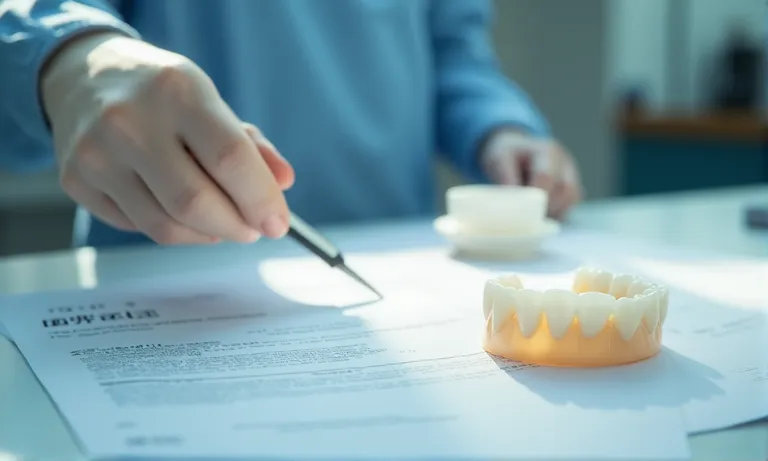
Zirconia veneers are gaining global popularity—but that doesn’t mean all are approved for use.
In the US and Europe, strict regulatory requirements govern which zirconia materials can be used clinically.
This article explains how CE marking, FDA clearance, and ISO compliance affect your ability to deliver safe, legal, and fully traceable restorations.
Zirconia veneers are clinically approved for use in the US and Europe when made from certified materials that meet FDA 510(k) requirements, carry CE marking under MDR regulations, and comply with ISO quality standards.
For any zirconia veneer to be legally placed in the US or EU, it must meet specific regulatory certifications ensuring its safety, performance, and traceability. As a dental lab serving international markets, understanding these compliance layers is essential—not only for import legality but also for clinician and patient trust. Certification isn’t just paperwork; it’s the foundation of clinical legitimacy.
Image
ALT: Zirconia-veneer-certification-FDA-CE-ISO
Prompt: Realistic tabletop layout of a zirconia block, CE and FDA approval papers, ISO badge icon, and dental veneer sample; clinic background, soft lighting emphasizing documents and material.
In the European Union:
A CE-marked zirconia block confirms its use is approved across all EU and EEA states.
In the US:
Labs using non-listed zirconia risk violating federal law—even if the block performs well clinically.
Certified zirconia should reference compliance with both standards in its material documentation.
To pass customs or audits:
Labs should retain all certification files for at least 10 years post-manufacture.
✅ Zirconia veneers require CE or FDA certification before clinical use in Europe or the US – TRUE
Both regions classify zirconia as a regulated medical material requiring documentation and market approval.
❌ All zirconia on the market is pre-certified and ready for veneer use – FALSE
Only zirconia blocks with traceable certification and documented compliance are legally approved for clinical application.
Zirconia veneers are widely accepted and used across both the United States and European Union—but only when sourced from certified, traceable materials. Clinical approval is not just about raw zirconia composition; it’s about what documentation, processing standards, and labeling come with the final product. From the lab perspective, we ensure not only material quality but also transparency for our clinic partners.
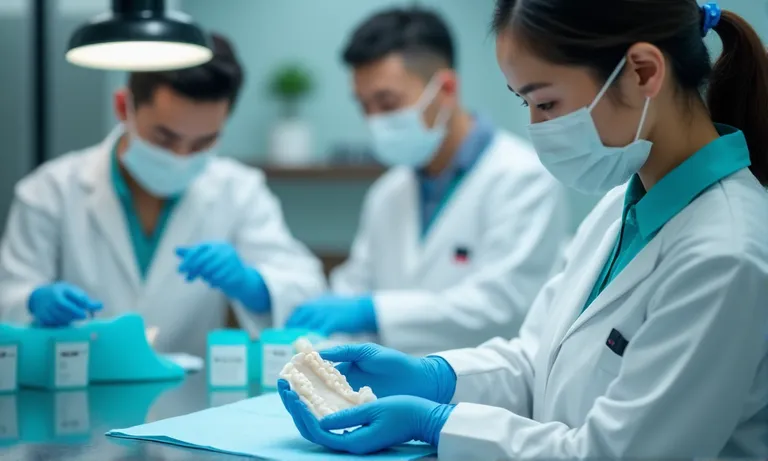
Certified-zirconia-veneer-usage-EU-US
Zirconia materials used for veneers must originate from:
These materials undergo clinical testing and device equivalency review before being approved for veneer applications.
Certified blocks should include:
At Raytops, we log and verify each block’s certificate before production and archive it per regulatory timelines.
If only the lab has ISO certification but uses non-listed zirconia, regulatory risk remains high.
Certified zirconia is no longer niche—it’s mainstream in the right clinical categories.
Zirconia veneer materials are widely accepted—but only when backed by proper documentation. Labs and clinics alike must verify that certification applies to the material used, not just the lab itself. That distinction often separates compliant restorations from regulatory risk.
The quality and safety of zirconia veneers start long before a case reaches the clinic—it begins at the raw material stage and continues through every step of processing. While many zirconia blocks may appear similar, only those made under strict manufacturing controls ensure long-term biocompatibility, structural integrity, and color stability. From the dental lab’s perspective, these differences directly impact fit accuracy, veneer survival, and patient safety.

Zirconia-manufacturing-standards-veneer-safety
Inconsistent sintering may result in chipping, warping, or internal microcracks, especially at thin veneer margins.
Only tested and documented materials should be considered for restorations that contact soft tissue or pulp-adjacent surfaces.
Labs must maintain these records for at least 10 years, per MDR and FDA expectations.
✅ Certified zirconia blocks must follow strict sintering, biocompatibility, and pigment safety protocols – TRUE
These controls ensure not just clinical strength, but safe, traceable, and durable veneer outcomes.
❌ All zirconia materials on the market meet the same safety standards – FALSE
Only properly regulated manufacturers follow ISO 13485 and validate their material processes under CE or FDA oversight.
Not all zirconia is created—or certified—equally. Using non-certified zirconia in the US or EU carries legal, financial, and clinical risks that far outweigh any short-term cost advantage. From a dental lab’s experience, uncertified materials are one of the top causes of remakes, audit failures, and brand-damaging patient complaints. These risks extend across the entire treatment chain—from manufacturer to distributor, lab, and clinic.

Non-certified-zirconia-clinical-risk
| ⚠️ Risk Area | Impact on Practice | Common Triggers |
|---|---|---|
| Patient Injury | Allergic reaction, fracture, implant failure | Pigment leaching, sintering voids |
| Legal Liability | Lawsuits, dental board action | No documented FDA/CE clearance |
| Insurance Denials | No reimbursement or pre-authorization | Non-listed material used |
| Customs Seizure | Loss of shipment, investigation | Missing UDI or CE documentation |
| Clinical Remakes | Increased lab costs, trust loss | Marginal integrity, debond, esthetic failure |
We’ve seen cases where veneer batches were held at EU customs simply due to incorrect CE labeling—despite being from reputable labs.
| ❌ Misconception | ✅ Reality |
|---|---|
| “If the lab is ISO certified, the materials must be too.” | ISO 13485 applies to process, not necessarily the raw material. |
| “Zirconia is biocompatible by nature—it doesn’t need approval.” | Only zirconia tested under ISO 10993 and listed with FDA/CE is approved. |
| “If it looks good and mills well, it’s fine to use.” | Performance does not replace legal traceability and certification. |
✅ Non-certified zirconia veneers expose clinics and labs to legal, financial, and clinical failure – TRUE
Without FDA/CE documentation, the burden of liability falls squarely on the provider—regardless of clinical result.
❌ All zirconia behaves the same, so certification is optional – FALSE
Material origin, pigmentation process, and biocompatibility documentation determine whether it’s legally usable in patient care.
Ensuring the zirconia used in veneer cases is truly certified doesn’t need to be complex—but it does require consistency and documentation. For clinics, labs, and distributors, building a simple verification process protects against regulatory fines, insurance denials, and clinical complications. At Raytops, we embed these checks into every case we ship—so our partners don’t have to second-guess what they’re delivering.

Zirconia-certification-verification-lab-clinic
Avoid distributors who respond vaguely or blame upstream manufacturers for missing files.
Any mismatch is a red flag—and grounds for return or escalation.
Labs using Raytops receive a digital certification packet with each case upon request.
If unsure, ask for a “compliance kit”—a bundle of current documents to validate the materials in use.
Traceability and certification aren’t a burden—they’re protection.
Want a certification checklist or need help reviewing zirconia block documentation? Our team can assist with sample validation, CE/FDA cross-checks, and building your clinic’s compliance log.
Zirconia veneers are a trusted material in modern restorative dentistry—but only when certified and traceable. Understanding the regulatory requirements behind FDA clearance, CE marking, and ISO compliance protects your practice, your patients, and your lab reputation.
Need help reviewing a supplier’s certification or building a compliance log? Contact Raytops Dental for CE/FDA templates, block verification support, or a sample traceability workflow.