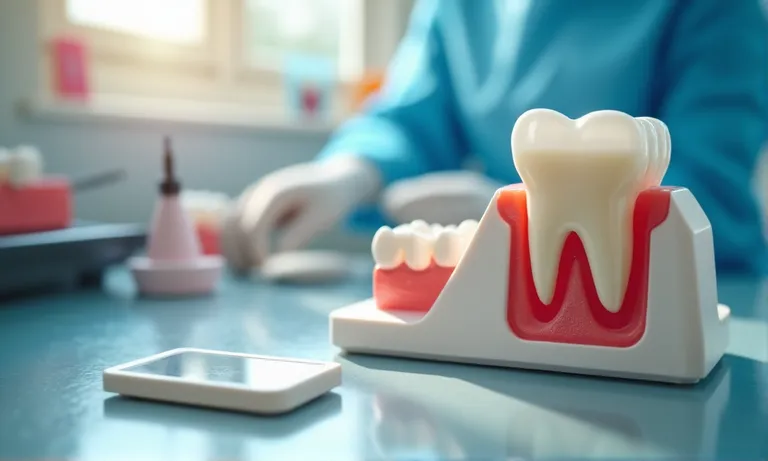
Posterior restorations often face a trade-off between durability and conservation. Many clinicians default to full crowns—even when less invasive options may suffice.
This approach can lead to unnecessary tooth reduction, increased cost, and compromised esthetics in cases that don’t require full coverage.
Inlays and onlays offer a conservative, lab-crafted alternative that preserves structure while reinforcing strength. This article explores when they’re appropriate, how they compare to direct fillings and crowns, and what factors influence material choice and longevity.
Inlays and onlays are indirect restorations used for posterior teeth when damage is too extensive for a filling but doesn’t require a full crown. Inlays fit within cusps, while onlays cover one or more cusps. They provide strong, conservative reinforcement and are often used for molars and premolars with moderate structural loss.
Inlays and onlays offer a conservative and durable alternative to full-coverage crowns or large direct fillings—particularly for posterior teeth. For clinicians and procurement leads evaluating restorative options, understanding how these restorations work and when they’re indicated is essential for both treatment planning and lab collaboration.
Posterior-tooth-inlay-onlay-illustration
While both are indirect, they differ in how much of the occlusal surface they restore. Onlays are often used as a step between an inlay and a crown.
Inlay/onlay restorations are typically selected when:
At Raytops, we often receive posterior onlay cases for e.max or zirconia, especially in cases with moderate tooth loss or esthetic demand.
Popular choices include:
| Material | Indications | Advantages |
|---|---|---|
| e.max | Esthetic zones, light occlusion | Translucent, strong, minimal prep |
| Zirconia | High-stress posterior areas | Very strong, durable, opaque |
| Hybrid resin | Interim restorations, cost-sensitive cases | Easy to adjust, budget-friendly |
Material choice depends on occlusal load, esthetic need, and prep design.
Key differences include:
Compared to direct composite fillings, inlays/onlays require more steps but often deliver better fit
While inlays and onlays offer clinical benefits, cost is often a deciding factor—especially in posterior teeth. From the lab’s perspective, understanding what contributes to pricing differences helps clinics set realistic expectations, reduce rework, and communicate value to patients more effectively.

Dental-cost-comparison-inlay-onlay-vs-filling
Indirect restorations include:
Compared to direct fillings, these fees are higher upfront—but often offset by better durability and fewer retreatments.
Indirect restorations require:
Total chair time may be similar or even less across two visits, especially with digital workflows. Direct fillings are done in one visit but may take longer for large cavities due to layer curing and adjustments.
Rework risks vary:
| Restoration Type | Typical Causes for Rework | Risk Level |
|---|---|---|
| Direct filling | Marginal leakage, post-op sensitivity | Moderate to high |
| Inlay/onlay (lab-made) | Fit mismatch, unclear margins | Lower if scan is accurate |
At Raytops, most inlay/onlay reworks stem from unclear prep margins or incomplete occlusal data—not the restoration type itself.
✅ Inlays/onlays have higher upfront cost but often lower long-term retreatment rates – TRUE
They’re more precise and durable in large posterior restorations, reducing future cost.
❌ Direct fillings are always more economical – FALSE
For complex cavities, direct restorations may fail earlier or require re-intervention, increasing total cost of care.
The long-term success of inlays and onlays depends on material choice, case selection, and execution. For posterior teeth under constant load, indirect restorations often outperform large fillings in terms of survival, fit, and maintenance requirements—especially when supported by proper lab-clinic coordination.

Dental-inlay-onlay-longevity-posterior-restoration
Multiple studies report:
Restoration longevity is enhanced by conservative prep, accurate occlusion, and clean margins.
Lab-made inlays and onlays typically:
Compared to bulk-fill composites, indirect ceramics resist fracture and fatigue more effectively in posterior occlusion.
Precision fit contributes to:
Most lab-related debonding issues are traceable to prep design or moisture contamination, not material failure.
Properly seated inlays/onlays:
Polishing protocols and periodic bite checks help maximize lifespan.
Indirect restorations—when well indicated and well executed—offer excellent long-term performance in posterior regions, often surpassing what can be expected from large direct fillings in high-stress zones.
Beyond clinical outcomes, inlays and onlays can significantly improve practice-level efficiency and treatment value. From the lab’s perspective, they fit well within modern digital workflows—reducing remakes and chair time while supporting higher per-unit case value. For clinics and DSOs focused on scalable restorative systems, they offer a balanced mix of predictability, profitability, and patient satisfaction.
Dental-clinic-workflow-efficiency-onlay
Clinics offering esthetic or minimally invasive options often position them as value-add services.
Digital workflows make inlay/onlay delivery faster and more consistent:
At Raytops, we integrate margin validation and auto-QC into our digital workflow to reduce remakes and clarify prep interpretation.
Compared to composite:
Especially in high-throughput clinics, this improves operatory availability and scheduling predictability.
Patients may decline full crowns due to:
Framing inlays/onlays as “stronger than a filling, but gentler than a crown” helps bridge the gap—especially when digital visuals or case photos are shared.
Inlay/onlay restorations combine efficiency, profitability, and minimally invasive dentistry into a scalable treatment solution.
If you’d like to explore how our digital onlay workflow integrates with your scanner or platform, we’re happy to share a reference case or step-by-step submission guide.
While inlays and onlays are effective in many posterior restorations, they’re not universally suitable. Recognizing their limitations helps avoid costly rework and ensures treatment aligns with the patient’s clinical, financial, and systemic context. From a dental lab’s perspective, these scenarios often trigger design challenges, remakes, or unexpected chairside adjustments.
Dental-case-not-ideal-for-onlay
When cusps are fractured or margins extend deeply subgingivally:
These cases often come back as remakes or have shorter clinical lifespan if restored with onlays.
Despite their long-term value, inlays/onlays:
Clinics should align treatment offering with financial context.
Indirect restorations require:
In regions or setups where lab quality is inconsistent, outcomes may not justify the added investment.
Inlay/onlay success depends on:
Patients with ongoing decay, parafunction (e.g., bruxism), or poor follow-up compliance are often better served with full coverage or protective strategies.
✅ Inlays and onlays are not ideal for severely damaged or high-risk posterior cases – TRUE
Proper case selection protects restoration longevity and reduces avoidable complications.
❌ Inlays and onlays are suitable for all posterior restorations – FALSE
They require a balance of structural preservation, occlusal control, and lab compatibility to succeed.
For many posterior cases, inlays and onlays strike the right balance between structural reinforcement and tooth preservation. When planned correctly, they offer high longevity, esthetic results, and workflow efficiency across both traditional and digital labs.
Here’s a summary of key takeaways:
Want to explore how inlays/onlays can fit into your restorative workflow? Contact Raytops Dental for sample cases, prep guides, and digital integration support.