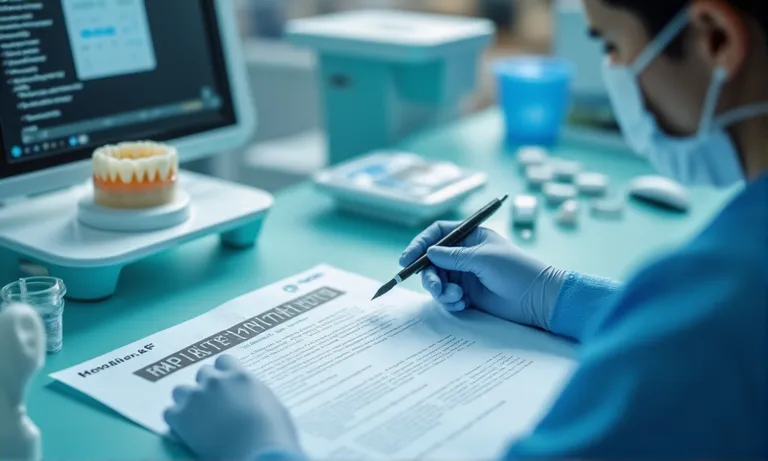
Choosing the right implant system is no longer just about price or compatibility—it’s about minimizing downstream risk. For overseas dental clinics, implant sourcing decisions impact not only restorations, but also compliance, digital workflow, logistics, and legal liability. At Raytops Dental Lab, we often detect sourcing issues during production—before they escalate chairside. This article outlines 7 key implant sourcing risks and how labs can help clinics avoid them.
Implant sourcing risks refer to regulatory, traceability, compatibility, and supply-related issues that arise when using unverified or unsupported implant systems. These risks can lead to clinical complications, insurance denials, delayed deliveries, or legal exposure. Dental labs play a key role in identifying and mitigating these risks early in the workflow.
Regulatory compliance is more than a label—it determines whether an implant can be legally placed, reimbursed, or even imported. While labs don’t select implant systems, we frequently identify red flags during fabrication that point to deeper sourcing risks. Partnering with a lab familiar with compliance checkpoints helps clinics avoid legal, financial, and operational disruptions before they escalate.
Dental-Implant-Regulatory-Compliance-Check
Some implants are cleared for use in one region but restricted or banned in another.
Reimbursement policies often require proof of regulatory approval.
Sourcing from low-cost overseas vendors can introduce serious logistical risk.
✅ Labs can help identify regulatory risks through label review and system familiarity – TRUE
Experienced labs regularly handle regulatory-approved systems and may detect inconsistencies early, preventing downstream issues.
❌ If an implant arrives in the clinic, it’s legally usable – FALSE
Physical delivery doesn’t equal compliance. Many unapproved imports enter markets informally, putting clinics at legal and reputational risk.
Traceability isn’t just a manufacturing issue—it’s central to patient safety and clinical accountability. While labs don’t control implant sourcing, we often encounter limitations when working with systems that lack transparent lot tracking or post-market support. Choosing traceable, well-documented systems helps clinics maintain compliance and minimize uncertainty in failure analysis.
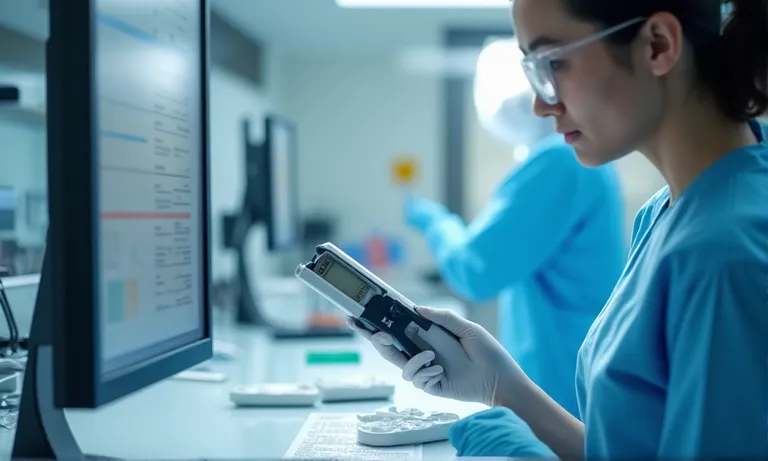
Dental-Implant-Traceability-Lab-Check
When a restoration fails, identifying root cause depends on traceable component data.
Labs occasionally encounter systems with unclear or unverified sourcing.
Well-supported systems provide real-world data on complications or trends—unverified ones do not.
✅ Using traceable implant systems helps labs and clinics manage accountability – TRUE
Traceability supports recall management, batch verification, and failure resolution—all essential to quality restoration outcomes.
❌ Once a restoration is complete, component traceability no longer matters – FALSE
Implant-related complications may occur years later. Without traceability, clinics and labs face legal and diagnostic uncertainty.
Implant selection isn’t just about the hardware—it’s about whether the system integrates seamlessly with lab workflows and digital design tools. When clinics use systems not supported by major CAD/CAM libraries, labs face trial-and-error processes, compatibility issues, and unpredictable case outcomes. Library-verified systems reduce risk, save time, and improve long-term maintenance consistency.
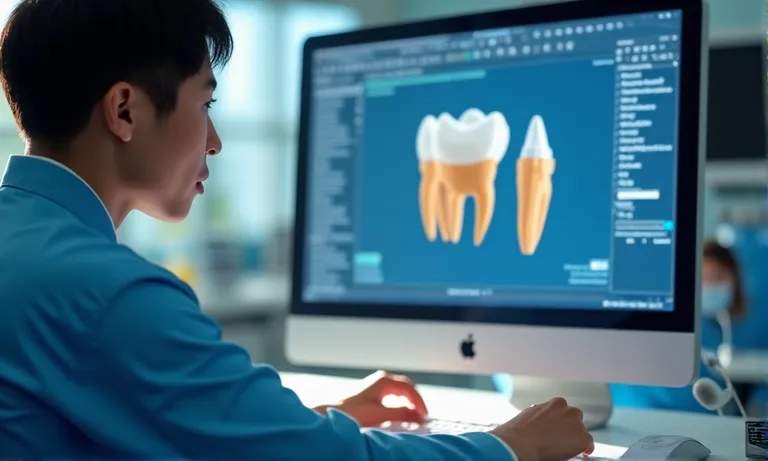
Dental-Implant-CADCAM-Compatibility-Issue
When implant systems aren’t supported by widely used libraries, digital workflows break down.
| Scenario | Impact on Lab Workflow |
|---|---|
| No official implant scan body | Forced to use generic scan flags; low fit accuracy |
| Library missing from design software | Requires manual modeling; delays & risk |
| Non-standard emergence geometry | Occlusal and tissue profiles poorly matched |
Even with digital models, precision seating requires accurate interface data—often missing in unverified systems.
Unsupported systems may look fine at delivery—but can create problems years later.
✅ Library-verified implant systems ensure smoother digital workflows – TRUE
When implant systems are integrated into major design platforms, labs can ensure predictable fit, faster turnaround, and long-term reproducibility.
❌ Any implant can be restored digitally with enough lab effort – FALSE
Unverified systems create hidden labor, design compromises, and increase the risk of failure or misfit—even with experienced lab teams.
Implant-related delays don’t just impact the lab—they cascade through the clinic’s surgical schedule, patient expectations, and overall treatment planning. While labs can’t control shipping, we often see the first signs of supply instability through incomplete kits, customs delays, or uncoordinated deliveries. Consistent supply partners help reduce the downstream chaos caused by global disruption.

Dental-Implant-Supply-Delay-Lab-Impact
International shipments introduce risk—especially when implant components come from multiple sources. Labs often notice delays before clinics do.
When components arrive late, clinics are forced to reschedule or improvise—both of which increase clinical risk.
| Delay Type | Clinical Consequence |
|---|---|
| Late-arriving final abutment | Last-minute adjustments, stress on margins |
| Incomplete provisional kit | Surgery must be postponed or re-planned |
| Delayed multi-unit parts | Risk of inconsistent healing or misfit |
Large cases with multiple phases are especially vulnerable to coordination failure. Labs often act as the timeline buffer.
Each delay doesn’t just affect one order—it disrupts a system. Labs that work with well-supported implant platforms help maintain schedule integrity across complex restorative timelines.
Want to reduce uncertainty around timelines and avoid rushed adjustments?
Contact us to request our Implant Case Logistics Checklist—built from years of coordinating global restorations.
When implant systems lack documentation or after-sales support, clinics often feel the pain chairside—but labs experience it first. Without access to validated workflows, live technical support, or surgical guides, labs face production delays, guesswork, and increased risk of misfit. That’s why labs tend to align with implant systems that come with clinical infrastructure—not just hardware.

Dental-Implant-System-Collaboration-Lab-Clinic
When implant issues arise mid-production, a lack of technical support can paralyze the lab process.
Without documentation, labs are left to guess what should have been standardized.
| Missing Element | Lab Impact |
|---|---|
| Torque specs or depth limits | Over-tightening or misalignment risks |
| Restorative space guidelines | Wrong emergence or over-contoured design |
| Surgical protocol references | Incompatible scan body positioning |
When something fails late in the process—tight deadlines, patient rescheduling—labs need responsive system support.
Labs aren’t just fabricators—we’re part of the clinical chain. Supported implant systems help us respond faster, collaborate better, and restore with confidence alongside your team.
Want to improve how your lab and clinical team communicate around implant cases?
Contact us to request our Supported Implant System Protocol Sheet—a resource for smoother, cross-functional workflows.
Upfront implant pricing rarely tells the full story. Labs routinely encounter systems that appear cost-effective at purchase but introduce rework, chairside delays, or international fees down the line. Restoration-ready systems—those designed with downstream workflows in mind—can significantly reduce hidden costs that clinics often absorb unknowingly.

Dental-Implant-Hidden-Cost-Checklist
Systems without restoration precision often require multiple iterations.
Clinicians often spend more time adjusting restorations when components don’t align with workflow expectations.
| Issue Type | Chairside Impact |
|---|---|
| Overcontoured emergence | Soft tissue compression or bleeding |
| Inaccurate occlusal clearance | Prolonged grinding or bite reset |
| Unexpected connector mismatch | Inability to seat multi-unit bridge |
Sourcing implants internationally can create financial blind spots.
Labs working with restoration-ready systems can help clinics anticipate and avoid these surprises—not just through fabrication, but through proactive material and system alignment.
Need a clearer view of the hidden costs tied to implant choices?
Contact us to request our Restoration Cost Impact Summary—a practical tool to help clinics plan beyond the purchase price.
Supporting Clinics with Documented and Legally Backed Implant Component Choices
When implant components come without documentation or enforceable terms, clinics are left to assume all risk—financial, legal, and reputational. Labs encounter these gaps first, whether through vague warranty claims, unreturnable components, or lack of material verification. Restoration-ready systems backed by clear policies help protect both patient outcomes and professional accountability.
Image
Alt: Dental-Implant-Warranty-Policy-Check
Prompt: Realistic photo of dental lab technician reading implant packaging alongside a printed warranty document, marked with highlights and notes, with components arranged on a workbench in a soft-lit setting
Unsupported systems often lack documented policies—until problems arise.
Low-cost international suppliers may offer unclear or unenforceable terms.
| Legal Issue | Clinic or Lab Risk |
|---|---|
| No governing jurisdiction | Legal actions become impractical |
| Language or contract gaps | Ambiguity weakens any refund claim |
| Slow or no response | Delays cause patient dissatisfaction |
Patient trust can erode when component failures appear systemic or unresolved.
Labs committed to reliable outcomes rely on systems that back every unit with formal, transparent policies. Supporting clinics means more than fabrication—it means helping them avoid hidden liability.
Looking to protect clinical reputation and minimize legal exposure?
Contact us to request our Implant Policy Verification Checklist—a tool used by labs to validate supplier claims before a single case is restored.
Conclusion
Implant sourcing isn’t just a procurement decision—it’s a quality and risk management strategy. From compliance checks to CAD/CAM compatibility, dental labs serve as frontline partners in identifying red flags and supporting predictable outcomes. At Raytops, we actively help our clinic partners avoid sourcing pitfalls through system familiarity and workflow coordination.
Quick Recap and Internal Links: